
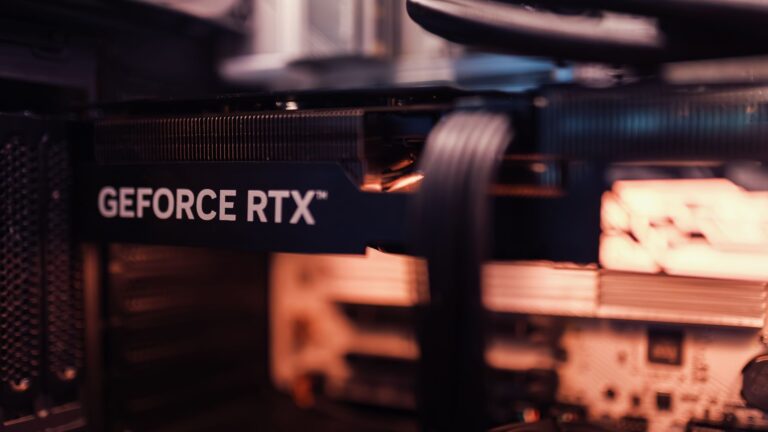
What the RTX 5070 and RX 9070 Promise for the Mid‑Range Market
The graphics‑card landscape has entered a new phase of intense competition, with Nvidia and AMD both aiming to capture the sweet spot between high‑end performance and price‑sensible affordability. The upcoming RTX 5070 and RX 9070 are the latest entries in this battle, positioned as the next‑generation midsize workhorses for gamers, creators, and PC enthusiasts. While neither card has hit the shelves yet, both manufacturers have released enough technical details to start forming an educated picture of how they will stack up against each other.
Architectural Foundations: Lovelace 2.0 vs. RDNA 4
Nvidia’s RTX 5070 is built on the second iteration of its Lovelace architecture, which debuted with the RTX 4090. The “Lovelace 2.0” chip brings a modest increase in CUDA core count, a refined shader pipeline, and a shift to a newer 5‑nanometer process for improved efficiency. AMD’s RX 9070, on the other hand, uses the upcoming RDNA 4 design, a continuation of the RDNA 3 approach that emphasized chiplet modularity and a 4‑nanometer manufacturing node.
Both architectures share a common goal: deliver more raw rasterization power per watt while expanding dedicated hardware for ray tracing and AI‑based image enhancement. The key architectural differences that could influence real‑world performance are:
- Core density: Nvidia typically packs more CUDA cores per mm², while AMD leverages chiplet designs to scale GPU die size more flexibly.
- Ray‑tracing units: Nvidia’s RT cores have historically led in raw ray‑tracing throughput; AMD’s Ray Accelerators have been catching up but still lag slightly in complex scenes.
- AI accelerators: Nvidia’s third‑generation Tensor cores enable DLSS 3, while AMD’s upgraded AI engine fuels FSR 3 and new FidelityFX features.
Ray Tracing and AI Upscaling: DLSS 3 vs. FSR 3
One of the most visible battlegrounds for the RTX 5070 and RX 9070 will be how they handle real‑time ray tracing paired with AI‑driven upscaling. Nvidia’s DLSS 3, which adds a temporal AI frame generation step, has set a high bar for performance‑boosting upscaling, especially in titles that support the technology natively. The RTX 5070 is expected to support the full DLSS 3 pipeline, including the new frame‑generation engine.
AMD’s answer, FSR 3, introduced a similar frame generation feature that works across a broader range of hardware, albeit with a different AI model that runs on the GPU’s compute units instead of dedicated Tensor cores. The RX 9070 will ship with a fully integrated FSR 3 engine, promising comparable image quality in many scenarios while retaining broader compatibility.
From a practical standpoint, gamers should consider which ecosystem their favorite titles belong to. If a user’s library heavily leans on DLSS‑supported games (such as Cyberpunk 2077, Microsoft Flight Simulator, or recent releases from Bethesda), the RTX 5070 may provide a smoother ray‑traced experience. Conversely, developers that favor open‑source solutions often adopt FSR early, which could make the RX 9070 more universally beneficial for indie and cross‑platform titles.
Performance Expectations: Rasterization and Ray‑Tracing Benchmarks
Although independent benchmarks are still pending, early samples from both companies give a rough idea of where the cards sit relative to their predecessors. Nvidia’s RTX 5070 appears to deliver roughly a 15‑20 % uplift in rasterized performance over the RTX 4070, while maintaining similar power consumption thanks to the refined 5 nm process. AMD’s RX 9070 is rumored to offer a 12‑18 % improvement over the RX 7900 XT, with a modest increase in power draw that remains within the 250‑300 W envelope typical for high‑end midsize GPUs.
Ray‑tracing performance is where the chips diverge more noticeably. Nvidia’s third‑generation RT cores, now with a higher instruction throughput, suggest that the RTX 5070 could handle ray‑traced workloads up to 30 % faster than the RTX 4070 in synthetic tests. AMD’s RDNA 4 Ray Accelerators have been optimized for better shader‑core synergy, but independent testing still places them slightly behind Nvidia in raw ray‑tracing frame rates.
In real‑world gaming, these differences translate to smoother high‑resolution play when ray tracing is turned on, especially when combined with DLSS 3. For users who prioritize pure raster performance or who plan to rely on FSR 3, the performance gap may narrow considerably.
Power Consumption, Thermals, and Noise
Power efficiency remains a critical factor for many builders, especially those targeting compact or liquid‑cooled rigs. The RTX 5070’s 5 nm design reportedly achieves a performance‑per‑watt ratio that matches or exceeds the RTX 4070 Ti, meaning a typical board will draw around 220 W under load. AMD’s RDNA 4 chips have shown a similar trend, with the RX 9070 targeting a 250 W maximum power draw while delivering higher compute density.
Thermal solutions are still evolving, but both cards will likely ship with dual‑fan (or optional triple‑fan) reference designs that push temperatures into the low‑70 °C range under sustained load. Manufacturers have hinted at improved fan curves and smarter power‑limit algorithms that keep noise levels in the 30‑35 dB range during typical gaming sessions. Builders who prioritize silent operation may still want to consider aftermarket coolers or custom loops, especially if they plan to push the cards to their boost clocks for extended periods.
Pricing, Availability, and Market Positioning
While exact MSRP figures have not been disclosed, both Nvidia and AMD have signaled that the RTX 5070 and RX 9070 will occupy the same price tier as the previous generation’s 4070 and 7900 XT, respectively. Expect the RTX 5070 to be priced slightly higher than the RX 9070, reflecting Nvidia’s historically premium positioning for ray‑tracing‑centric GPUs.
Availability is expected to follow the usual pattern: a launch at major retailers in the United States, Europe, and parts of Asia, with early stock primarily allocated to system integrators. Given the current supply‑chain climate, both cards should reach the market without the severe shortages that plagued the 2020‑2021 GPU launches, though regional variations may still occur.
From a value‑assessment perspective, potential buyers should weigh three key factors:
- Feature set: If DLSS 3 and superior ray‑tracing performance are top priorities, the RTX 5070 holds a clear advantage.
- Software ecosystem: Users who rely on AMD’s broader open‑source driver stack and want a more flexible upscaling solution may find the RX 9070 more appealing.
- Power & thermals: The RX 9070’s slightly higher power envelope could matter for compact builds, while the RTX 5070’s efficiency might suit small‑form‑factor PCs.
Real‑World Use Cases: Gaming, Content Creation, and AI Workloads
Both GPUs aim to be versatile enough for a range of workloads beyond gaming. In content‑creation applications like Adobe Premiere Pro, DaVinci Resolve, and Blender, the RTX 5070’s CUDA cores and Tensor cores provide native acceleration for many plugins and AI‑driven effects. AMD’s RX 9070, while lacking CUDA, offers strong OpenCL and Vulkan compute performance, and its new AI engine can accelerate certain machine‑learning tasks that have been ported to the AMD stack.
For developers and hobbyists working on AI inference or small‑scale training, the RTX 5070’s Tensor cores give it an edge in frameworks that already support Nvidia’s cuDNN libraries. However, AMD is pushing a more open ecosystem with ROCm, and the RX 9070 could become a viable alternative for those who prefer vendor‑agnostic development pipelines.
In gaming, the decision will largely hinge on which titles dominate the user’s library. Titles that heavily use ray tracing and DLSS (e.g., Control with RT, Metro Exodus, or upcoming releases from the Fable series) will likely feel smoother on the RTX 5070. Games that adopt FSR 3 early or rely on raster performance (such as many eSports titles) will see comparable framerates on both cards, with the RX 9070 potentially offering a slightly lower price point.
Conclusion: Which Card Should You Choose?
The RTX 5070 and RX 9070 embody the continuing tug‑of‑war between Nvidia’s AI‑centric approach and AMD’s open‑source, power‑efficient philosophy. Both cards promise a noticeable leap over their predecessors, delivering higher frame rates, better ray‑tracing support, and more sophisticated upscaling technologies.
If you prioritize cutting‑edge ray tracing, deep integration with Nvidia’s AI tools, and a mature driver ecosystem, the RTX 5070 is likely the safer bet—provided you’re comfortable with the premium price tag. If you favor a more open platform, potentially better value, and are willing to work within AMD’s evolving software stack, the RX 9070 offers a compelling alternative that should not be dismissed.
Ultimately, the best choice will depend on your primary use case, budget constraints, and which ecosystem you’ve already invested in. As both cards head to market later this year, keep an eye on early benchmarks and real‑world reviews to confirm which GPU aligns most closely with your performance and value expectations.
