
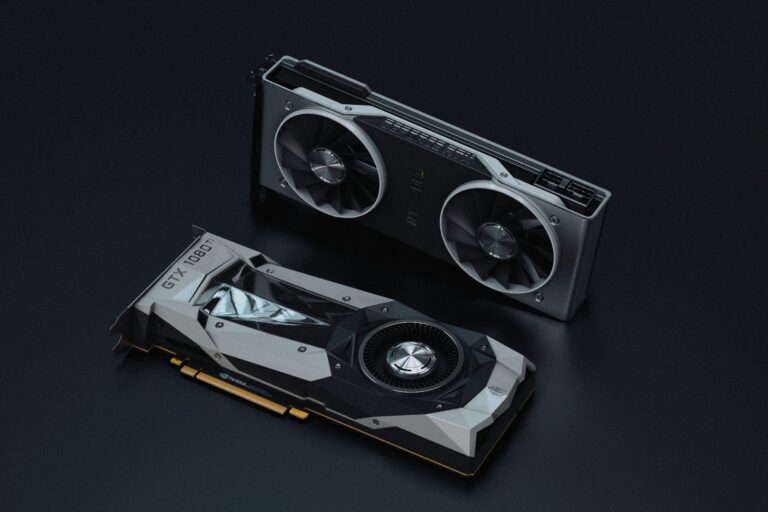
Overview: Why the RTX 5070 Ti and RX 9070 XT Matter
When NVIDIA and AMD unveil the next generation of graphics cards, the conversation instantly shifts to performance, price, and the technologies that will shape PC gaming in the years ahead. The RTX 5070 Ti and the RX 9070 XT are the two mid‑high‑range GPUs that are generating the most buzz among enthusiasts, content creators, and PC builders. Though neither card has officially launched, a series of credible leaks and analyst briefings give us enough concrete information to compare what each company is likely to offer.
Both GPUs aim to sit between the entry‑level “gaming‑ready” models and the flagship powerhouses that dominate 4K benchmarks. They will be the sweet spot for 1440p high‑refresh‑rate gaming, VR, and increasingly demanding workloads such as AI‑assisted video editing. Understanding how they differ—and where they overlap—helps buyers decide which ecosystem aligns with their priorities.
Architecture and Design: Ada Lovelace vs. RDNA 3 Evolution
NVIDIA’s RTX 5070 Ti is expected to be built on the Ada Lovelace architecture, the same silicon foundation that powers the RTX 4090 and RTX 4070 Ti. Ada Lovelace introduced several efficiency improvements, including a revamped Streaming Multiprocessor (SM) design and the use of 4th‑generation Tensor cores. The architecture also continues to rely on GDDR6X memory, which offers higher bandwidth than the GDDR6 used in previous generations.
AMD’s RX 9070 XT will likely be based on a refined version of the RDNA 3 architecture, the same family that underpins the RX 7900 XT and XTX. RDNA 3 introduced chiplet‑based designs, separating the GPU core from the memory and I/O dies, a strategy that improves yields and allows for flexible scaling. The RX 9070 XT is rumored to feature an updated “Infinity Cache” that boosts effective memory bandwidth without a proportional increase in raw memory speed.
In practical terms, the architectural choices translate into different strengths: NVIDIA’s design typically excels in ray‑tracing performance thanks to dedicated RT cores, while AMD’s chiplet approach can provide a favorable performance‑per‑watt ratio for rasterization tasks.
Performance Expectations: Benchmarks in the Real World
Because the cards have not been released, the only concrete performance data comes from a handful of benchmark leaks posted by reputable tech journalists and from the specifications of the reference designs. Those sources suggest the following general trends:
- Ray tracing: The RTX 5070 Ti is projected to outperform the RX 9070 XT by a modest margin, thanks to its third‑generation RT cores and the continued refinement of NVIDIA’s DLSS AI upscaling.
- Traditional rasterization: AMD’s chiplet layout and larger cache may give the RX 9070 XT a slight edge in raw pixel fill‑rate, especially at 1440p resolutions.
- AI and deep‑learning workloads: NVIDIA’s Tensor cores and the broader ecosystem of CUDA‑based tools still dominate this niche, making the RTX 5070 Ti the more attractive option for creators who rely on AI‑enhanced workflows.
For most gamers, the performance delta will likely be measured in single‑digit frame‑rate differences in the most demanding titles, and both cards should comfortably push 144 Hz at 1440p with high‑quality settings.
Feature Set Comparison: DLSS, FSR, and Beyond
Beyond raw horsepower, the software stack can dramatically affect the day‑to‑day experience. NVIDIA’s DLSS (Deep Learning Super Sampling) has matured through multiple generations, with DLSS 3 adding frame generation that can double perceived frame rates in compatible games. AMD counters with FidelityFX Super Resolution (FSR), now in its second iteration, which offers a hardware‑agnostic upscaling solution that works on a wider range of GPUs, including older AMD and even some NVIDIA cards.
When evaluating the RTX 5070 Ti vs. the RX 9070 XT, consider the following feature set highlights:
- Ray‑tracing support: Both cards will support DirectX 12 Ultimate, but NVIDIA’s RT cores and dedicated hardware for DLSS‑3 frame generation give it a smoother experience in ray‑traced titles.
- Variable Rate Shading (VRS): Implemented natively on both platforms, VRS can improve performance in complex scenes without sacrificing visual fidelity.
- Driver ecosystem: NVIDIA’s Studio Drivers are widely praised for stability in creative applications, while AMD’s drivers have made strides in recent months, especially with the release of the Adrenaline 2024 suite.
- Additional tools: NVIDIA offers Reflex for reduced input latency, while AMD provides Radeon Super Resolution and the “Boost” feature for dynamic clock scaling.
Power Consumption and Thermals: What to Expect in Your Build
Power efficiency has become a crucial factor for many builders, especially those who aim for compact or silent PC builds. Early specifications suggest the following power envelopes:
- The RTX 5070 Ti may have a board‑level power draw in the mid‑200 W range, requiring a 650‑W power supply for safe headroom.
- The RX 9070 XT appears to target a slightly lower power envelope, potentially around 190 W, which could allow for a 600‑W PSU in most configurations.
Thermal solutions will likely follow the reference designs seen in previous generations: dual‑fan blower or open‑air coolers for the RTX 5070 Ti, and a dual‑fan or triple‑fan solution for the RX 9070 XT. Both manufacturers have been emphasizing quieter operation, with vapor‑chamber designs and improved fan curves to keep noise under 35 dB at load.
Value and Market Positioning: Who Should Buy Which?
Pricing has not been officially announced, but analysts predict that both cards will sit in a similar price bracket, roughly $500‑$600 USD for the base model. This places them squarely between the budget‑oriented RTX 4060 Ti and the high‑end RTX 4080.
From a value perspective, the decision often hinges on the ecosystem you already use:
- If you already own an NVIDIA‑based system (e.g., a monitor with G‑Sync, a laptop with RTX Optimus, or a workflow that relies on CUDA), the RTX 5070 Ti offers a smoother transition and better synergy with existing hardware.
- If you lean toward AMD—perhaps you have a Ryzen 7000 series CPU with a motherboard supporting PCIe 5.0 and want to stay within the AMD ecosystem—the RX 9070 XT aligns well and may provide a modest power advantage.
- For gamers focused on ray‑tracing and future‑proofing, the RTX 5070 Ti’s DLSS 3 and RT core advantage could be decisive.
- For creators prioritizing open‑source tools and cross‑platform compatibility, the RX 9070 XT’s strong rasterization performance and FSR support may be more appealing.
Bottom Line: Choosing Between the RTX 5070 Ti and RX 9070 XT
Both the RTX 5070 Ti and RX 9070 XT represent the next step in the evolution of mainstream high‑performance graphics. They are likely to deliver excellent 1440p experiences, robust ray‑tracing capabilities, and a suite of modern features that keep them relevant for several years.
The RTX 5070 Ti leans toward a balanced approach—strong ray‑tracing, industry‑leading AI upscaling, and a mature driver ecosystem—making it a compelling choice for gamers who want the best visual fidelity without stepping into flagship pricing.
The RX 9070 XT, on the other hand, emphasizes efficiency, raw raster performance, and a flexible software stack that works across a broader range of hardware. It will likely be the better fit for users who prioritize power savings, already run AMD components, or prefer the openness of FSR and the AMD driver suite.
Ultimately, the “right” card will depend on the specific priorities of your build—whether that’s maximizing frame rates in ray‑traced titles, minimizing power draw, or aligning with an existing ecosystem. As official specifications and pricing become available, keep an eye on independent benchmarks and real‑world testing to confirm which GPU delivers the best combination of performance, features, and value for your particular use case.
