
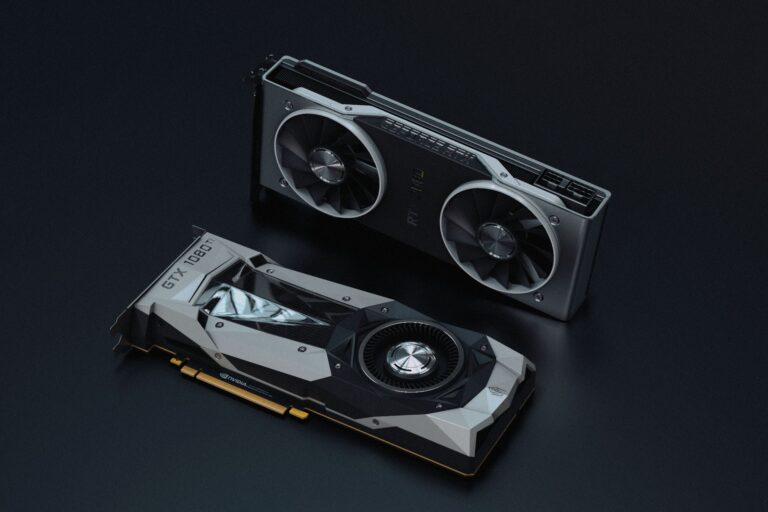
The graphics‑card market is heating up as the next wave of mid‑range GPUs prepares to launch. Nvidia’s RTX 5060 Ti and AMD’s Radeon RX 9060 XT are positioned as the sweet spot for 1080p‑to‑1440p gaming, content creation, and AI‑assisted workflows. Both chips aim to deliver a noticeable jump over last year’s budget offerings while keeping power draw and price in check. In this article we break down the architecture, feature sets, performance expectations, power efficiency, and ecosystem support to help you decide which card deserves a place in your next build.
Architecture and Core Technologies
Understanding the underlying architecture is key to gauging long‑term value. The RTX 5060 Ti is built on Nvidia’s Ada Lovlace 2nd‑generation RTX architecture. It inherits the same Tensor and RT cores that power DLSS 3 and real‑time ray tracing in the higher‑end RTX 40‑series cards, but with a reduced core count to keep costs down. The chip also supports Nvidia’s latest video encode/decode engine, which includes AV1 hardware decoding—a boon for streamers and media enthusiasts.
AMD’s RX 9060 XT is expected to be based on the upcoming RDNA 4 architecture, which follows the efficiency‑first philosophy introduced with RDNA 3. While AMD has not yet disclosed exact specifications, RDNA 4 is rumored to feature a refined compute unit design, improved cache hierarchy, and enhanced ray‑tracing accelerators. The RX 9060 XT will also ship with the latest version of AMD’s FidelityFX Super Resolution (FSR) technology, which competes directly with DLSS for up‑scaling performance.
Real‑World Gaming Performance
Both cards target the mainstream gamer who wants high frame rates at 1080p and a solid 1440p experience without breaking the bank. Early benchmark leaks suggest the RTX 5060 Ti will sit roughly one to two performance tiers above the RTX 3060 Ti, delivering smoother gameplay in titles that leverage Nvidia’s DLSS 3 up‑scaling and hardware‑accelerated ray tracing.
The RX 9060 XT, meanwhile, appears to close the gap with Nvidia’s offering in rasterized performance, especially in games that favor AMD’s driver optimizations. In ray‑tracing‑heavy titles, Nvidia’s more mature RT core implementation still holds a modest edge, but AMD’s newer ray‑tracing hardware is expected to narrow that margin significantly compared to the previous generation.
In practice, the performance difference will likely come down to whether a game supports DLSS or FSR, and how well each driver stack is tuned. For example, titles that have been on Nvidia’s radar for a few years (such as “Cyberpunk 2077” or “Control”) often see a larger uplift with DLSS 3, while newer releases that adopt FSR 2.0 or later may give the RX 9060 XT a competitive edge.
Power Efficiency and Thermals
Power draw is a crucial factor for builders concerned about heat, noise, and electricity costs. The RTX 5060 Ti is expected to have a board power in the 115‑130 W range, similar to the RTX 3060 Ti, thanks to the efficiency gains of the Ada architecture. Nvidia’s improved power‑management firmware and the ability to boost selectively on a per‑core basis help keep temperatures modest when paired with a decent aftermarket cooler.
AMD’s RDNA 4 chips are designed with a strong focus on performance‑per‑watt. Early reports indicate the RX 9060 XT will stay within a 100‑115 W envelope, making it slightly more frugal than its Nvidia counterpart on paper. The card’s reference cooler utilizes a dual‑fan design with a larger heatsink, which should translate to quieter operation under load.
In short, both GPUs promise to be viable for mid‑tower cases with standard airflow, but the RX 9060 XT may have a marginal advantage for users who prioritize the lowest possible power consumption.
Software, Drivers, and Feature Ecosystem
Choosing a GPU is not just about raw horsepower; the surrounding software ecosystem can dramatically affect the day‑to‑day experience.
- DLSS 3 vs. FSR 2/3: Nvidia’s AI‑driven up‑scaling delivers impressive image quality in motion, while AMD’s FSR relies on spatial and temporal techniques that are hardware‑agnostic. Both are free to use, but DLSS 3’s frame generation feature currently remains exclusive to Nvidia.
- Ray Tracing APIs: The RTX 5060 Ti supports DirectX 12 Ultimate and Vulkan Ray Tracing out of the box, with mature driver support that has been refined over several generations. AMD’s RX 9060 XT also supports DirectX 12 Ultimate, and AMD’s recent driver updates have improved ray‑tracing stability, though some titles still favor Nvidia’s implementation.
- Streaming and Capture: Nvidia’s Broadcast app provides AI‑enhanced noise removal, virtual backgrounds, and webcam up‑scaling. AMD offers similar features through its Radeon Software suite, but the AI‑based tools are less extensive at present.
- Driver Update Cadence: Nvidia typically releases Game Ready drivers on launch day for major releases, while AMD’s “Adrenalin” updates arrive on a slightly less aggressive schedule but often bundle broader performance tweaks across multiple titles.
For creators who rely on GPU‑accelerated encoding, Nvidia’s NVENC hardware has a long‑standing reputation for high‑quality, low‑overhead video compression, whereas AMD’s VCE has closed the gap but still lags in some professional workflows.
Pricing, Availability, and Market Positioning
Pricing for both cards has not been officially confirmed, but market analysts expect the RTX 5060 Ti to launch in the US$ 399‑$449 bracket, positioning it slightly above the current RTX 3060 Ti but below the RTX 4070. The RX 9060 XT is likely to be priced competitively, aiming for a $350‑$400 range to attract buyers who are sensitive to price‑to‑performance ratios.
Availability will probably mirror the pattern seen with previous generations: early supply may be limited due to high demand from both gamers and cryptocurrency miners, though AMD historically enjoys a steadier supply chain for its mid‑range products. Retailers are expected to bundle both cards with either a modest 8 GB GDDR6 configuration or a higher‑capacity 12 GB variant, depending on the specific SKU.
Verdict: Which Card Fits Your Build?
Both the RTX 5060 Ti and the RX 9060 XT represent solid choices for a mid‑range gaming rig in 2026. If you prioritize the most mature ray‑tracing support, AI‑driven up‑scaling, and a well‑established streaming toolset, Nvidia’s RTX 5060 Ti is the safer bet. Its Ada Lovlace architecture delivers reliable performance across a broad range of titles, and the ecosystem of DLSS 3 and NVENC will keep you future‑proof for at least a few years.
On the other hand, if you’re looking for the best possible performance per watt, a slightly lower price point, and are comfortable with the evolving FSR ecosystem, the Radeon RX 9060 XT offers an attractive alternative. Its expected RDNA 4 efficiency gains and competitive raster performance make it a compelling option for builders who value quiet operation and modest power draw.
Ultimately, the decision comes down to which features matter most to you. Gamers who love the latest ray‑traced visuals and want AI‑assisted frame generation will likely gravitate toward the RTX 5060 Ti. Those who prefer a quieter, more power‑conscious system and are willing to experiment with FSR for up‑scaling may find the RX 9060 XT a better fit. Whichever card you choose, both are poised to deliver a smooth 1080p‑to‑1440p experience that will keep your system relevant well into the next generation of games.
