
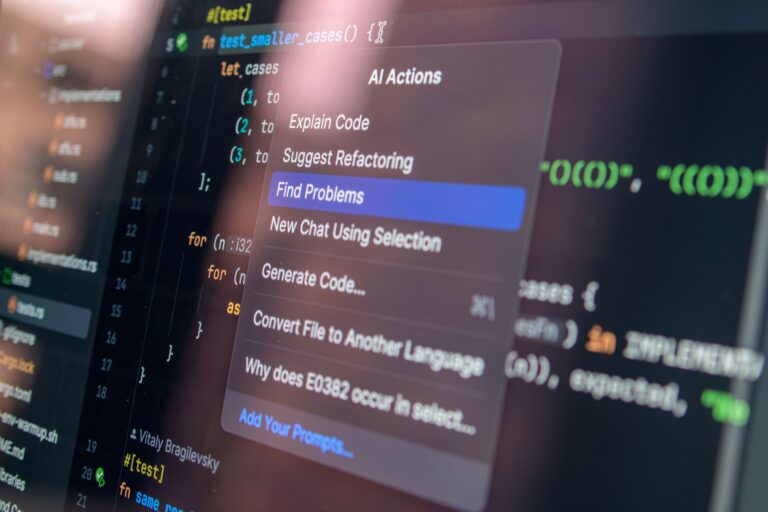
What Are AI Coding Assistants?
AI coding assistants are software tools that use large language models (LLMs) to generate, complete, or refactor code on demand. They sit inside an integrated development environment (IDE) or operate as a standalone chatbot, offering suggestions that range from a single line of syntax to entire function implementations. The most visible examples include GitHub Copilot, which works directly in editors like VS Code, and chat‑based tools such as OpenAI’s ChatGPT that can be prompted with natural‑language descriptions of desired behavior.
These assistants are trained on publicly available code repositories, documentation, and programming textbooks. When a developer types a comment or begins a function, the model predicts the most likely continuation based on patterns it has seen. The output is then presented as a suggestion that the developer can accept, modify, or reject. In practice, the experience feels like a highly knowledgeable pair programmer who never gets tired.
How Traditional Programming Has Evolved
Traditional programming has always been a collaborative process, but the collaboration was historically limited to human teammates, code reviews, and static documentation. Over the past few decades, several milestones have shaped the modern workflow:
- Version control systems (Git, Mercurial) introduced reliable ways to share and merge code.
- Automated testing frameworks made it possible to verify behavior continuously.
- Continuous integration/continuous deployment (CI/CD) pipelines turned manual builds into repeatable, automated steps.
- Code linters and formatters enforced style consistency without human intervention.
These tools reduced the friction of collaboration but still required developers to write the core logic themselves. The shift introduced by AI assistants is therefore not a replacement of these foundations, but an addition that automates a different part of the process: the generation of boilerplate and routine code.
Productivity Gains and Workflow Changes
Many early adopters report that AI assistants shorten the time spent on repetitive tasks. For instance, scaffolding a new REST endpoint, writing a data‑access object, or converting a JSON schema into a type‑checked model can be done in seconds rather than minutes. The real productivity boost, however, comes from the “cognitive off‑loading” effect: developers can focus on higher‑level design and problem solving while the assistant handles the low‑level syntax.
Typical workflow adjustments include:
- Prompt‑first development: writing a natural‑language description of what you need before opening a file.
- Iterative refinement: accepting a suggestion, running tests, then asking the assistant to tweak the output.
- Inline documentation generation: prompting for docstrings or API docs alongside the code.
These patterns can reduce context switches, but they also require developers to develop a habit of reviewing each suggestion carefully. The speed gain is only realized when the assistant’s output aligns with the project’s conventions and passes the existing test suite.
Quality, Maintainability, and Trust
Code quality remains a central concern. AI models generate code based on statistical patterns, not on an understanding of the underlying domain. As a result, the suggestions can be correct, suboptimal, or occasionally unsafe. Trust is therefore built through a feedback loop:
1. Review – Developers must read the generated code, checking for logical errors, mismatched types, or inefficiencies.
2. Testing – Automated unit and integration tests catch regressions that a quick visual inspection might miss.
3. Refactoring – Over time, teams develop style guides that incorporate AI‑generated code, ensuring that new suggestions conform to established patterns.
When these steps are consistently applied, AI assistants can produce code that meets or exceeds the quality of hand‑written snippets, especially for well‑defined tasks like data parsing or API client generation. However, for complex algorithms that require deep domain expertise, human insight remains indispensable.
Security and Ethical Considerations
The open‑source nature of many training datasets raises legitimate concerns about inadvertent code leakage and licensing compliance. An assistant might suggest a snippet that closely mirrors copyrighted material, exposing a project to legal risk. Additionally, because LLMs can produce insecure code—such as SQL queries without proper sanitization—developers must treat any suggestion as a potential security liability.
Best practices to mitigate these risks include:
- Running generated code through static analysis tools that flag known vulnerability patterns.
- Enforcing a policy that all AI‑generated code be reviewed by a senior developer before merging.
- Maintaining an internal whitelist of approved libraries and APIs, and prompting the assistant to stay within that list.
Ethically, organizations should be transparent with stakeholders about the use of AI assistance, especially when the generated code may incorporate data from external sources. This transparency helps align expectations and ensures that the development process remains auditable.
Learning Curve and Skill Development
One common fear is that reliance on AI assistants could erode fundamental programming skills. The reality is more nuanced. For junior developers, an assistant can serve as a teaching aid—showing idiomatic usage of a language feature or suggesting a more efficient algorithm. However, without deliberate practice, there is a risk of “copy‑and‑paste” learning, where the developer accepts suggestions without understanding why they work.
To turn AI assistance into a learning opportunity, teams can adopt practices such as:
- Encouraging developers to explain the generated code in their own words before committing.
- Pairing AI‑generated solutions with short code‑review sessions focused on underlying concepts.
- Maintaining a “learning log” where developers note patterns or anti‑patterns observed in AI output.
These habits help ensure that the technology augments, rather than replaces, the developer’s growth trajectory.
Looking Ahead: A Hybrid Future
AI coding assistants are unlikely to supplant traditional programming entirely. Instead, the industry is moving toward a hybrid model where human judgment and machine‑generated code coexist. In this model:
Human developers define architecture, enforce security policies, and make strategic decisions about trade‑offs. AI assistants handle repetitive boilerplate, generate first drafts, and surface alternative implementations for review.
As LLMs become more specialized—trained on domain‑specific corpora such as medical imaging pipelines or financial risk models—their suggestions will grow more accurate, reducing the need for extensive manual correction. Simultaneously, tooling around provenance (tracking where a snippet originated) and licensing compliance will become standard features of IDE extensions.
The ultimate measure of success will be whether teams can ship reliable software faster without compromising security or maintainability. Early adopters who have built disciplined review processes already demonstrate that AI assistants can be a powerful ally, not a shortcut. For developers, embracing the technology means staying curious, asking better prompts, and never relinquishing the final responsibility for the code that runs in production.
