
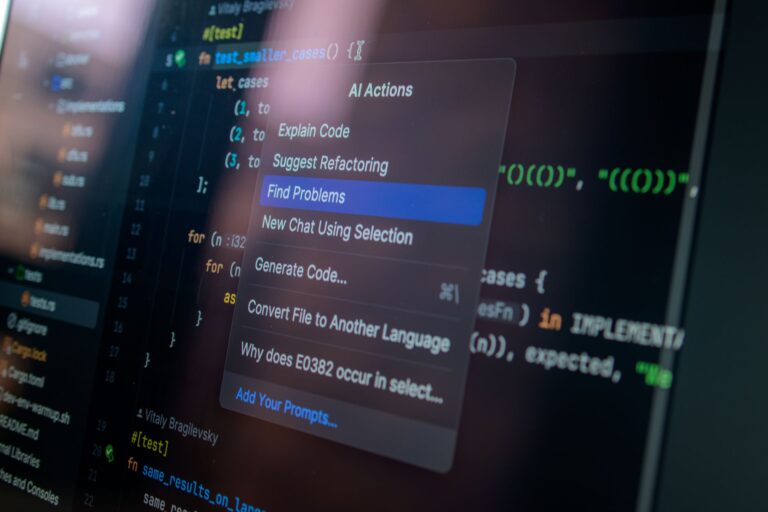
Why AI Coding Assistants Matter in 2026
The software development landscape has shifted dramatically over the past few years. Teams now expect to ship features faster, maintain higher code quality, and adapt to ever‑changing technology stacks without expanding headcount. AI‑driven coding tools have become the quiet workhorses that make this possible, turning repetitive tasks into near‑instant actions and surfacing insights that would otherwise require a deep dive into documentation or a senior engineer’s schedule.
Beyond the obvious productivity boost, these tools are reshaping how developers learn, collaborate, and even think about problem solving. In 2026, AI assistance is no longer a novelty; it’s a standard part of the development pipeline, embedded in IDEs, CI/CD systems, and even version‑control platforms.
Integrated IDE Helpers: Copilot and Beyond
When GitHub Copilot first arrived, it introduced the concept of “code completion on steroids.” Today, its core technology—OpenAI’s Codex model—has been refined through years of feedback, resulting in more context‑aware suggestions, better handling of large codebases, and tighter integration with popular editors like VS Code, JetBrains IDEs, and Neovim.
Other notable players have entered the arena:
- Google Gemini for Code – leverages Gemini’s multimodal foundation to understand both code and natural‑language documentation, offering suggestions that respect project conventions.
- Amazon CodeWhisperer – tightly coupled with AWS services, it excels at generating infrastructure‑as‑code snippets and SDK calls for cloud‑native workloads.
- Codeium – a free‑first offering that provides lightweight, on‑device inference, making it attractive for privacy‑sensitive environments.
What sets the best IDE helpers apart now is their ability to keep the entire project context in memory: they scan imports, recent commits, and even issue tracker descriptions to tailor suggestions. The result is less “guess‑the‑API” and more “complete the function exactly as you intended.”
Specialized Code Review & Security Tools
While autocomplete engines speed up writing, AI‑enhanced code review tools focus on catching bugs, security flaws, and style violations before they reach production. Companies have moved from rule‑based linters to models that can reason about data flow and potential exploits.
Two categories dominate the market:
- Static analysis with generative feedback – tools such as DeepCode (now part of Snyk) combine traditional static analysis with large‑language‑model explanations, offering remediation steps in plain English.
- Automated security reviewers – products like GitHub Advanced Security’s AI scanner and Amazon Inspector’s code‑level checks use trained models to highlight injection risks, insecure deserialization, and misconfigurations.
What developers appreciate most is the “human‑like” review comments that include code snippets, references to relevant standards (e.g., OWASP Top 10), and links to official documentation. This reduces the back‑and‑forth that typically slows down pull‑request cycles.
Low‑Code & No‑Code Platforms Powered by AI
Not every development effort requires a full‑stack engineer. In 2026, low‑code and no‑code platforms have become smarter thanks to AI, allowing product managers, designers, and even marketers to prototype functional applications without writing a single line of traditional code.
Key platforms that have integrated generative AI include:
- Microsoft Power Platform – AI Builder can generate custom connectors and Power Apps formulas from plain‑language prompts.
- Retool AI – offers a “Prompt‑to‑Component” mode, turning user stories into UI widgets and backend queries.
- Appsmith – uses a conversational assistant to suggest database schemas and API integrations based on project goals.
These solutions are particularly valuable for internal tools, dashboards, and rapid MVPs, where speed outweighs the need for hand‑crafted architecture. The AI layer handles routine data‑validation logic, basic CRUD operations, and even simple business rules, freeing developers to focus on complex domain problems.
Collaborative AI: Pair Programming in Remote Teams
Remote work has cemented the importance of asynchronous collaboration. AI pair programmers now act as a shared teammate that can be summoned in a chat channel, a pull‑request comment, or directly within an IDE.
Popular implementations include:
- Claude 2 in Slack – integrates with development channels to answer code‑specific questions, suggest refactors, or generate test cases on demand.
- Replit AI – provides a live “ghost” collaborator that watches the code you type and offers inline suggestions, complete with runnable snippets.
- Cursor IDE – a lightweight editor built around an AI assistant that can navigate the project, run debugging sessions, and even write documentation in real time.
The biggest advantage of these tools is consistency. When a team member is on vacation or in a different time zone, the AI can keep the momentum by answering queries and ensuring code adheres to the repository’s standards. Moreover, the conversational interface encourages knowledge sharing, as the AI often cites external resources or internal wiki pages when explaining a concept.
Choosing the Right Tool for Your Workflow
With a growing ecosystem, selecting the best AI coding tool depends on several practical factors rather than headline features alone. Below is a short checklist to help teams evaluate options:
- Integration depth – Does the tool work natively with your preferred IDE or CI pipeline?
- Data privacy – Are code snippets processed on‑device, or sent to cloud services? Consider compliance requirements for proprietary code.
- Customization – Can you fine‑tune the model with your own codebase or enforce organization‑specific style guides?
- Cost model – Is the pricing based on usage, seat licenses, or a freemium tier that scales with the team?
- Support for your stack – Does the assistant understand the languages, frameworks, and libraries you rely on?
Many organizations adopt a hybrid approach: a general‑purpose assistant like Copilot for day‑to‑day coding, a specialized security reviewer for pull‑request gates, and a low‑code AI platform for internal tooling. This layered strategy balances flexibility with governance, ensuring that AI augments human expertise rather than replaces it.
The Road Ahead: What to Expect Beyond 2026
Looking forward, several trends are already emerging that will shape the next generation of AI coding tools:
- Model transparency – Vendors are investing in explainable AI, allowing developers to see why a suggestion was made and to trace it back to training data.
- Multimodal debugging – Future assistants will combine code, logs, and performance metrics in a single view, offering “debug‑by‑conversation” experiences.
- Community‑driven fine‑tuning – Open source ecosystems are building pipelines that let companies share anonymized model updates, creating a virtuous cycle of improvement.
As these capabilities mature, the distinction between a developer and an AI‑augmented collaborator will blur. The most successful teams will be those that treat AI as a partner—one that amplifies creativity, enforces quality, and keeps the delivery pipeline humming.
