
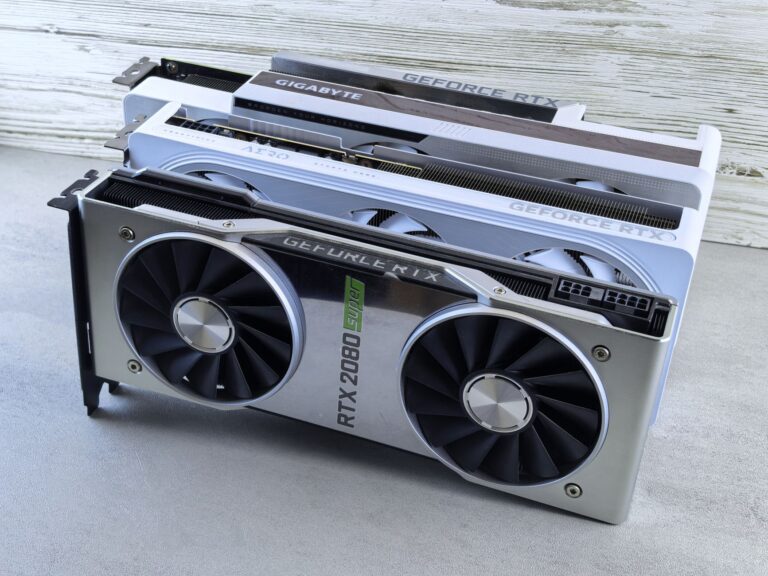
Understanding the Core Purpose of a GPU
A graphics processing unit, or GPU, is a specialized electronic circuit designed to accelerate the creation and manipulation of images and visual data. While a central processing unit (CPU) handles a wide range of tasks—running the operating system, managing I/O, and executing application code—a GPU focuses on a narrower, but computationally intensive, set of operations: transforming geometric data into pixels that can be displayed on a screen.
The distinction is not merely about speed; it’s about how the hardware is organized. CPUs are built with a few powerful cores that excel at sequential, branching logic. GPUs, by contrast, contain hundreds or thousands of smaller cores that can perform the same operation on many pieces of data simultaneously. This “massively parallel” architecture makes GPUs especially adept at the matrix and vector math that underlies modern graphics pipelines.
A Brief History: From Gaming to General Computing
The first GPUs appeared in the late 1990s as 3‑D accelerators for video games. Early cards such as the NVIDIA RIVA TNT and the 3dfx Voodoo series off‑loaded polygon rasterization and texture mapping from the CPU, delivering smoother frame rates and more realistic graphics. As game developers pushed for higher resolutions, complex shading, and realistic lighting, GPU capabilities expanded dramatically.
In the mid‑2000s a pivotal shift occurred: researchers discovered that the same parallel hardware could accelerate non‑graphics workloads. The term “GPGPU” (general‑purpose computing on GPUs) entered the lexicon, and programming frameworks like CUDA (introduced by NVIDIA in 2006) and OpenCL (released by the Khronos Group in 2009) made it possible for developers to write code that runs directly on the GPU’s cores. What began as a gaming‑centric component quickly became a versatile compute engine for scientific simulation, data analytics, and, more recently, artificial intelligence.
How GPUs Work: Parallelism and Architecture
At the heart of a modern GPU is a collection of streaming multiprocessors (SMs) or compute units, each containing dozens of execution cores. When a program launches a kernel—a function designed for parallel execution—the GPU schedules thousands of threads across these cores. Because the threads follow the same instruction path, the hardware can keep the pipelines filled and achieve high throughput.
Memory hierarchy also plays a crucial role. GPUs typically feature a high‑bandwidth, relatively large “global” memory (often referred to as VRAM), a small but extremely fast shared memory within each SM, and a set of registers per thread. Efficient algorithms must orchestrate data movement so that most of the heavy lifting occurs in the fast shared memory, minimizing costly trips to global memory.
This design contrasts with a CPU’s deep cache hierarchy and out‑of‑order execution engine, which aim to reduce latency for a small number of threads. In a GPU, the goal is to hide latency by keeping a massive number of threads busy, swapping in new work whenever one finishes a memory fetch.
Key Technologies that Power Modern GPUs
Several software and hardware innovations have turned GPUs into the backbone of today’s compute landscape.
- CUDA: NVIDIA’s proprietary parallel computing platform provides a mature ecosystem of libraries, debugging tools, and compiler support. It remains the dominant interface for deep‑learning frameworks such as TensorFlow and PyTorch.
- OpenCL: An open standard maintained by the Khronos Group, OpenCL enables code to run on GPUs from multiple vendors, as well as on CPUs, FPGAs, and other accelerators.
- Vulkan and DirectX 12: Low‑overhead graphics APIs that give developers finer control over GPU resources, reducing driver overhead and improving performance in both games and compute workloads.
- Ray‑Tracing Cores: Introduced in recent generations, dedicated hardware for tracing light paths in real time has transformed visual fidelity in games and professional visualization.
- Tensor Cores: Specialized matrix multiplication units designed for the mixed‑precision arithmetic that powers modern AI inference and training.
Real‑World Uses Beyond Gaming
While gaming continues to be a major driver of GPU development, the range of applications has broadened dramatically. Here are some of the most impactful areas where GPUs are now essential:
- Artificial Intelligence: Training large neural networks involves billions of matrix multiplications; GPUs cut training time from weeks to days, and in some cases to hours.
- Scientific Simulation: Climate modeling, molecular dynamics, and astrophysics rely on GPUs to solve complex differential equations at scale.
- Video Processing: Real‑time encoding, transcoding, and effects rendering benefit from GPU acceleration, enabling smoother streaming and faster post‑production.
- Data Analytics: GPUs accelerate database queries, graph processing, and machine‑learning inference directly inside data warehouses.
- Autonomous Systems: Self‑driving cars and drones use GPUs for on‑board perception, running computer‑vision models that interpret sensor data in milliseconds.
Each of these domains leverages the same core principle that makes GPUs powerful for graphics: the ability to perform the same operation on many data elements at once.
Choosing a GPU: What Matters for Different Users
Not every buyer needs the highest‑end graphics card on the market. The right GPU depends on workload, budget, and system constraints.
Gaming enthusiasts typically look for high clock speeds, abundant VRAM (4 GB – 12 GB for most modern titles), and support for the latest APIs like DirectX 12 and ray tracing. Creative professionals such as video editors or 3‑D artists prioritize memory bandwidth and large VRAM buffers to handle high‑resolution textures and 8K video streams.
For AI researchers and data scientists, the presence of tensor cores, driver stability for compute workloads, and compatibility with deep‑learning libraries are paramount. In contrast, a desktop workstation for software development may benefit more from a balanced CPU‑GPU combo, where the GPU handles occasional compile‑time acceleration but the CPU remains the primary workhorse.
Power consumption, cooling solutions, and driver ecosystem are also critical considerations. A GPU that draws 300 W or more will require a robust power supply and adequate airflow, while enterprise‑grade cards often come with passive cooling designed for data‑center environments.
The Future Landscape of GPU Computing
Looking ahead, GPUs are poised to become even more integrated with the rest of the computing stack. Chiplet architectures—where multiple smaller dies are interconnected—promise to scale core counts without the yield challenges of monolithic silicon. Simultaneously, tighter CPU‑GPU coupling, exemplified by technologies like AMD’s Infinity Fabric and Intel’s Xe‑HP, aims to reduce data movement latency, blurring the line between “processor” and “accelerator.”
On the software side, abstractions such as SYCL (a higher‑level wrapper over OpenCL) and emerging compiler technologies aim to make heterogeneous programming less burdensome. As AI models continue to grow, hardware vendors are investing in dedicated AI accelerators, but GPUs remain the most flexible platform for a wide range of workloads.
In the consumer space, real‑time ray tracing and AI‑driven upscaling (e.g., NVIDIA’s DLSS) are becoming standard features in new games, pushing GPUs toward a dual role: delivering both visual fidelity and compute horsepower. Meanwhile, the rise of cloud gaming services shows how GPUs can be virtualized, delivering high‑performance graphics to devices that lack native hardware.
All of these trends suggest that the GPU will remain a central pillar of modern computing for years to come, evolving from a graphics‑only device into a universal engine for parallel processing across entertainment, science, and industry.
