
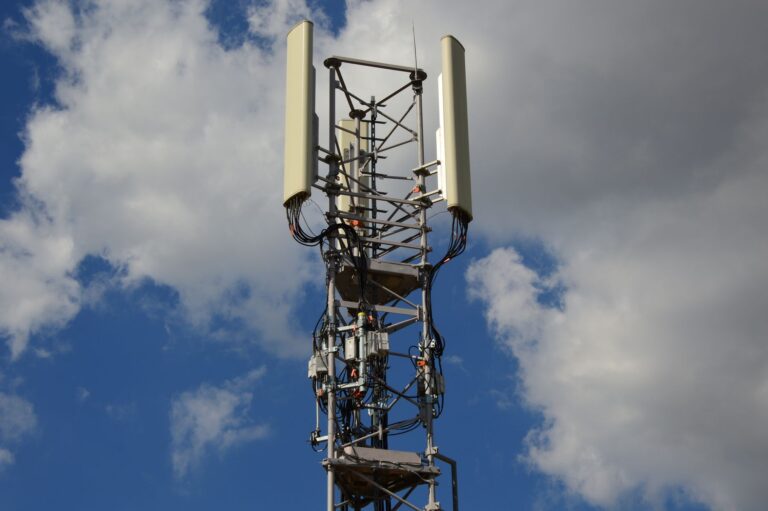
What 4G Actually Is
Fourth‑generation mobile networks, commonly known as 4G, arrived as a clear step up from the earlier 3G era. Built on the LTE (Long Term Evolution) standard, 4G was designed to deliver broadband‑like speeds, reliable video streaming, and seamless web browsing on the go. The core of 4G’s architecture relies on a fairly flat network topology, where data moves quickly between the user’s device and the nearest base station, then onto an IP‑based core that routes traffic to the internet.
From a user perspective, 4G meant being able to watch high‑definition video without constant buffering, participate in video calls with acceptable quality, and download apps in a matter of seconds. It also introduced the concept of “all‑IP” networks, moving voice calls onto data channels via VoLTE (Voice over LTE), which improved call clarity and reduced dropped calls.
How 5G Takes It Further
The fifth generation, or 5G, is not just a faster version of 4G; it is a fundamentally different approach to wireless communication. While 4G was primarily focused on enhancing mobile broadband, 5G adds two additional pillars: ultra‑reliable low‑latency communications (URLLC) and massive machine‑type communications (mMTC). This means the network is engineered to support everything from real‑time remote surgery to billions of connected sensors in a smart city.
Technically, 5G introduces a new radio interface (NR) that can operate across a broader range of frequencies, including the millimeter‑wave (mmWave) bands that were previously unused for mobile services. It also employs advanced antenna technologies like massive MIMO (multiple‑input multiple‑output) and beamforming, which focus signal energy directly toward a device rather than broadcasting it uniformly in all directions.
Speed vs. Latency: Why Both Matter
When people talk about 5G, speed is the headline grabber. Indeed, the higher frequency bands can support data rates that dwarf those of 4G, making large‑file transfers and high‑resolution streaming feel instantaneous. However, speed alone does not define the user experience.
Latency – the time it takes for data to travel from a device to the network and back – is equally critical. 4G typically delivers latency measured in tens of milliseconds, which is fine for web browsing and video calls. 5G aims to reduce that figure to single digits, opening the door for applications that need near‑real‑time feedback, such as augmented reality gaming, autonomous vehicle coordination, and industrial robotics.
In practical terms, a lower latency means a smoother remote‑control experience for drones, more responsive haptic feedback in virtual reality, and quicker reaction times for safety‑critical systems.
Spectrum and Architecture: The Hidden Engine
One of the most significant differences lies in the way each generation uses radio spectrum. 4G largely occupies the sub‑6 GHz bands, which provide a good balance of coverage and capacity but are already crowded in many urban areas. 5G expands the usable spectrum in two ways:
- Sub‑6 GHz (mid‑band): Offers broader coverage and better building penetration, serving as the workhorse for most early 5G deployments.
- Millimeter‑wave (high‑band): Provides massive bandwidth for ultra‑high‑speed links but has limited range and struggles with obstacles like walls or foliage.
To manage this diversity, 5G networks use a flexible, software‑defined architecture known as “network slicing.” Each slice is a virtual network tailored to a specific set of performance requirements—one slice might prioritize low latency for autonomous vehicles, while another emphasizes high throughput for mobile broadband users. This level of customization simply isn’t possible with the monolithic design of 4G.
Real‑World Use Cases That Matter
While both 4G and 5G enable everyday activities like messaging and streaming, the true value of 5G emerges in scenarios that demand either massive capacity or ultra‑low latency. Some of the most compelling examples include:
- Smart factories: Sensors and robots communicate instantly, allowing production lines to adapt on the fly without human intervention.
- Remote healthcare: High‑definition video combined with near‑real‑time data exchange enables doctors to perform diagnostics or even guide surgeries from thousands of miles away.
- Immersive entertainment: Cloud‑based gaming and AR/VR experiences become viable on mobile devices because the network can stream high‑resolution graphics with minimal lag.
- Connected transportation: Vehicles exchange safety messages in milliseconds, supporting advanced driver‑assistance systems and paving the way for fully autonomous fleets.
- Urban infrastructure: Citywide sensor networks monitor traffic flow, air quality, and energy usage, feeding data into AI platforms that optimize municipal services.
Many of these applications already have pilot projects underway, demonstrating that 5G is more than a marketing buzzword—it is becoming a foundational layer for the next wave of digital services.
What 5G Means for Everyday Devices
For the average consumer, the transition from 4G to 5G will feel incremental at first. Early 5G‑enabled smartphones support both sub‑6 GHz and mmWave bands, automatically falling back to 4G when 5G coverage is unavailable. This seamless handover ensures that users remain connected without needing to manually switch networks.
Battery life is a common concern, but modern 5G chipsets incorporate power‑saving techniques such as “idle mode” signaling and adaptive antenna usage, which mitigate the impact of higher data rates. In fact, because 5G can deliver the same amount of data in a shorter burst, devices may spend less time with the radio active, potentially balancing out power consumption.
Another subtle shift is the rise of “edge computing.” By processing data closer to the device—often at a nearby 5G base station—applications can achieve lower latency without relying on distant cloud servers. This is already evident in mobile gaming platforms that offload heavy graphics rendering to edge nodes, delivering smoother gameplay on modest hardware.
Looking Ahead: When 5G Becomes the New Normal
We are still in the early stages of 5G rollout. Most major carriers have focused on deploying sub‑6 GHz coverage in densely populated areas, with mmWave pockets in city centers, stadiums, and campuses. As network operators continue to expand and refine their slicing capabilities, the distinction between 4G and 5G will blur for end users—much like the transition from 3G to 4G felt natural once the coverage was ubiquitous.
The true breakthrough will occur when industry verticals fully integrate 5G’s unique qualities into their operations. Expect to see more factories running on private 5G slices, autonomous delivery drones navigating urban skies, and augmented reality overlays becoming a routine part of navigation apps.
Until that point, 4G will remain a reliable workhorse, especially in regions where 5G infrastructure is still sparse. However, the momentum is clear: a world where billions of devices exchange data instantly, securely, and efficiently is no longer a distant vision—it is the emerging reality of 5G.
