
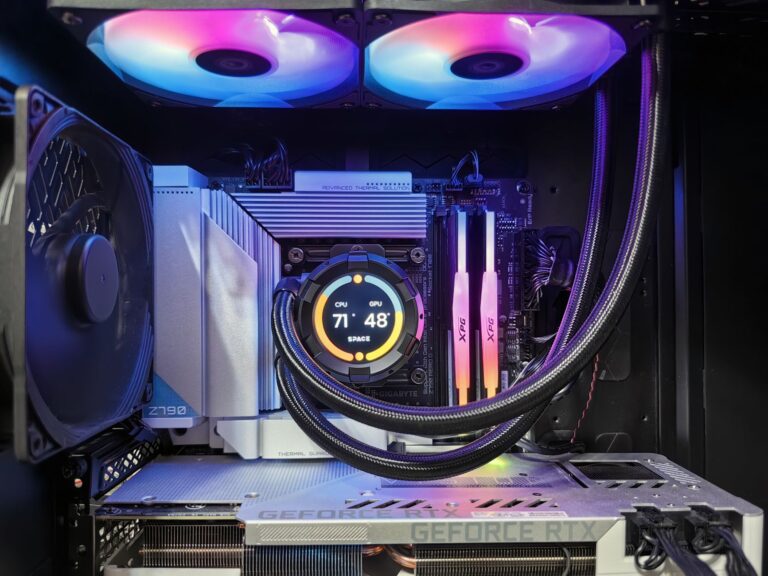
Understanding the Core: What a CPU Really Is
A central processing unit (CPU) has been the workhorse of computers for decades. Designed as a versatile, general‑purpose processor, the CPU can handle a wide array of tasks—from running operating system services to executing complex business logic. Its architecture is optimized for low latency, with a relatively small number of powerful cores that excel at sequential execution and rapid context switching. Modern CPUs also incorporate sophisticated features such as out‑of‑order execution, branch prediction, and large caches to squeeze out as much performance as possible from each instruction cycle.
Because of this flexibility, the CPU remains the default choice for tasks that require quick decision‑making, branching logic, or handling many small, unrelated operations. Typical workloads include web servers, databases, office applications, and the orchestration of other specialized processors like GPUs and NPUs.
The Rise of the GPU: From Graphics to General Compute
Graphics processing units (GPUs) originated as dedicated hardware for rendering images on screens. Their hallmark is a massive array of relatively simple cores that can perform the same operation on many data points simultaneously—a model known as SIMD (single instruction, multiple data). This parallelism made GPUs ideal for rasterizing triangles, shading pixels, and handling texture mapping.
In the early 2010s, developers discovered that the same parallel structure could accelerate non‑graphics workloads, especially those involving large matrix and vector calculations. This gave birth to the field of GPGPU (general‑purpose GPU) computing, with APIs like CUDA and OpenCL allowing programmers to offload scientific simulations, video encoding, and deep‑learning training to the GPU.
Today, GPUs are a staple in data centers for AI training, high‑performance computing (HPC), and even cryptocurrency mining. Their strength lies in handling workloads that can be broken down into many identical, independent tasks—think multiplying large matrices or applying convolution filters across an image.
Enter the NPU: Neural Processing Tailored for AI
Neural processing units (NPUs) are a newer class of accelerators built specifically for artificial‑intelligence inference and, increasingly, training. While GPUs are excellent at parallel math, they remain a general‑purpose parallel engine. NPUs, by contrast, embed architectural shortcuts that map directly onto the operations most common in neural networks, such as tensor multiplication, activation functions, and quantization.
Typical NPU designs include dedicated systolic arrays, on‑chip memory hierarchies optimized for weight storage, and support for low‑precision arithmetic (e.g., 8‑bit integers). These features allow NPUs to achieve higher throughput per watt for AI workloads than a GPU or CPU would, which is why they are now appearing in smartphones, edge devices, and increasingly in cloud servers.
Because NPUs focus on inference, they often come with software stacks that streamline model deployment, including model conversion tools and runtime libraries that handle tasks like batch management and hardware scheduling.
Architectural Differences at a Glance
- Core Design: CPUs have few, complex cores; GPUs have thousands of simpler cores; NPUs use specialized matrix‑oriented units.
- Memory Hierarchy: CPUs rely on large caches for low‑latency access; GPUs use high‑bandwidth memory (HBM or GDDR) and shared memory; NPUs integrate on‑chip weight buffers to minimize data movement.
- Instruction Set: CPUs execute a broad ISA (e.g., x86, ARM); GPUs expose a parallel programming model (CUDA, OpenCL); NPUs provide AI‑focused instructions for convolutions, activation functions, and quantized math.
- Power Efficiency: CPUs prioritize versatility; GPUs balance performance with power; NPUs aim for maximum AI throughput per watt.
- Typical Use Cases: CPUs – OS, general apps, orchestration; GPUs – graphics, scientific simulation, AI training; NPUs – AI inference, real‑time vision, speech processing.
Choosing the Right Processor for Your Workload
When deciding which processor to employ, consider three key dimensions: workload characteristics, latency requirements, and power budget.
Workload characteristics are the most decisive factor. If your application involves many branching decisions, complex control flow, or requires fast single‑threaded performance, the CPU remains the optimal choice. For tasks that can be expressed as massive parallel operations—such as rendering, video transcoding, or large‑scale matrix multiplication—a GPU will typically deliver superior performance.
Latency requirements also matter. Real‑time inference on a mobile device, for example, benefits from an on‑chip NPU that can process a neural network in a few milliseconds while keeping battery drain low. In contrast, batch processing of large models in a data‑center environment may tolerate higher latency, making a GPU or even a cluster of CPUs viable.
Power budget is especially critical for edge and mobile deployments. NPUs are engineered to squeeze the most AI work out of the least energy, often outperforming GPUs on a per‑watt basis for inference. Conversely, desktop or server environments can afford the higher power draw of GPUs when they need raw computational muscle.
Software Ecosystems: From Code to Execution
The hardware choices are only half the story; the software stack determines how effectively you can leverage each processor. CPUs enjoy a mature ecosystem with compilers like GCC and Clang, and a plethora of libraries for everything from linear algebra to web serving.
GPUs rely heavily on vendor‑provided SDKs. NVIDIA’s CUDA ecosystem, for instance, includes libraries such as cuBLAS and cuDNN that accelerate common deep‑learning primitives. Open-source alternatives like ROCm aim to provide comparable tooling for other hardware vendors.
NPUs, being newer, often come with specialized runtimes that handle model quantization, graph optimization, and hardware scheduling. Many chip manufacturers provide conversion tools that take a TensorFlow or ONNX model and generate an optimized binary for their NPU. In some cases, the NPU runtime can be invoked directly from higher‑level frameworks, making integration relatively seamless.
Looking Ahead: The Era of Heterogeneous Computing
Rather than viewing CPUs, GPUs, and NPUs as competitors, the industry is increasingly treating them as complementary pieces of a heterogeneous compute fabric. Modern servers now feature CPUs paired with one or more GPUs, while edge devices might combine a CPU with an NPU and a modest GPU for graphics.
This trend is driven by the desire to match each part of an application to the processor that handles it most efficiently. A typical AI‑enabled service could use the CPU to manage request routing, the GPU to train models offline, and the NPU to serve those models at the edge with minimal latency.
Looking forward, we can expect tighter integration at both the hardware and software levels. Initiatives such as unified memory architectures aim to reduce the data‑movement overhead between processors, while emerging programming models strive to abstract away the underlying hardware, allowing developers to write once and run anywhere.
In short, understanding the distinct strengths of CPUs, GPUs, and NPUs empowers engineers and decision‑makers to build systems that are faster, more power‑efficient, and better suited to the tasks at hand. As the line between these processors continues to blur, the real challenge—and opportunity—will be orchestrating them in harmony.
