
Understanding the Ryzen AI Landscape
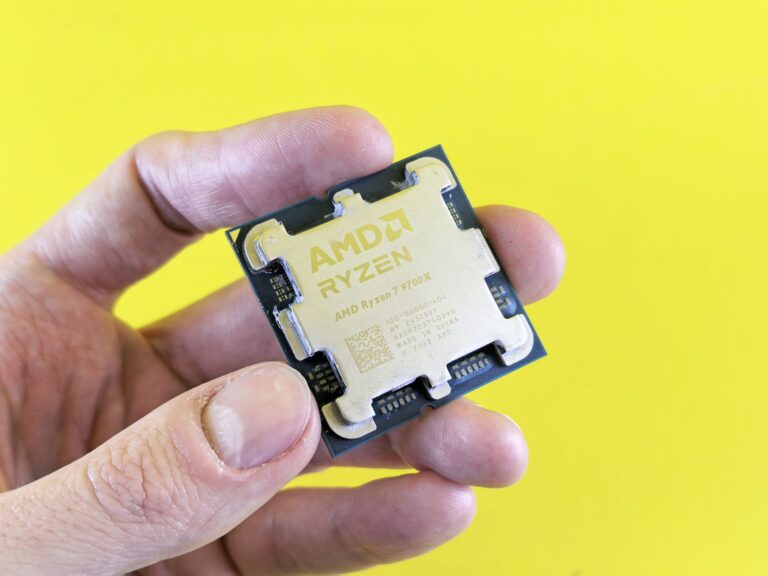
When AMD unveiled the Ryzen AI line, it signaled a clear intent to bring on‑chip artificial‑intelligence acceleration to mainstream desktop and mobile platforms. Unlike dedicated AI accelerators that sit alongside a CPU, Ryzen AI processors integrate neural‑network engines directly into the silicon, sharing memory with the cores and promising lower latency for AI workloads. This integration reflects a broader industry trend where AI is no longer confined to cloud servers but is becoming a first‑class citizen in consumer devices.
What Sets Ryzen AI Apart from Traditional CPUs?
The core difference lies in the addition of a purpose‑built AI engine—often referred to as the “Neural Net Processing Unit” (NPU). While the standard Zen 4 cores handle general‑purpose tasks, the NPU is optimized for matrix‑multiply operations that dominate deep‑learning inference. Because the AI engine shares the same cache hierarchy, data does not need to travel across a peripheral bus, which can shave milliseconds off real‑time tasks like voice transcription or image enhancement.
From a developer’s perspective, AMD provides a software stack that includes drivers and libraries compatible with popular frameworks such as ONNX Runtime and TensorFlow Lite. This means existing models can often be ported with minimal changes, allowing developers to leverage the hardware acceleration without rewriting code from scratch.
Real‑World Use Cases: Where the Benefits Show Up
Not every PC user will see a dramatic performance boost from an AI‑enabled processor, but several scenarios stand out:
- Creative workflows: Applications that upscale video, enhance photos, or apply generative effects can offload these tasks to the NPU, freeing the CPU for UI responsiveness.
- Productivity tools: Real‑time transcription, language translation, and smart email summarization run faster when the inference engine is close to the data.
- Gaming and interactive media: Some modern games experiment with AI‑driven NPC behavior or upscaling techniques like DLSS‑style image reconstruction, which can benefit from on‑chip acceleration.
In each case, the key advantage is reduced latency. When an AI operation completes in a few milliseconds rather than tens or hundreds, the overall user experience feels smoother.
Performance vs. Power: The Efficiency Equation
One of the most compelling arguments for integrated AI hardware is power efficiency. Dedicated external GPUs or external AI accelerators often draw significant wattage, especially under sustained load. The Ryzen AI NPU, however, is designed to operate within the same thermal envelope as the CPU cores. Early benchmark reports from reputable tech outlets suggest that AI inference tasks on Ryzen AI can consume a fraction of the power required by a high‑end discrete GPU performing the same operation.
This efficiency translates to tangible benefits for laptops, where battery life is a critical factor. Users running AI‑enhanced video calls or local speech‑to‑text conversion may notice longer runtimes compared to systems that rely solely on the CPU.
How Does Ryzen AI Compare to Competing Solutions?
Intel’s Xeon Scalable processors and Apple’s M‑series chips also embed AI accelerators. While each approach has its strengths, Ryzen AI distinguishes itself through a balance of traditional CPU performance and AI capability without demanding a premium price tier. The architecture leverages AMD’s proven Zen core efficiency, which tends to deliver strong multi‑threaded performance, while the NPU adds a specialized lane for inference.
It’s worth noting that the competitive landscape is rapidly evolving. Nvidia’s RTX GPUs, for example, provide industry‑leading AI throughput but are primarily targeted at workstation and gaming segments where the price and power budgets differ. In contrast, Ryzen AI aims at the sweet spot of mainstream desktops and laptops, offering a more accessible entry point for developers and enthusiasts.
Cost Considerations and Value Proposition
When evaluating whether a Ryzen AI processor is “worth it,” the primary factor is the expected workload. For users who regularly engage with AI‑heavy applications—such as video editors using AI upscaling, developers building on‑device inference models, or professionals relying on real‑time language tools—the added performance can justify the incremental cost of an AI‑enabled SKU.
Conversely, if a user’s primary activities revolve around standard office tasks, web browsing, or legacy gaming, the benefits may be marginal. In those cases, a non‑AI Ryzen processor can deliver comparable day‑to‑day performance at a lower price point.
Another aspect to weigh is future‑proofing. As AI features become more embedded in software ecosystems, having hardware ready to accelerate those workloads can extend the useful life of a system, potentially delaying the need for an upgrade.
Looking Ahead: The Role of On‑Chip AI in the Consumer Space
Beyond the immediate performance gains, the inclusion of AI engines in mainstream CPUs hints at a broader shift. Software developers are increasingly designing applications that assume hardware acceleration is available. Whether it’s photo apps that automatically remove backgrounds, browsers that render web pages with AI‑enhanced compression, or operating systems that adapt UI elements based on user behavior, the underlying hardware will determine how fluid these experiences feel.
AMD’s roadmap suggests that future generations will continue to expand the AI engine’s capabilities, possibly offering higher precision compute and broader software support. For early adopters, investing in a Ryzen AI platform can serve as a testing ground for emerging AI‑centric features, giving them a head start in a market that rewards innovation.
Bottom Line: Is a Ryzen AI Processor Worth It?
Answering that question ultimately depends on three pillars: workload relevance, power efficiency, and long‑term ecosystem alignment. If you:
- Regularly use applications that incorporate AI inference (e.g., video upscaling, real‑time transcription, generative art tools),
- Value lower power draw for AI tasks—especially in portable devices,
- Prefer a platform that is likely to stay compatible with future AI‑enhanced software,
then a Ryzen AI processor offers a compelling mix of performance and efficiency that can justify the additional investment.
For users whose computing habits remain largely non‑AI, the traditional Ryzen line still provides excellent performance at a lower cost. As the AI software ecosystem matures, the advantage of on‑chip acceleration will become clearer, and the decision may tilt in favor of AI‑enabled silicon for an increasingly wide audience.
