
Defining Autonomous AI
Autonomous artificial intelligence refers to systems that can operate, make decisions, and adapt without direct, real‑time human oversight. While every AI model requires some level of programming or training, an autonomous AI goes a step further: it continuously assesses its environment, evaluates possible actions, and executes the most appropriate one on its own. The term is often used in contrast to “assistant‑style” AI, which waits for a user prompt before responding. In practice, autonomy is a spectrum—from simple rule‑based automation to fully self‑directing agents that can set sub‑goals, learn from mistakes, and improve over time.
How It Differs From Traditional AI
Traditional AI applications, such as recommendation engines or chatbots, are typically reactive. They process inputs, apply a pre‑defined model, and produce an output. The system’s scope is limited to the tasks it was explicitly trained for, and any deviation from expected inputs usually results in failure or a fallback to a human operator.
Autonomous AI, by contrast, incorporates three additional capabilities:
- Self‑monitoring: continual assessment of performance and environment.
- Goal management: ability to prioritize and re‑prioritize objectives based on changing conditions.
- Adaptive learning: updating its own models or strategies without external retraining cycles.
These qualities allow an autonomous system to handle open‑ended scenarios, such as navigating a busy city street or managing a dynamic supply chain, where the exact sequence of events cannot be predicted in advance.
Core Technologies Behind Autonomy
The emergence of autonomous AI rests on a convergence of several mature and emerging technologies:
- Reinforcement learning (RL): Agents learn optimal behavior through trial and error, receiving rewards for actions that bring them closer to a goal.
- Probabilistic modeling: Techniques like Bayesian networks help systems quantify uncertainty and make decisions under incomplete information.
- Sensor fusion: Combining data from cameras, lidar, radar, and other sources creates a richer perception of the surrounding world.
- Edge computing: Processing power located close to the data source reduces latency, essential for real‑time autonomy.
- Explainable AI (XAI): Methods that surface the reasoning behind decisions, helping engineers debug and regulators assess safety.
When these components are integrated, they form a feedback loop: perception informs a model of possible actions, the model selects an action, execution generates new data, and the cycle repeats. Over time, the system refines its internal representation of cause and effect, edging closer to true autonomy.
Real‑World Applications Emerging Today
Several domains are already seeing autonomous AI move from research labs into everyday operations:
Transportation. Autonomous driving stacks combine perception, planning, and control to navigate complex traffic. While fully driverless taxis are not yet ubiquitous, many manufacturers offer advanced driver‑assistance features that handle lane keeping, adaptive cruise control, and emergency braking without driver input.
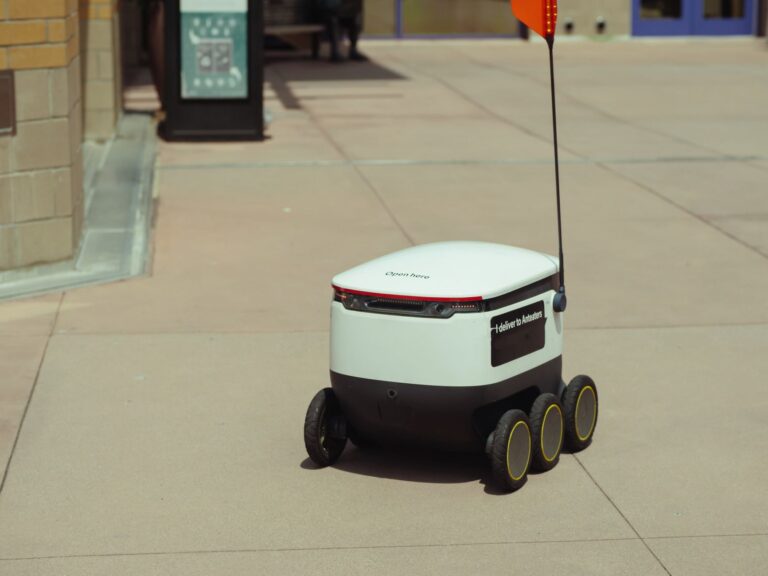
Robotics. Warehouse robots can map storage aisles, prioritize picking orders, and re‑route around obstacles without human commands. Similarly, agricultural robots use vision and reinforcement learning to identify weeds and apply targeted treatments.
Finance. Algorithmic trading platforms employ autonomous agents that monitor market signals and execute trades while continuously adjusting risk parameters. These systems operate within strict regulatory boundaries but illustrate how autonomy can function under high‑stakes constraints.
Healthcare. Autonomous AI assists in triaging patients by analyzing vital signs and imaging data, flagging cases that require immediate attention. In surgical settings, robots can maintain steady instrument positioning, adapting in real time to subtle patient movements.
Ethical and Regulatory Landscape
With autonomy comes responsibility. Stakeholders are wrestling with questions about accountability, transparency, and fairness. If an autonomous vehicle misjudges a pedestrian’s intent, who is liable—the manufacturer, the software developer, or the owner? Regulatory bodies worldwide are drafting frameworks that require safety validation, audit trails, and, increasingly, explainability for autonomous systems.
Many organizations adopt a set of guiding principles:
- Human oversight must be possible and clearly defined.
- Systems should be designed to avoid bias and ensure equitable outcomes.
- Data used for training must be sourced responsibly, respecting privacy and consent.
- Continuous monitoring and periodic third‑party audits are essential for long‑term safety.
These guidelines aim to balance innovation with public trust, recognizing that autonomous AI will only thrive when society feels comfortable delegating critical decisions to machines.
Challenges on the Road to Full Autonomy
Despite impressive progress, several technical and societal hurdles remain:
- Edge‑case handling: Rare but high‑impact scenarios—such as unexpected road constructions or sudden sensor failures—can still cause autonomous systems to falter.
- Robustness to adversarial inputs: Small, intentional perturbations to sensor data can mislead perception models, a concern for safety‑critical applications.
- Scalable validation: Testing every possible situation in the real world is infeasible; simulation environments must be sufficiently realistic to serve as reliable stand‑ins.
- Public perception: Incidents involving autonomous technology receive intense media scrutiny, influencing adoption rates and policy decisions.
Addressing these challenges requires interdisciplinary collaboration—engineers, ethicists, legal experts, and end users must work together to define acceptable risk thresholds and develop mitigation strategies.
Looking Ahead: What the Future May Hold
The trajectory of autonomous AI suggests a gradual shift from isolated, task‑specific agents to more general, interoperable systems. Imagine a fleet of delivery drones that coordinate with autonomous trucks, all managed by a city‑wide AI platform that optimizes traffic flow, energy consumption, and emergency response in real time. Such scenarios depend on advances in multi‑agent coordination, secure communication protocols, and standards that allow diverse autonomous entities to work together safely.
In the near term, we can expect continued expansion of “autonomy‑as‑a‑service” offerings, where businesses subscribe to cloud‑based platforms that provide the underlying decision‑making engine while retaining control over domain‑specific data. This model lowers the barrier to entry for smaller firms, accelerating the diffusion of autonomous capabilities across industries.
Ultimately, the promise of autonomous AI lies not in replacing humans but in extending our capacity to act. By handling routine, high‑velocity decisions, autonomous agents free people to focus on creativity, strategic planning, and empathy—skills that remain uniquely human. As the technology matures, thoughtful governance and transparent design will be key to ensuring that autonomy serves the broader public good.
