
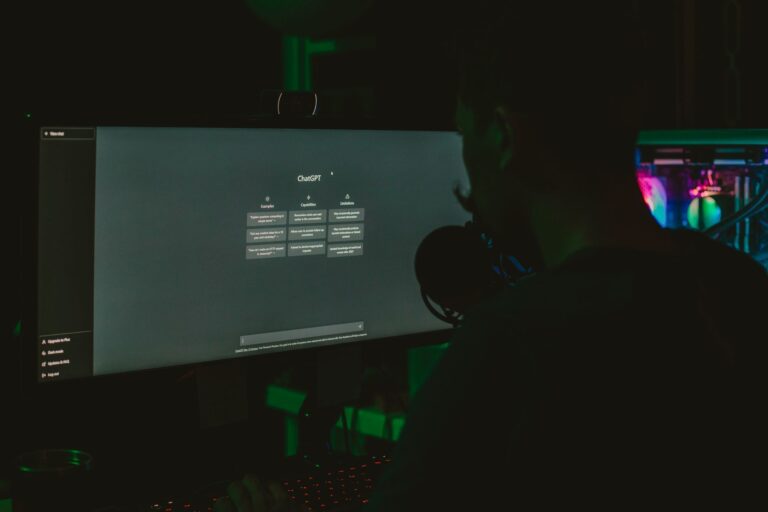
Defining the AI PC: Beyond a Traditional Desktop
The term “AI PC” is emerging as a shorthand for a personal computer that is purpose‑built—or at least purpose‑optimized—to run artificial‑intelligence workloads locally, without relying exclusively on cloud services. While any modern PC can technically run AI models using a CPU or a discrete graphics card, an AI PC distinguishes itself through a combination of hardware accelerators, software stacks, and user‑centric design choices that make AI tasks feel as natural as browsing the web or editing a document.
Key Hardware Elements That Make a PC “AI‑Ready”
When manufacturers talk about an AI PC, they are usually referring to three core hardware components that together accelerate the inference and training of neural networks:
- Dedicated AI accelerators: These can be integrated into the CPU (e.g., Intel’s Gaudi‑style matrix extensions), present as a separate chip on the motherboard (such as Apple’s Neural Engine), or appear as a specialized add‑in card (e.g., NVIDIA’s Tensor Core GPUs or AMD’s Radeon Instinct).
- High‑performance GPU: Modern graphics cards include tensor cores or similar units that excel at the matrix multiplications central to deep‑learning models. A PC with a GPU that supports mixed‑precision compute (FP16/FP32) can dramatically cut inference latency.
- Fast memory and storage: Large language models and vision models benefit from high‑bandwidth RAM (DDR5 or LPDDR5) and NVMe SSDs that reduce data‑transfer bottlenecks when loading model weights.
These components are often paired with a motherboard that offers PCIe 4.0 or 5.0 lanes, ensuring the accelerator can communicate with the rest of the system without being throttled.
Software Ecosystem: From Drivers to Development Kits
Hardware alone does not make a PC AI‑capable. The software stack turns raw compute power into usable AI functions. The most common layers include:
- Drivers and runtimes: NVIDIA’s CUDA and cuDNN, AMD’s ROCm, and Intel’s oneAPI provide low‑level access to the accelerator’s capabilities.
- Framework integrations: Popular deep‑learning libraries such as TensorFlow, PyTorch, and ONNX Runtime include optimizations for the specific hardware present in an AI PC.
- User‑friendly tools: Applications like Microsoft Copilot, Adobe’s generative features, and various AI‑enhanced video‑editing suites expose the power of local AI through simple GUIs, making the technology accessible to non‑developers.
Because these software layers are often open source or supported by large vendor ecosystems, users can choose between pre‑built applications and custom development environments, depending on their skill level and needs.
Real‑World Use Cases: Why a Local AI PC Matters
Running AI models locally offers advantages that are hard to replicate with cloud‑only solutions:
- Privacy and data sovereignty: Sensitive data—medical images, proprietary designs, or personal recordings—can stay on the user’s machine, reducing exposure to network breaches.
- Low latency: Tasks such as real‑time video enhancement, augmented‑reality overlays, or interactive voice assistants benefit from sub‑second response times that a local accelerator can deliver.
- Offline capability: In remote or bandwidth‑constrained environments, a self‑contained AI PC can continue to function without an internet connection.
- Cost predictability: For power users who run AI workloads regularly, a one‑time hardware investment can be more economical than ongoing cloud compute fees.
Examples range from indie game developers who embed AI‑driven NPC behavior directly into their titles, to photographers who use local diffusion models to upscale images without uploading them to a third‑party service.
How AI PCs Fit Into the Broader Computing Landscape
Historically, AI workloads have been the domain of data centers and specialized workstations. The rise of AI PC hardware signals a shift toward democratization. Several trends are converging to make this possible:
- Advances in chip design: Companies are integrating AI‑specific matrix multiplication units directly into consumer‑grade CPUs, blurring the line between “general‑purpose” and “AI‑specific” silicon.
- Software abstraction: Toolkits that automatically convert models to run on the most efficient available hardware reduce the technical barrier for end users.
- Consumer demand for AI features: Photo‑editing apps, video‑calling platforms, and even browsers now offer AI‑enhanced options, creating a feedback loop that encourages hardware manufacturers to embed AI capabilities.
In practice, an AI PC is often marketed alongside traditional gaming rigs or creator workstations, emphasizing that AI is becoming a mainstream performance metric—much like rasterization performance was a decade ago.
Challenges and Considerations When Buying an AI PC
While the concept is exciting, prospective buyers should keep several practical points in mind:
- Thermal design: AI accelerators can generate significant heat under sustained loads. Adequate cooling—air or liquid—ensures stable performance.
- Power consumption: High‑end GPUs and dedicated AI chips draw more wattage than a typical desktop. Ensure the power supply unit (PSU) has enough headroom.
- Software compatibility: Verify that the AI tools you plan to use support the specific hardware. For example, some newer AI chips may still be awaiting full driver support in mainstream frameworks.
- Future‑proofing: AI models are growing in size and complexity. Selecting a platform with expandable PCIe slots or support for next‑generation memory standards can extend the machine’s useful life.
Because the market is still evolving, many manufacturers offer modular configurations that let users upgrade the AI accelerator separately from the rest of the system.
The Outlook: From Hobbyist Labs to Everyday Desktops
In the next few years, the AI PC is likely to become a standard option rather than a niche variant. Several developments will drive this transition:
- Edge AI proliferation: As smart‑home devices, autonomous drones, and wearable tech rely more on on‑device inference, the demand for capable consumer‑grade AI hardware will rise.
- Model compression techniques: Researchers are making large models smaller and more efficient through quantization and pruning, which means even modest AI PCs will handle tasks that previously required server‑class hardware.
- Integrated ecosystems: Operating systems are beginning to expose AI capabilities at the OS level—think of built‑in voice assistants that can run custom plugins locally.
When these trends converge, the average user might find AI‑enhanced features baked directly into everyday applications: a spreadsheet that predicts formulas, a photo viewer that automatically removes background clutter, or a video chat that applies real‑time background replacement without any cloud processing.
Conclusion: The AI PC as a New Computing Paradigm
An AI PC is more than a collection of faster GPUs; it is a holistic platform where hardware, drivers, frameworks, and end‑user applications collaborate to bring artificial‑intelligence capabilities to the desktop. By keeping data local, reducing latency, and offering a flexible development environment, these machines empower creators, professionals, and enthusiasts to experiment with AI in ways that were previously confined to labs or costly cloud services.
For anyone who has ever felt limited by “upload‑to‑the‑cloud, wait, and download” cycles, the AI PC promises a more immediate, private, and controllable experience. As chip manufacturers continue to embed AI logic into everyday silicon and software ecosystems mature, the distinction between a “regular” PC and an “AI” PC will blur—making intelligent computing a default feature of the next generation of personal computers.
