
Understanding the Basics: What Makes a Data Center “AI‑Focused”?
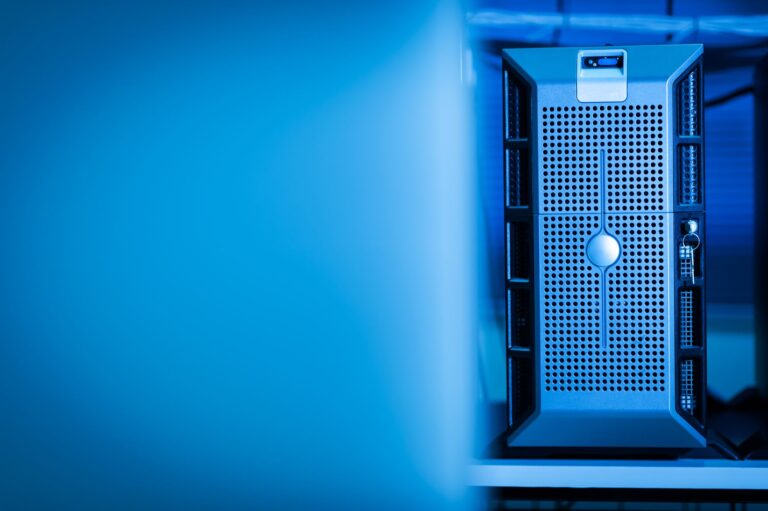
At its core, a data center is a facility that houses the servers, storage systems, networking gear, and supporting infrastructure needed to process and store digital information. An AI data center takes that concept a step further by optimizing every layer—from power delivery to cooling—to meet the intense compute, memory, and bandwidth demands of modern artificial‑intelligence workloads.
Traditional data centers were built around general‑purpose workloads such as web hosting, enterprise applications, and batch processing. Those workloads typically rely on a balanced mix of CPU cores, moderate memory footprints, and predictable I/O patterns. In contrast, AI workloads—think large language model training, image‑recognition inference, and real‑time recommendation engines—are dominated by:
- Massive parallelism, often requiring thousands of GPU or specialized accelerator cores.
- High‑throughput, low‑latency interconnects to move tensors between processors at speeds measured in terabytes per second.
- Large, high‑bandwidth memory pools (HBM, DDR5, and emerging memory‑centric architectures).
- Intensive power consumption, sometimes exceeding a megawatt per rack.
Because of these characteristics, an AI data center is not merely a collection of servers; it is an ecosystem deliberately engineered to sustain the extreme computational intensity of AI training and inference.
The Evolution: From General‑Purpose Clouds to Dedicated AI Hubs
The shift toward AI‑specific facilities began in earnest around the mid‑2010s, when deep‑learning models grew beyond what conventional CPUs could handle. Early adopters repurposed existing server farms with GPU add‑ons, but soon the inefficiencies became clear: power distribution was strained, cooling systems could not keep up, and network topologies created bottlenecks for the data‑intensive nature of model training.
Major cloud providers—Amazon Web Services, Microsoft Azure, Google Cloud—responded by creating “AI zones” or “GPU regions” that feature denser racks of NVIDIA A100s, AMD Instinct GPUs, or custom AI accelerators such as Google’s TPU. Simultaneously, hyperscale operators like Meta and OpenAI began constructing purpose‑built campuses where entire rows are devoted to AI clusters, with custom cooling loops and direct‑to‑silicon power delivery.
These developments have given rise to a new generation of data centers that differ in three key ways:
- Hardware density: Racks often contain 8‑12 GPUs per server, compared with 1‑2 in a typical cloud VM.
- Network fabric: High‑speed Ethernet (200 Gbps+), InfiniBand HDR, or proprietary silicon interconnects replace standard 25‑Gbps Ethernet.
- Energy architecture: Direct‑current (DC) power distribution, on‑site renewable generation, and advanced liquid‑cooling solutions are employed to reduce conversion losses and keep temperatures within tight tolerances.
Key Architectural Pillars of an AI Data Center
Building an AI data center involves a coordinated approach across several layers. Below are the most critical components and why they matter.
1. Compute Engines: GPUs, TPUs, and Emerging Accelerators
The heart of any AI workload is the processor. While GPUs remain the workhorse for most deep‑learning training jobs, other options are gaining traction:
- Tensor Processing Units (TPUs): Google’s custom ASICs designed for matrix multiplication, offering high FLOP per watt ratios for specific model families.
- FPGA‑based accelerators: Provide flexibility for inference pipelines that need low latency and can be reprogrammed for new model architectures.
- Dedicated AI chips: Startups such as Graphcore, Cerebras, and SambaNova deliver wafer‑scale or tile‑based designs that claim to reduce data movement overhead.
Choosing the right mix depends on the target workloads, software stack compatibility, and total cost of ownership.
2. Memory and Storage: Keeping Data Close
Training a transformer model with billions of parameters can consume terabytes of GPU memory. To avoid bottlenecks, AI data centers pair high‑bandwidth memory (HBM2/3) on the accelerators with:
- NVMe SSD arrays offering sub‑millisecond latency for checkpointing and dataset loading.
- Parallel file systems such as Lustre or GPFS that distribute I/O across many nodes.
- Emerging persistent memory technologies (e.g., Intel Optane) that sit between DRAM and SSD tiers.
3. Networking Fabric: The Nervous System
When dozens of GPUs collaborate on a single model, the interconnect becomes the limiting factor. AI data centers often adopt:
- InfiniBand HDR (200 Gbps) or NDR (400 Gbps) with RDMA support for low‑latency, high‑throughput data exchange.
- Custom silicon back‑planes that provide a “mesh” topology, reducing hops between nodes.
- Software‑defined networking (SDN) that can dynamically allocate bandwidth based on workload priority.
4. Cooling Solutions: From Air to Liquid and Beyond
Power densities in AI racks can exceed 30 kW per rack, far beyond the capacity of conventional air‑cooling. Modern AI data centers therefore employ:
- Direct‑to‑chip liquid cooling: Cold plates attached directly to GPU or accelerator modules, circulating coolant at temperatures that enable free‑cooling in many climates.
- Rear‑door heat exchangers: Integrated into rack enclosures, they extract heat before it reaches the data hall.
- Immersion cooling: Servers are submerged in non‑conductive dielectric fluid, achieving the highest thermal efficiency for the most power‑dense installations.
5. Power Infrastructure: Managing Megawatts Efficiently
To keep the lights on—literally—AI data centers invest heavily in power quality and redundancy:
- High‑efficiency UPS systems (80 %+ efficiency) that convert AC to DC with minimal loss.
- On‑site renewable generation (solar, wind) and battery storage to offset peak demand and improve sustainability.
- Power‑distribution units (PDUs) that provide granular monitoring, enabling per‑rack power capping during training spikes.
Real‑World Use Cases: Why Companies Need Dedicated AI Facilities
AI data centers are not just a vanity project for tech giants; they enable concrete business outcomes across many sectors.
Model Training at Scale
Training large language models (LLMs) like GPT‑4 or Claude requires weeks of continuous compute on thousands of GPUs. A dedicated AI hub can reduce that timeline dramatically, allowing research teams to iterate faster and bring new capabilities to market.
Low‑Latency Inference for Edge Applications
Industries such as autonomous driving, telemedicine, and financial trading demand inference responses in milliseconds. By colocating inference clusters near the user base—or even integrating them into edge data centers—companies can meet stringent latency SLAs while offloading the heavy training phase to centralized AI facilities.
Scientific Computing and Simulation
Climate modeling, drug discovery, and astrophysics increasingly rely on AI‑augmented simulations. The massive parallelism of AI accelerators speeds up particle‑physics calculations and molecular dynamics, shortening the research cycle and reducing overall compute costs.
Challenges and Considerations When Building an AI Data Center
Even with clear benefits, deploying an AI‑centric facility presents a unique set of hurdles.
Capital Expenditure vs. Cloud Flexibility
Building a purpose‑built AI data center requires substantial upfront investment in land, power, cooling, and specialized hardware. Organizations must weigh that against the pay‑as‑you‑go model of public cloud AI services, which offer elasticity but can become costly at scale.
Talent and Operational Expertise
Running high‑density GPU racks is not the same as managing a standard server farm. Facility engineers need expertise in fluid dynamics, power electronics, and high‑speed networking. Additionally, software teams must be adept at distributed training frameworks (e.g., PyTorch Distributed, DeepSpeed) to fully exploit the hardware.
Thermal and Power Limits
Even with advanced cooling, the heat generated by AI workloads can push the limits of existing building infrastructure. Power contracts may need renegotiation, and local utility constraints can dictate the maximum allowable draw, influencing rack placement and expansion plans.
Regulatory and Environmental Impact
Large AI facilities often draw scrutiny for their carbon footprint. Operators are increasingly required to report energy usage and source renewable power where possible. Transparent sustainability reporting has become a competitive differentiator.
Looking Ahead: The Future Shape of AI Data Centers
As AI models continue to grow and new hardware paradigms emerge, the architecture of AI data centers will evolve accordingly.
- Chip‑level integration: Wafer‑scale engines like Cerebras’ CS‑2 blur the line between a single accelerator and a full rack, potentially reducing interconnect overhead.
- Composable infrastructure: Disaggregated pools of compute, memory, and storage that can be programmatically assembled for each workload promise higher utilization.
- Edge‑to‑cloud AI fabrics: Seamless orchestration across central AI hubs and distributed edge nodes will enable real‑time analytics without sacrificing model size.
- Hyper‑efficient cooling: Emerging two‑phase immersion and evaporative cooling technologies may allow future AI racks to exceed 50 kW per rack without additional energy penalties.
In short, an AI data center is a purpose‑built environment that aligns power, cooling, networking, and compute to the distinct demands of modern artificial‑intelligence workloads. Whether a company chooses to lease capacity from a hyperscale provider or to construct its own dedicated facility, understanding the underlying architectural principles is essential for making informed decisions about cost, performance, and sustainability in the AI‑driven era.
