
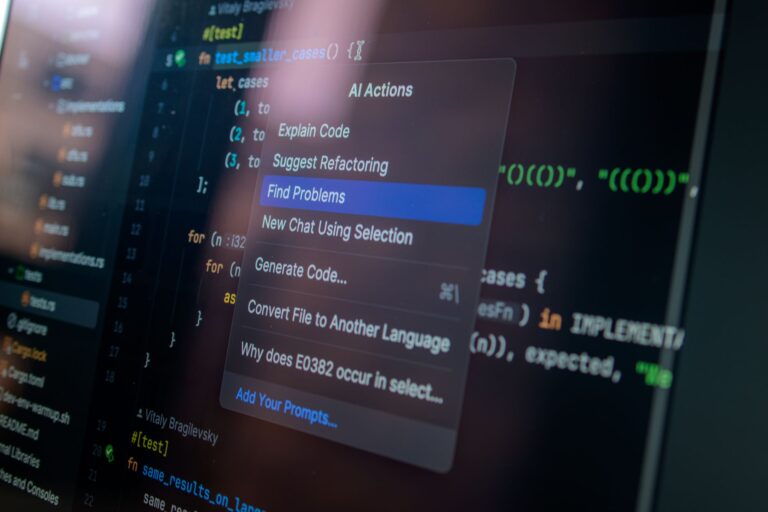
Defining an AI Coding Agent
When you hear the term “AI coding agent,” picture a software assistant that can understand, generate, and even debug code on your behalf. At its core, an AI coding agent is a machine‑learning model—often built on large language models (LLMs)—that has been trained on vast amounts of publicly available source code and technical documentation. By interpreting natural language prompts or code snippets, the agent can suggest completions, write functions from scratch, refactor existing code, and answer programming‑related questions.
The distinction between a plain code‑completion feature and a full‑fledged AI coding agent lies in the breadth of capabilities. Simple completion tools merely predict the next token based on the current context. An AI coding agent, by contrast, can reason across files, understand project architecture, and engage in a back‑and‑forth dialogue, much like a junior developer who can be asked to explain design decisions or explore alternatives.
The Evolution from Autocomplete to Conversational Assistants
The journey began with basic autocomplete features in integrated development environments (IDEs) that suggested variable names or method signatures. As deep learning techniques matured, tools such as Tabnine introduced neural‑network‑based predictions that could handle more complex patterns. The launch of large language models—GPT‑3, Codex, and others—marked a turning point, enabling agents to generate multi‑line code blocks and respond to natural‑language instructions.
Since then, several products have emerged that blend these capabilities with conversational interfaces. For instance, GitHub Copilot integrates directly into popular editors, offering inline suggestions and the ability to generate entire functions when prompted. Meanwhile, open‑source projects like StarCoder and Code Llama provide community‑driven alternatives that can be fine‑tuned for specific languages or domains. The common thread among these solutions is the use of transformer architectures that excel at capturing the relationships between code tokens across long contexts.
How AI Coding Agents Work Under the Hood
Although the underlying mathematics can be dense, the practical workflow of an AI coding agent can be broken down into a few intuitive steps:
- Context Gathering: The agent reads the surrounding code, project files, and any supplied prompts. This context may include comments, docstrings, or even a brief description of the desired feature.
- Model Inference: Using its trained neural network, the agent predicts the most likely continuation or transformation of the code. Modern agents often employ beam search or sampling techniques to generate multiple candidate snippets.
- Post‑Processing: Generated code is filtered for syntax errors, style conformity, and potential security issues. Some agents integrate static analysis tools to catch common pitfalls before presenting suggestions.
- Interaction Loop: Developers can accept, reject, or refine the output, feeding back their choices to the agent. Over time, many agents learn from this feedback, subtly adapting to a developer’s preferred patterns.
Because the models are trained on publicly licensed repositories and documentation, they capture idiomatic usage patterns for a wide range of languages—from Python and JavaScript to Rust and Go. The result is an assistant that can, for example, translate a Python list comprehension into an equivalent JavaScript map call, or suggest a type‑safe Rust struct based on a JSON schema.
Real‑World Use Cases: From Boilerplate to Debugging
AI coding agents have found a home in many stages of the software development lifecycle. Below are some of the most common scenarios where developers report tangible benefits:
- Rapid Prototyping: By describing a feature in plain English, developers can receive a first‑draft implementation within seconds, allowing them to iterate on ideas without writing low‑level scaffolding.
- Documentation Generation: Agents can produce docstrings, inline comments, or even API reference snippets that align with the code they generate, helping maintain documentation parity.
- Refactoring Assistance: When a codebase needs modernization—such as moving from callbacks to async/await—an agent can suggest systematic changes across files.
- Learning and Onboarding: New team members can ask the agent to explain why a particular pattern was chosen, effectively turning the model into a living knowledge base.
- Bug Hunting: By describing unexpected behavior, developers can receive hypotheses about root causes or sample test cases that expose the issue.
These use cases are not meant to replace human expertise but to augment it, freeing developers from repetitive tasks and enabling them to focus on higher‑level design and problem‑solving.
Limitations and Ethical Considerations
Despite impressive capabilities, AI coding agents are not infallible. They can produce syntactically correct code that fails at runtime, introduces subtle performance regressions, or inadvertently replicates insecure patterns found in the training data. Moreover, because the models learn from existing repositories, there is a risk of propagating license violations if the generated code mirrors copyrighted snippets too closely.
From an ethical standpoint, organizations must weigh the benefits against potential liability. Best practices include:
- Running generated code through static analysis and security scanners before merging.
- Maintaining clear attribution policies for any code that appears to be lifted from known sources.
- Providing developers with transparency about the model’s confidence level and source of suggestions.
Open dialogue about these concerns is essential, especially as more teams adopt AI agents in regulated industries where compliance and audit trails are non‑negotiable.
Integrating an AI Coding Agent into Your Workflow
Adopting an AI coding agent does not require a complete overhaul of existing processes. Most agents are offered as extensions for popular editors such as Visual Studio Code, JetBrains IDEs, or even as cloud‑based APIs that can be invoked from CI/CD pipelines. A pragmatic integration strategy might look like this:
- Pilot Phase: Enable the agent for a small team or a specific project to gauge its impact on productivity and code quality.
- Feedback Loop: Collect qualitative feedback and track metrics like time saved on boilerplate tasks or number of accepted suggestions.
- Policy Definition: Establish guidelines for when to accept, modify, or reject generated code, including required code reviews.
- Scale Up: Roll out the agent more broadly, incorporating any custom fine‑tuning or internal datasets that reflect your codebase’s style.
By treating the agent as a collaborative partner rather than an autonomous coder, teams can reap the efficiency gains while preserving the rigor of human oversight.
Looking Ahead: The Future of AI‑Powered Development
The trajectory of AI coding agents points toward deeper integration with the entire software delivery pipeline. Emerging research explores agents that can not only write code but also generate test suites, design database schemas, and suggest deployment configurations based on high‑level requirements. Some prototypes already demonstrate the ability to run a generated function in a sandboxed environment, evaluate its correctness, and iteratively improve it—a step toward fully autonomous code synthesis.
As models become more specialized and data privacy concerns drive the creation of on‑premise versions, we can expect a diversification of agents tailored to niche domains like embedded systems, scientific computing, or financial modeling. The core promise remains the same: to amplify human creativity, reduce repetitive toil, and open up programming to a broader audience.
Whether you’re a seasoned architect or a curious newcomer, understanding what an AI coding agent is—and how it fits into modern development—will be a valuable part of staying competitive in the years ahead.
