
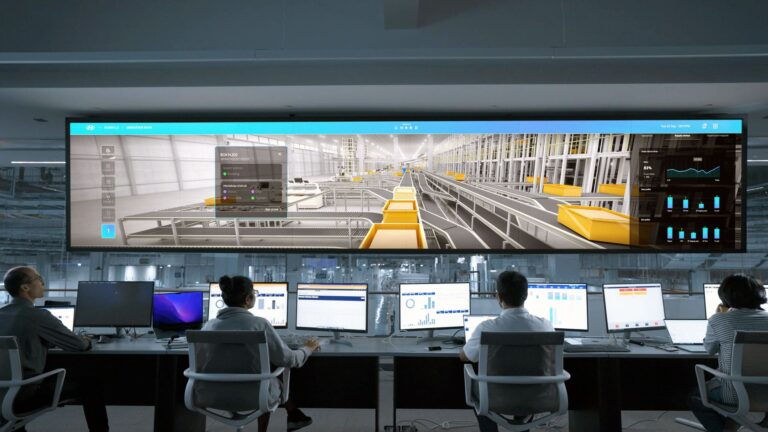
Understanding the Concept of a Digital Twin
A digital twin is a virtual representation of a physical object, process, or system that mirrors its real‑world counterpart in real time. The idea is not new—engineers have used simplified models for decades—but advances in sensors, cloud computing, and data analytics have made it possible to create highly detailed, continuously updated replicas. In practice, a digital twin collects data from the physical entity through Internet of Things (IoT) devices, feeds that data into a computational model, and then uses the model to simulate behavior, predict outcomes, and suggest optimizations.
The Core Components That Make a Twin Work
Three ingredients are essential for a functional digital twin:
- Data acquisition: Sensors, meters, and other IoT devices capture temperature, vibration, location, usage patterns, and any other relevant metric.
- Computational model: Software platforms translate raw data into a dynamic, physics‑based or data‑driven model that can be visualized and analyzed.
- Feedback loop: Insights derived from the model are sent back to the physical asset or to decision‑makers, enabling real‑time adjustments.
When these elements operate in concert, the digital twin becomes more than a static blueprint—it evolves alongside the real object, reflecting wear, environmental changes, and operational shifts.
How Companies Build Their Digital Twins
The construction process typically follows a phased approach:
- Define scope and objectives: Organizations decide whether they need a twin for a single machine, an entire production line, or a complex supply‑chain network.
- Instrument the asset: IoT hardware is installed to capture the data streams required for the model.
- Create the virtual model: Engineers use CAD files, simulation software, or machine‑learning algorithms to build the initial replica.
- Integrate data pipelines: Cloud services or on‑premise platforms ingest sensor data, clean it, and feed it to the model.
- Validate and refine: The twin’s predictions are compared against real‑world observations, and the model is tuned for accuracy.
- Operationalize: Once confidence is established, the twin is used for monitoring, forecasting, and optimization.
Many vendors now offer modular platforms that combine data ingestion, analytics, and visualization, allowing companies to focus on domain‑specific logic rather than building every piece from scratch.
Real‑World Applications Across Industries
Digital twins have found footing in a surprisingly wide range of sectors. In manufacturing, plants use twins of production equipment to anticipate failures before they cause downtime. In aerospace, airlines maintain twins of aircraft engines, enabling predictive maintenance schedules that extend service life and improve safety. Urban planners deploy city‑scale twins to model traffic flow, energy consumption, and emergency response scenarios, helping officials test policies without disrupting real residents.
Healthcare is also experimenting with patient‑level twins that aggregate wearable data, electronic health records, and genetic information. While still emerging, such models aim to forecast disease progression and personalize treatment plans. In the energy sector, wind farms and power grids are modeled digitally to balance supply, optimize turbine placement, and assess the impact of weather events.
Why Companies Choose to Invest in Digital Twins
Businesses adopt digital twins for several strategic reasons:
- Reduced downtime: By spotting anomalies early, maintenance can be scheduled proactively rather than reactively.
- Cost savings: Simulating process changes virtually prevents costly trial‑and‑error on the shop floor.
- Improved product quality: Real‑time feedback loops enable continuous refinement of manufacturing parameters.
- Faster innovation cycles: Engineers can test new designs in a virtual environment, accelerating the move from concept to market.
- Enhanced decision‑making: Data‑driven insights replace intuition with quantifiable risk assessments.
Because the twin reflects actual operating conditions, the insights are grounded in reality, not just theoretical assumptions. This alignment gives executives confidence to allocate resources to initiatives that have demonstrable ROI.
Challenges to Consider Before Going Digital
Despite the promise, implementing a digital twin is not without hurdles. Data quality is paramount; noisy or incomplete sensor streams can corrupt the model, leading to misleading recommendations. Integrating disparate data sources—especially in legacy environments—often requires significant engineering effort. Moreover, the computational demands of high‑fidelity simulations can be substantial, pushing organizations to adopt cloud‑based scaling solutions.
Security and privacy are also critical. A twin that mirrors a physical asset can become a vector for cyber‑attacks if unauthorized parties gain control of the data or the feedback mechanisms. Companies must therefore embed robust authentication, encryption, and monitoring into every layer of the twin architecture.
Finally, cultural adoption matters. Teams accustomed to traditional maintenance schedules or manual process optimization may resist relying on algorithmic guidance. Successful rollout typically involves pilot projects that demonstrate quick wins, followed by training and clear governance structures.
Looking Ahead: The Future of Digital Twins
The trajectory of digital twins points toward deeper integration with artificial intelligence and edge computing. As AI models become more adept at extracting patterns from massive data streams, twins will move from predictive to prescriptive—suggesting specific actions and even executing them autonomously when appropriate. Edge devices will enable faster, localized decision‑making, reducing latency for time‑critical applications like autonomous vehicles or industrial robotics.
Standardization efforts are also gaining momentum. Industry consortia are working on common data schemas and communication protocols, which should lower the barrier to interoperability and make it easier for companies to combine multiple twins into a broader ecosystem—think of a “digital thread” that connects product design, manufacturing, logistics, and after‑sales service.
For businesses that can navigate the technical and organizational challenges, the digital twin offers a powerful lens into the hidden dynamics of their operations. By turning physical reality into an accessible, data‑rich simulation, companies can shift from reactive problem‑solving to proactive, insight‑driven stewardship of their assets and processes.
