
The Physical Shell: Building and Layout
When you picture a data center, you might imagine rows of blinking lights and endless racks of servers. In reality, the first thing a visitor notices is the building itself – a purpose‑built structure designed to protect delicate equipment from the elements, power fluctuations, and even human error. Most modern facilities are located on the outskirts of major cities, where land is affordable and access to high‑capacity fiber routes is reliable. The exterior walls are often reinforced concrete with raised floors that double as a distribution network for power and cooling.
Inside, the layout follows a disciplined geometry. A typical floor plan is divided into hot and cold aisles, a concept that directs airflow in predictable patterns. Cold aisles face the front of servers, drawing in cool air, while hot aisles collect exhaust from the back. This simple arrangement dramatically improves efficiency and makes it easier for technicians to troubleshoot temperature problems.
Powering the Beast: Electricity and Redundancy
Data centers are essentially power‑hungry beasts. A single facility can consume as much electricity as a small town, and that demand must be met continuously. To achieve this, operators rely on multiple layers of redundancy, often described by the “N+1” rule: there is at least one independent backup for every critical component.
Incoming power typically arrives via high‑voltage feeders from the utility grid. From there, it is stepped down through transformers and routed to uninterruptible power supplies (UPS). Modern UPS units use lithium‑ion batteries or flywheel technology to bridge the gap between a power loss and the start‑up of diesel generators.
- Primary feed: Direct connection to the regional grid.
- Secondary feed: A separate substation or on‑site generation (often natural gas generators).
- UPS: Provides instant power for seconds to minutes.
- Backup generators: Run for hours or days until normal power returns.
Operators monitor power quality in real time, watching for voltage sags, frequency variations, and harmonic distortion. Any anomaly triggers automated alerts, allowing staff to intervene before equipment is affected.
Keeping Cool: Cooling Systems and Airflow
Heat is the silent adversary of every server. Even a modest 2‑watts per CPU can add up to megawatts of waste heat in a large rack. Effective cooling, therefore, is not a luxury—it’s a necessity. Data centers employ several complementary strategies to keep temperatures in the optimal 18‑27 °C (64‑81 °F) range.
Traditional air‑cooled designs rely on chilled water plants that feed air‑handling units (AHUs). These AHUs pull cool air from the raised floor, push it through the cold aisles, and return the warmed air to the hot aisles where it is captured by return ducts. More recent facilities have adopted liquid cooling, where coolant circulates directly to server components, removing heat at the source and reducing the need for massive air‑handling infrastructure.
In addition to the primary cooling loop, many sites use economizers that bring in outside air when ambient conditions are favorable. This “free cooling” can cut energy use dramatically, especially in cooler climates.
The Heartbeat: Servers, Racks, and Cabling
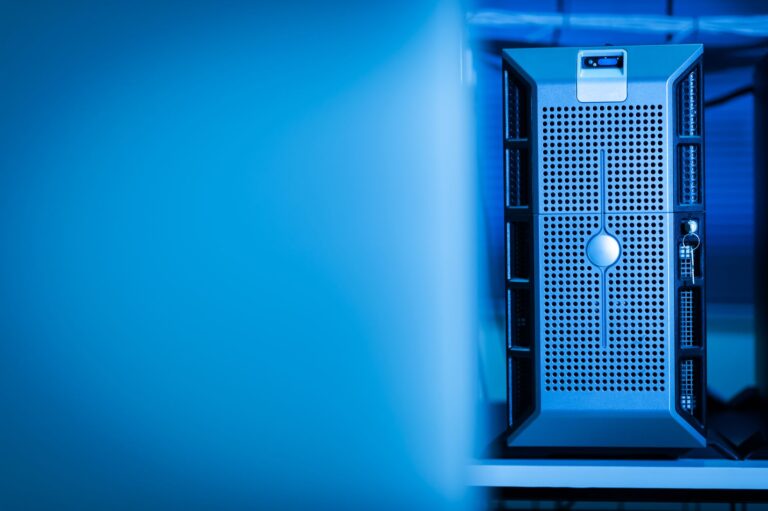
At the core of any data center are the servers themselves—standardized metal boxes that house CPUs, memory, storage, and networking interfaces. These servers are mounted in 42‑U racks, which provide both physical support and a pathway for power and network cables.
Every rack typically contains a power distribution unit (PDU) that breaks the incoming electricity into individual outlets for each server. Modern PDUs are “intelligent,” offering remote monitoring of voltage, current, and power factor. This data helps operators balance loads across the facility and spot potential overloads before they become a problem.
Cabling is another hidden art. Horizontal cabling runs between racks, while vertical cabling connects each rack to the backbone network. Structured cabling standards, such as TIA‑568, ensure that fiber and copper runs are organized, labeled, and tested for signal integrity. Poor cable management can cause latency spikes, increase heat, and make routine maintenance a nightmare.
Network Fabric: How Data Moves
While the servers process information, the network fabric is responsible for moving that data quickly and reliably. Inside a data center, the fabric is typically built from a mix of Ethernet switches, routers, and sometimes specialized fabrics like InfiniBand for high‑performance computing workloads.
Top‑of‑rack (ToR) switches are popular because they keep the number of cables short—each server plugs directly into the switch at the top of its rack. The ToR switches then uplink to aggregation switches, which in turn connect to the core network. This hierarchical design simplifies scaling: add more racks, add more ToR switches, and the aggregation layer expands accordingly.
Software‑defined networking (SDN) is gaining traction, allowing administrators to program traffic flows through a central controller. By abstracting the control plane from the hardware, SDN can dynamically allocate bandwidth, prioritize latency‑sensitive applications, and improve overall utilization without physically rewiring the floor.
Security Inside and Out
Physical and cyber security go hand‑in‑hand in a data center. The outer perimeter is often protected by fencing, CCTV, and security patrols. Access to the building typically requires badge credentials, biometric verification, and sometimes a man‑trap—a small room that only opens when two doors are not simultaneously open.
Inside the facility, each aisle may have its own access controls, and racks can be locked individually. Monitoring systems track who enters a specific zone, and logs are retained for compliance audits. On the cyber side, firewalls, intrusion‑detection systems, and regular vulnerability assessments protect the network from external threats. Many operators also employ “air‑gap” zones where the most sensitive hardware is isolated from public networks.
Compliance frameworks such as ISO 27001, SOC 2, and the U.S. Federal Risk and Authorization Management Program (FedRAMP) provide guidelines for both physical and logical safeguards. Achieving and maintaining these certifications is a major focus for reputable data center providers.
Sustainability and the Future
Energy consumption is the most visible environmental impact of data centers, and the industry has responded with a wave of sustainability initiatives. Operators now track Power Usage Effectiveness (PUE), a metric that compares total facility power to the power actually used by IT equipment. A PUE close to 1.2 is considered efficient, and many leading facilities regularly publish their PUE scores to demonstrate progress.
Renewable energy integration is becoming standard practice. Some data centers purchase wind or solar power directly from utilities, while others install on‑site solar panels or even small hydro generators where geography permits. Waste heat recovery—using the excess heat from servers to warm office spaces or nearby buildings—is another emerging trend.
Looking ahead, edge computing is reshaping the traditional centralized model. Smaller “micro‑data centers” are being placed closer to end users to reduce latency, especially for applications like autonomous vehicles and real‑time analytics. Yet these edge sites still rely on many of the same design principles—redundant power, efficient cooling, robust networking—just on a more compact scale.
Artificial intelligence is also finding a home inside data centers, optimizing everything from cooling setpoints to predictive maintenance schedules. By analyzing sensor data in real time, AI can anticipate a failing fan or a power anomaly before it disrupts service, turning reactive maintenance into a proactive discipline.
In short, a data center is far more than a room full of machines. It is a meticulously engineered ecosystem where electricity, cooling, networking, and security intersect to keep the digital world humming. As the demand for compute continues to surge, the invisible choreography inside these facilities will only become more sophisticated, sustainable, and essential to our everyday lives.
