
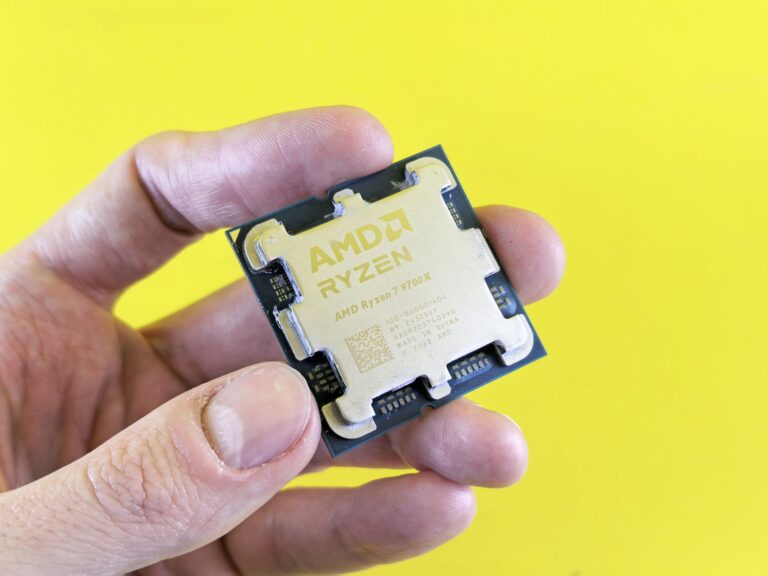
What the Ryzen AI 9 HX 370 Brings to the Table
AMD’s latest high‑performance mobile chip, the Ryzen AI 9 HX 370, is the company’s first attempt to fuse a powerful Zen 4‑based CPU core complex with a dedicated AI accelerator. Built on a 5 nm process, the HX 370 pairs up to eight Zen 4 cores (with simultaneous multithreading) with a new “Radeon AI Engine” that sits alongside the integrated RDNA 3 graphics block. The AI Engine is a matrix‑multiply unit that can handle inference workloads such as image upscaling, speech recognition, and on‑device translation without taxing the main cores.
In practice, the result is a laptop processor that can sustain high CPU performance while offloading neural‑network tasks to a specialized block. Early developer demos have shown smoother video‑upscaling in real‑time and lower latency for AI‑enhanced gaming features. The chip also supports DDR5‑5600 memory and PCIe 5.0, giving it ample bandwidth for high‑end discrete GPUs or fast storage.
Apple’s M4: Evolution of the System‑on‑Chip
The Apple M4, expected to appear in premium Macs and the next generation of iPad Pro, builds on the M-series roadmap that has redefined performance per watt in consumer silicon. The M4 is rumored to feature a new “Performance‑Core” (P‑core) design that pushes clock speeds higher than the M3, while retaining the efficiency‑core (E‑core) cluster for low‑power tasks. Apple’s in‑house Neural Engine (NE) also receives an upgrade, adding more cores to accelerate machine‑learning inference across the OS.
One of the most talked‑about changes is the adoption of a 4‑nm process, which should give the M4 a modest edge in power efficiency compared to the 5 nm M3. The chip continues to use a unified memory architecture, allowing the CPU, GPU, and Neural Engine to share a common pool of LPDDR5X memory, reducing latency and simplifying software development.
Architectural Philosophies: Heterogeneous Integration vs. Unified SoC
Both AMD and Apple are betting on heterogeneous computing, but they approach it from opposite directions. AMD’s HX 370 is a traditional “CPU‑first” design that adds a dedicated AI accelerator as an add‑on. This means developers can target the AI engine via standard APIs (e.g., DirectML, OpenCL) while still having the option to run workloads on the Zen cores or the integrated GPU.
Apple, on the other hand, treats the entire chip as a single, tightly coupled system. The Neural Engine is not a separate block that developers must explicitly address; instead, the operating system routes suitable workloads automatically. This can simplify development for iOS/macOS apps but may limit fine‑grained control for power users who want to choose the exact compute unit.
In short, the HX 370 offers more flexibility for developers who need explicit control over where AI work runs, while the M4 provides a seamless experience that abstracts that complexity away.
Performance in Real‑World Tasks
When it comes to everyday usage—web browsing, office productivity, media consumption—both chips feel fast. The Ryzen AI 9 HX 370 benefits from the high clock speeds of its Zen cores and the ability to pair with a discrete GPU, which can be a decisive factor for gamers and creators who need desktop‑class graphics.
The M4’s strength lies in its unified memory and the efficiency of its E‑cores, which keep battery drain low during light tasks. In AI‑heavy scenarios such as photo editing with on‑device upscaling or real‑time video effects, the M4’s Neural Engine can deliver low latency because the data never leaves the chip’s tightly integrated memory pool.
Benchmarks from early access programs suggest that the HX 370 can edge out the M4 in raw CPU throughput when both are running at full power, especially in multi‑threaded workloads. Conversely, the M4 often leads in power‑efficiency metrics, offering longer battery life in thin‑and‑light laptops or tablets.
Software Ecosystem and Developer Tools
Developer support is a crucial differentiator. AMD provides the ROCm platform, which includes tools for GPU compute and now an SDK for the AI Engine. Windows developers can also use the DirectML API to target the AI accelerator without worrying about the underlying hardware specifics.
Apple’s ecosystem is more closed but highly optimized. The company’s Core ML framework abstracts the Neural Engine, allowing developers to write once and have the OS decide the best execution path. Because the entire software stack—from Xcode to the operating system—is under Apple’s control, the performance of AI‑enabled apps tends to be consistent across devices.
For cross‑platform developers, the HX 370’s openness may be appealing. However, creators who focus on the Apple ecosystem benefit from the tight integration and the wealth of ready‑made ML models that Apple provides through its developer portal.
Power Consumption and Thermals
- Ryzen AI 9 HX 370: Designed for high‑performance laptops, it can draw upwards of 45 W under load. The dedicated AI block adds a modest power budget, but the chip’s ability to offload work can keep the CPU cores cooler during AI‑heavy tasks.
- Apple M4: Expected to stay within a 15‑20 W envelope in most usage scenarios, thanks to its 4 nm process and efficient core design. The unified memory layout also reduces the need for power‑hungry data shuffling.
In practical terms, this means a premium Windows laptop equipped with the HX 370 may need more robust cooling solutions—larger heat pipes or active fan profiles—to sustain turbo frequencies. Apple’s MacBooks, which have traditionally used passive cooling, can likely maintain the M4’s peak performance without a fan, though some models may still include one for sustained workloads.
Who Should Choose Which Chip?
Choosing between the Ryzen AI 9 HX 370 and the Apple M4 ultimately depends on the user’s workflow and platform preference.
Consider the HX 370 if you:
- Need a Windows or Linux environment for specialized software.
- Require the option to pair the CPU with a powerful discrete GPU.
- Want direct access to a hardware AI accelerator for custom inference pipelines.
- Prefer the flexibility of upgrading or configuring RAM and storage independently.
Consider the M4 if you:
- Are already invested in the Apple ecosystem (iPhone, iPad, macOS).
- Prioritize battery life and silent operation.
- Develop or consume apps that already leverage Core ML.
- Value a tightly integrated system that minimizes driver headaches.
Both chips represent the cutting edge of mobile computing in 2026, and each shines in its own niche. The Ryzen AI 9 HX 370 pushes the envelope for heterogeneous compute in a traditionally open platform, while Apple’s M4 continues to refine the unified‑memory, efficiency‑first approach that has become its hallmark.
Looking Ahead: The Future of On‑Device AI
The competition between AMD’s AI‑focused HX series and Apple’s Neural Engine signals a broader industry trend: AI is no longer an afterthought but a first‑class citizen in chip design. As developers demand faster on‑device inference—driven by privacy concerns, lower latency requirements, and offline capabilities—manufacturers will continue to dedicate silicon real estate to matrix‑multiply units, tensor cores, and specialized caches.
What we can expect in the next few years includes:
- Greater convergence of AI accelerators with graphics pipelines, enabling mixed‑reality workloads.
- Standardized APIs that abstract the hardware differences, making cross‑platform AI development smoother.
- Continued improvements in power efficiency, allowing AI‑heavy apps to run for hours on a single charge.
Whether you gravitate toward the customizable, high‑power world of the Ryzen AI 9 HX 370 or the sleek, efficiency‑driven realm of the Apple M4, the message is clear: on‑device AI is here to stay, and it will shape the way we interact with our computers for the foreseeable future.
