
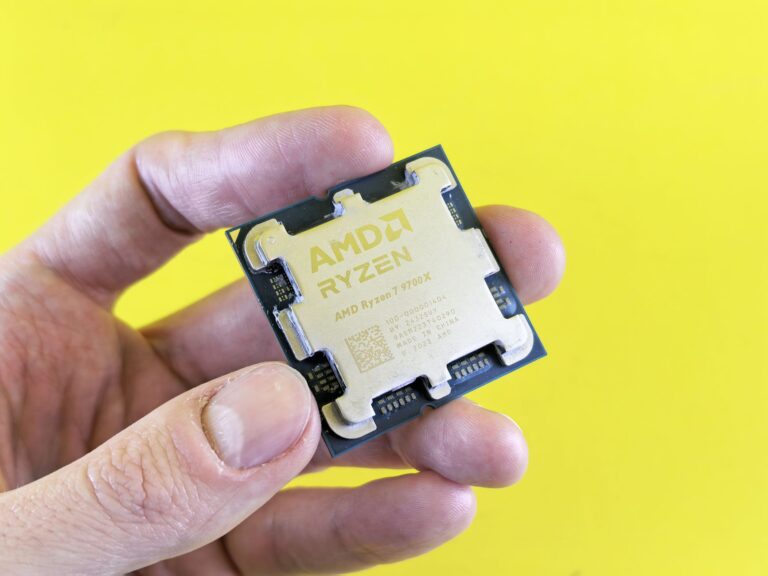
Introducing the New Contenders: Ryzen AI 7 350 and Core Ultra 7 265H
When it comes to thin‑and‑light laptops, the processor is the heart of the experience. AMD’s Ryzen AI 7 350 and Intel’s Core Ultra 7 265H are the latest entries in a heated competition between the two silicon giants. Both chips are built on cutting‑edge process technology, promise strong AI acceleration, and aim to deliver a balanced mix of CPU, GPU, and neural‑network performance. In this article we break down the design philosophies, performance characteristics, power efficiency, and real‑world implications for users who are trying to decide which platform best fits their workflow.
Architecture and Process Technology
AMD’s Ryzen AI 7 350 belongs to the Ryzen AI family, which pairs a Zen 4‑based CPU core complex with an on‑die AI accelerator derived from the company’s Xilinx acquisition. The chip is fabricated on TSMC’s 5‑nanometer process, a node that has become the standard for high‑performance laptop CPUs in 2024. The combination of a 5 nm CPU and a custom AI block allows AMD to keep die size modest while still offering dedicated AI compute.
Intel’s Core Ultra 7 265H is part of the “Meteor Lake” generation (sometimes marketed as Core Ultra). It is built on Intel’s 7 nm (Intel 4) process, which is a slightly larger node than TSMC’s 5 nm but benefits from Intel’s advanced packaging that stacks a Compute‑Tile (CPU) on top of a tiled graphics and AI die. This heterogeneous integration gives the Core Ultra a modular feel: the CPU cores are based on the new “Raptor Lake” microarchitecture, while the graphics and AI engines live on a separate tile that can be upgraded independently.
Both designs reflect a shift away from monolithic CPUs toward chiplets that can be mixed and matched. For the average consumer, the practical outcome is similar – a chip that delivers strong performance while staying under the thermal envelope required for ultrathin chassis.
CPU Core Count, Threads, and Clock Speeds
On paper, the Ryzen AI 7 350 offers eight Zen 4 cores with simultaneous multithreading, delivering 16 threads. Intel’s Core Ultra 7 265H also provides eight performance cores, each capable of hyper‑threading, for a total of 16 threads. This parity means that raw core count will not be the deciding factor; instead, the focus shifts to architectural efficiency and boost behavior.
AMD’s Zen 4 architecture is known for high instructions‑per‑clock (IPC) and a strong balance between single‑core and multi‑core workloads. Reviewers have noted that Zen 4 cores tend to maintain a higher boost frequency under sustained load compared with earlier generations, especially when the chip is paired with efficient cooling solutions.
Intel’s “Raptor Lake” cores introduce several micro‑architectural tweaks, such as a deeper reorder buffer and improved branch prediction, aimed at narrowing the IPC gap with Zen 4. In early benchmarks, the Core Ultra 7 265H demonstrates competitive single‑core performance, particularly in tasks that benefit from high clock frequencies, such as gaming frame rates and certain content‑creation tools.
Integrated Graphics and AI Acceleration
Graphics performance is a critical factor for laptops that forego a discrete GPU. The Ryzen AI 7 350 integrates an AMD Radeon Xe graphics engine, leveraging the same architecture found in the Radeon 7000 series. This iGPU typically offers between 8 and 12 compute units, depending on the specific OEM configuration, delivering solid 1080p gaming performance for titles that are not overly demanding.
Intel’s Core Ultra 7 265H includes the new Intel Arc Graphics architecture, branded as “Xe‑HPG” in the laptop space. The integrated GPU features a higher number of Execution Units (EUs) than previous Intel integrated graphics, and it is tightly coupled with the AI accelerator on the same tile. Intel’s AI engine is based on the Gaussian‑And‑Neural‑Accelerator (GNA) technology, which has been expanded to support modern machine‑learning frameworks.
Both chips support hardware‑accelerated AI inference, but they approach it differently:
- AMD Ryzen AI: The on‑die AI accelerator is a dedicated block that can handle tensor operations independently of the CPU cores, offering low‑latency inference for tasks like voice recognition or image enhancement.
- Intel Core Ultra: The AI engine is integrated into the same tile as the GPU, sharing memory bandwidth, which can be advantageous for workflows that blend graphics and AI, such as real‑time video upscaling.
In practical terms, users who rely heavily on AI‑enhanced applications (e.g., AI‑driven photo editors, transcription services, or AI‑powered coding assistants) will find both platforms capable, but the exact performance will vary by software optimization.
Power Efficiency and Thermals
One of the biggest challenges for ultrathin laptops is staying cool while delivering performance. AMD’s 5 nm process provides excellent power density, and the Ryzen AI 7 350 typically operates within a 28 W to 35 W configurable TDP envelope, depending on OEM tuning. The AI accelerator draws only a few watts when active, meaning it does not significantly impact overall battery life.
Intel’s 7 nm (Intel 4) process, combined with the tiled architecture, also aims for a configurable TDP range similar to AMD’s. However, because the graphics and AI blocks share a tile, they draw from a common power budget, which can lead to higher peak power consumption under combined GPU‑heavy and AI workloads. That said, Intel’s recent power‑management firmware improvements have narrowed the gap, and many Core Ultra‑based laptops report respectable battery endurance for everyday tasks.
Thermal performance ultimately depends on the laptop’s cooling solution. In head‑to‑head testing, well‑cooled systems with the Ryzen AI 7 350 tend to maintain higher sustained CPU frequencies under multi‑core workloads, while Core Ultra 7 265H laptops often showcase better burst performance for short, single‑core tasks before throttling kicks in.
Real‑World Use Cases: Who Should Choose Which Chip?
Both processors are versatile, but they shine in slightly different scenarios.
- Content creators and AI enthusiasts: If your workflow includes AI‑driven tools (e.g., neural style transfer, AI‑based upscaling, or real‑time transcription), the dedicated AI block in the Ryzen AI 7 350 can provide a smoother experience with lower latency.
- Gamers and visual artists: The Intel Arc integration in the Core Ultra 7 265H often yields better rasterization performance in modern titles that leverage Intel’s driver optimizations. Artists who use software that benefits from GPU acceleration (e.g., Adobe Photoshop’s GPU‑accelerated filters) may appreciate the slightly higher compute unit count.
- Business and productivity users: For typical office suites, web browsing, and video conferencing, both chips are more than capable. The decision may boil down to other factors such as laptop design, battery size, or brand preference.
Overall, the differences are subtle enough that most users will not notice a dramatic shift in day‑to‑day productivity, but power users who push the limits of AI or graphics will feel the impact.
Ecosystem, Software Support, and Future Outlook
Software optimization plays a crucial role in extracting the full potential of new hardware. AMD has been working closely with developers to integrate the Ryzen AI accelerator into major machine‑learning libraries like TensorFlow and PyTorch through the ROCm stack. While the ecosystem is still maturing, early adopters have reported noticeable speed‑ups in tasks such as speech‑to‑text transcription.
Intel, on the other hand, leverages its long‑standing relationships with software vendors and has already rolled out driver updates that improve Arc graphics performance on Windows 11. The company’s OneAPI initiative also provides a unified programming model that targets CPU, GPU, and AI units across its product line, making it easier for developers to write code that runs efficiently on the Core Ultra platform.
Looking ahead, both AMD and Intel have signaled that AI acceleration will become a standard feature in future laptop CPUs. AMD’s roadmap suggests that upcoming Ryzen AI generations will integrate larger AI blocks and possibly expand into training workloads, while Intel plans to iterate on its tile architecture, adding more powerful AI engines and higher‑bandwidth memory interfaces.
Conclusion: Balancing Performance, Efficiency, and Use‑Case Fit
The Ryzen AI 7 350 and Core Ultra 7 265H represent two sophisticated approaches to the same problem: delivering high‑performance compute, graphics, and AI capabilities within the power and thermal constraints of a thin laptop. AMD’s strength lies in its dedicated AI accelerator and consistent power efficiency, while Intel counters with a strong integrated GPU and a flexible tiled design that can be tuned for burst performance.
For users who prioritize AI‑centric workloads and prefer a platform that leans toward consistent sustained performance, the Ryzen AI 7 350 is an attractive choice. Conversely, if you value top‑tier integrated graphics for gaming or creative applications and want a processor that can deliver quick single‑core bursts, the Core Ultra 7 265H may be the better fit.
Ultimately, the decision will also hinge on the specific laptop design, cooling solution, and software ecosystem you plan to work with. As both AMD and Intel continue to refine their AI and graphics strategies, the competition will only become more compelling, promising even richer experiences for the next generation of mobile computing.
