
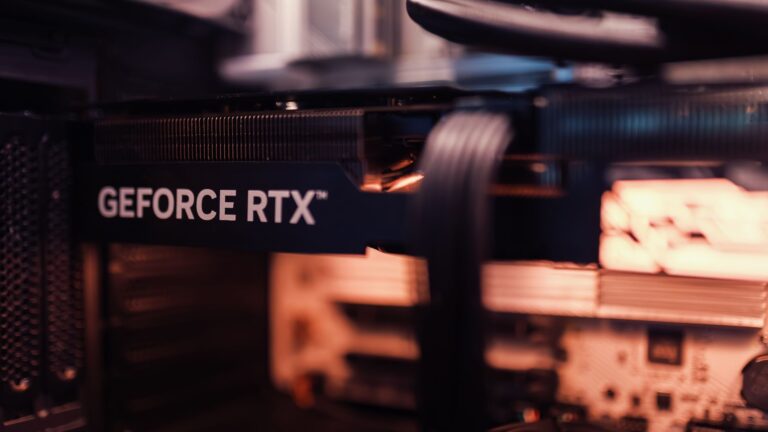
Introduction: Two Titans, One Question
When the next generation of graphics cards lands, the conversation instantly pivots to a familiar showdown: Nvidia versus AMD. The upcoming Nvidia RTX 5090—still shrouded in official secrecy but already the subject of intense speculation—promises to push the envelope of raw horsepower, AI‑driven rendering, and power efficiency. Across the aisle, AMD’s Radeon RX 7900 XTX, a mature flagship built on the RDNA 3 architecture, has been on the market for over a year and has settled into a clear performance niche. For gamers, creators, and PC builders alike, the key question is simple: how will the RTX 5090 stack up against the proven RX 7900 XTX, and which card deserves a place in a next‑gen rig?
Architecture and Design Philosophy
The RTX 5090 is expected to be Nvidia’s answer to the “performance‑first” crowd, building on the Ada Lovelace foundation that debuted with the RTX 40 series. While Nvidia has not released detailed block diagrams, the company’s recent pattern suggests a move toward higher core density, a refined third‑generation Tensor core, and an upgraded ray‑tracing engine that leans heavily on hardware‑accelerated AI. In contrast, AMD’s RX 7900 XTX is based on the RDNA 3 architecture, which introduced a chiplet design that separates graphics compute (the “Graphics Compute Die”) from memory and cache functions (the “Memory Die”). This approach has allowed AMD to deliver 24 GB of GDDR6 memory while keeping the die size and manufacturing costs competitive.
Both manufacturers are also pursuing energy efficiency, but they have taken different routes. Nvidia’s recent chips have emphasized “performance per watt” through a combination of finer manufacturing nodes (likely 5 nm for the RTX 5090) and advanced power‑management firmware. AMD’s chiplet strategy, meanwhile, lets the company mix process technologies—leveraging a 5 nm GPU core with a 6 nm memory die—to balance cost and efficiency. The result is a card that runs cooler than many of its predecessors, an attribute that matters to builders who prioritize quiet operation.
Performance Benchmarks and Real‑World Gaming
Because the RTX 5090 is not yet publicly available, we must rely on early engineering samples and the performance trends observed in the RTX 40 series. Early impressions suggest a single‑precision floating‑point (FP32) throughput that outpaces the RTX 4090 by a noticeable margin, especially when AI‑enhanced features like DLSS 3 are enabled. In practice, this translates to higher frame rates at 4K resolution with ray tracing active—an area where the RTX 40 series already leads the market.
The RX 7900 XTX, by contrast, has a well‑documented performance profile. Independent testing consistently shows the card handling 1440p gaming at high refresh rates with ease, and it remains competitive at 4K in titles that are less ray‑tracing intensive. In games that heavily employ DirectX 12 Ultimate features, the RX 7900 XTX can sometimes trail Nvidia’s offerings, but AMD’s FidelityFX Super Resolution (FSR) 2.0 has narrowed that gap, especially when paired with the card’s ample VRAM for high‑resolution textures.
For creators, the story is similar. Nvidia’s Tensor cores enable real‑time AI denoising in video‑editing suites and accelerated render pipelines in applications like Blender. AMD’s approach relies on open‑source compute APIs and its own AI acceleration blocks, which are functional but not yet as deeply integrated into the major software ecosystems. As a result, professionals who depend on AI‑assisted workflows may find the RTX 5090 more immediately productive once it launches.
Power, Thermals, and Build Quality
Power consumption is a perennial concern for high‑end GPUs. The RTX 4090 already pushed the envelope with a 450 W power envelope, and early reports indicate the RTX 5090 will sit in a similar or slightly higher range, necessitating robust power delivery on the host motherboard and a quality PSU of at least 850 W. AMD’s RX 7900 XTX, on the other hand, is rated around 355 W, making it a more modest draw for most systems. This difference can affect everything from case selection to overall system noise.
Thermal performance follows a similar pattern. The RTX 5090 is rumored to feature a new vapor‑chamber design and a larger fan assembly, aimed at keeping temperatures under 80 °C under full load—an ambitious target given the power levels involved. The RX 7900 XTX’s chiplet layout helps spread heat across a broader area, and many reference models maintain sub‑80 °C temps with relatively low fan speeds. For builders who value a quiet workstation, the AMD card currently enjoys a slight edge, though third‑party Nvidia designs may close the gap with innovative cooling solutions.
Feature Set: Ray Tracing, AI, and Software
Both GPUs support the full suite of DirectX 12 Ultimate features, but they differ in execution. Nvidia’s third‑generation RT cores have historically offered higher ray‑tracing throughput, and the RTX 5090 is expected to continue that trend with more dedicated hardware units per compute block. AMD’s Ray Accelerators, while efficient, have generally lagged behind Nvidia in complex lighting scenarios.
On the AI front, Nvidia’s ecosystem shines with DLSS, now in its third iteration, which leverages deep learning to upscale lower‑resolution frames with impressive visual fidelity. This technology has become a de‑facto standard for many AAA titles and is supported across a wide range of games. AMD counters with FidelityFX Super Resolution (FSR) 2.0, an open‑source upscaling technique that works on a broader hardware set but does not yet match the image quality of DLSS in the most demanding titles.
Software tools also influence the user experience. Nvidia’s GeForce Experience bundles driver updates, game optimization profiles, and a suite of streaming tools, while AMD’s Radeon Software offers a clean interface, performance overlays, and a strong focus on open‑source drivers for Linux users. For developers, Nvidia’s CUDA platform remains dominant in AI and scientific computing, whereas AMD promotes ROCm for open‑source compute workloads.
- Ray tracing: RTX 5090 – third‑gen RT cores; RX 7900 XTX – second‑gen Ray Accelerators.
- AI upscaling: DLSS 3 (Nvidia) vs. FSR 2.0 (AMD).
- Software ecosystem: GeForce Experience vs. Radeon Software.
Value Proposition and Market Positioning
Pricing is a critical factor, but without official MSRP for the RTX 5090 we can only speak in relative terms. Historically, Nvidia’s flagship cards carry a premium that reflects their performance lead and feature set. The RX 7900 XTX positioned itself as a high‑end alternative at a lower price point, offering a compelling balance of raw rasterization performance and ample VRAM for future‑proofing. For consumers who prioritize maximum frame rates with ray tracing and AI features enabled, the premium for Nvidia is often justified. For those who primarily game at 1440p or 4K without demanding ray tracing, the AMD card continues to deliver excellent performance per dollar.
Another dimension of value is longevity. Nvidia’s drivers have a strong track record of supporting new titles for many years, and the company’s AI roadmap suggests ongoing improvements to DLSS that can extend the useful life of a GPU. AMD’s commitment to open standards and its recent focus on driver stability have closed the gap, but the perception of Nvidia as the “long‑term leader” still influences purchasing decisions.
Looking Ahead: Future‑Proofing Your Build
Choosing between the RTX 5090 and the RX 7900 XTX ultimately hinges on your use case and how you weigh raw performance against cost and power considerations. If your primary goal is cutting‑edge ray tracing, AI‑enhanced workflows, and you have the power budget to support a high‑draw card, the RTX 5090 is poised to be the top choice once it reaches shelves. Conversely, if you value a more modest power envelope, quieter operation, and a competitive price for high‑resolution rasterized gaming, the RX 7900 XTX remains a solid, future‑ready solution.
Both cards will support the next generation of consoles and PC titles that increasingly rely on hardware‑accelerated ray tracing and AI upscaling. As developers continue to optimize for these technologies, the performance gap may shift, but the core strengths of each architecture—Nvidia’s AI‑centric design and AMD’s efficient chiplet approach—will keep the competition lively. For builders planning a system that will last several years, the decision comes down to which features matter most and how much power you’re willing to allocate.
In the end, the RTX 5090 vs. RX 7900 XTX debate isn’t just about benchmark numbers; it’s about the broader ecosystem each card brings to your desktop. Whether you gravitate toward Nvidia’s AI‑first vision or AMD’s balanced, cost‑effective design, the next wave of graphics hardware promises to keep PC gaming and content creation at the forefront of technological innovation.
