
Understanding the Core Concepts: What Makes GPUs, TPUs, and NPUs Different?
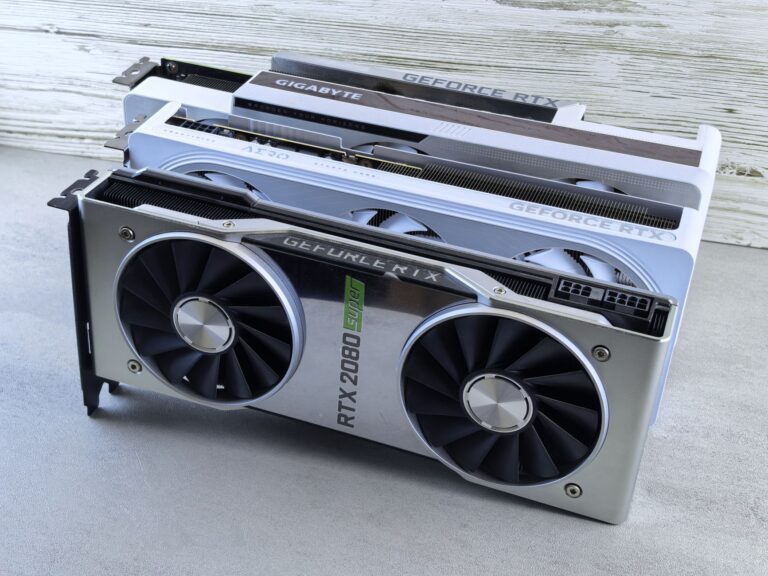
When you hear about “accelerators” in the context of modern computing, three acronyms often surface: GPU, TPU, and NPU. While all three are designed to speed up specific workloads, they each stem from distinct design philosophies and target different problem domains. A GPU (Graphics Processing Unit) was originally built to render images at high frame rates, a TPU (Tensor Processing Unit) was introduced by Google to accelerate deep‑learning tensor operations, and an NPU (Neural Processing Unit) is a broader category of silicon that focuses on neural‑network inference and training across a variety of vendors.
The key to understanding their differences lies in three dimensions: architecture, software ecosystem, and typical use cases. GPUs are massively parallel, SIMD‑style processors with a flexible instruction set, making them suitable for graphics, scientific simulations, and many AI workloads. TPUs, by contrast, are highly specialized matrix‑multiply engines that excel at the dense linear algebra at the heart of modern deep learning. NPUs sit somewhere in between, often blending matrix units with dedicated support for quantized inference, sparsity, and on‑chip memory hierarchies to reduce power consumption.
Historical Roots: From Rendering Pixels to Crunching Tensors
The journey began in the 1990s when graphics cards evolved from simple 2D blitters to programmable pipelines. NVIDIA’s GeForce 256, introduced in 1999, is widely regarded as the first “GPU” because it offered programmable vertex and pixel shading. Over the next two decades, the GPU’s parallel nature proved useful for general‑purpose computing (GPGPU), especially after the launch of CUDA in 2006, which gave developers a C‑like language to write kernels that run on the GPU.
Deep learning’s resurgence in the 2010s sparked a demand for even higher throughput for matrix multiplications. While GPUs could be used, researchers discovered that much of the silicon budget was wasted on features irrelevant to tensor math. In 2016 Google unveiled the TPU, a custom ASIC that stripped away unnecessary logic and focused on a 2‑dimensional systolic array for fast multiply‑accumulate (MAC) operations. The first TPU was offered as a cloud service, and later versions (TPU v2, v3, etc.) added more on‑chip memory and higher‑bandwidth interconnects.
Parallel to Google’s effort, semiconductor manufacturers began branding their own AI‑centric accelerators as NPUs. Companies such as Huawei (with its Ascend series), Apple (the Neural Engine inside A‑series chips), and Qualcomm (Hexagon DSP with AI extensions) have integrated NPUs directly into system‑on‑chips (SoCs) for mobile and edge devices. The NPU label is intentionally broader, covering any hardware that is optimized for neural‑network workloads, whether it uses matrix cores, vector units, or even analog computation.
Architectural Highlights: How Each Accelerator Is Built
While a full technical deep‑dive could fill a textbook, three architectural motifs capture the essence of each accelerator:
- GPU – Massive SIMD cores with shared memory. Modern GPUs contain thousands of small compute cores organized into streaming multiprocessors (SMs). Each SM has its own L1 cache and shared memory, enabling high‑throughput data reuse.
- TPU – Systolic matrix array and on‑chip high‑bandwidth memory. A TPU’s heart is a fixed‑size array (e.g., 128×128 MAC units) that streams data in a wave‑like fashion, minimizing data movement and achieving teraflops of dense matrix math with relatively low power.
- NPU – Hybrid mix of matrix units, vector engines, and dedicated control logic. NPUs often include support for quantized arithmetic (8‑bit or lower), sparsity pruning, and programmable micro‑kernels that can be tailored to a particular model architecture.
These design choices affect not just raw performance but also power efficiency and flexibility. A GPU’s general‑purpose nature means it can handle a wide variety of kernels—from ray tracing to physics simulations—while a TPU’s fixed matrix size can become a bottleneck for models that do not map neatly onto its array dimensions. NPUs aim to strike a balance by offering configurable precision and programmable pipelines, but they may not match the absolute throughput of a top‑tier GPU or TPU for the specific workloads they were designed to accelerate.
Software Ecosystems: From CUDA to TensorFlow and Beyond
Hardware is only half the story; the surrounding software stack determines how easily developers can extract performance.
GPU ecosystems revolve around CUDA (NVIDIA) and OpenCL (cross‑vendor). CUDA provides a rich set of libraries—cuBLAS, cuDNN, and cuFFT—that abstract low‑level details while delivering near‑optimal performance. The ecosystem also includes profiling tools like Nsight and a thriving community of tutorials and research papers.
TPU ecosystems are tightly coupled with TensorFlow. Google’s XLA compiler translates high‑level TensorFlow graphs into TPU‑specific instructions, handling data layout and placement automatically. While TPUs can be programmed via other frameworks (e.g., PyTorch with XLA), the experience is most polished when using TensorFlow.
NPU ecosystems vary widely. Some vendors release proprietary SDKs (e.g., Huawei’s Ascend AI Processor with the Ascend Compute Library), while others provide open‑source runtimes that integrate with popular AI frameworks via ONNX conversion. Mobile developers often encounter NPUs through higher‑level APIs like Apple’s Core ML, Android’s Neural Networks API (NNAPI), or Qualcomm’s Snapdragon Neural Processing Engine, which abstract the hardware details and let apps run inference with a single line of code.
The takeaway is that the maturity of the software stack can be a decisive factor when choosing an accelerator for a project. GPUs benefit from decades of community development; TPUs have a more focused but powerful TensorFlow pipeline; NPUs are still consolidating standards, though the rise of ONNX and universal inference runtimes is narrowing the gap.
Real‑World Use Cases: Where Each Accelerator Shines
Understanding which accelerator fits a given workload often comes down to three practical considerations: latency requirements, batch size, and power envelope.
GPUs dominate in high‑performance computing (HPC) and large‑scale training. Researchers training transformer models with batch sizes in the thousands typically rely on multi‑GPU clusters, taking advantage of GPU interconnects such as NVLink. GPUs also remain the go‑to for graphics‑intensive applications—gaming, VR, and professional rendering.
TPUs are most visible in cloud‑based training and inference services. Because a TPU’s matrix engine is designed for dense 32‑bit floating‑point or bfloat16 math, it excels at workloads that can be expressed as large matrix multiplications, such as convolutional neural networks (CNNs) and large language models. Google’s own services (Search, Translate, Photos) have leveraged TPUs to reduce training time dramatically.
NPUs are purpose‑built for edge and mobile scenarios where power and latency are paramount. A smartphone’s NPU can run a face‑unlock model in a few milliseconds while consuming a fraction of the energy a GPU would require. In autonomous vehicles, NPUs process sensor fusion pipelines and object‑detection networks locally, ensuring decisions are made within strict real‑time windows.
It’s also common to see hybrid deployments: a data‑center might use GPUs for initial research, TPUs for production‑scale training, and NPUs for on‑device inference, creating a pipeline that leverages each accelerator’s strengths.
Future Directions: Convergence, Heterogeneity, and New Paradigms
While the acronyms suggest distinct categories, the industry is moving toward a more blended landscape. Several trends illustrate this convergence:
- Unified memory models. Both NVIDIA’s recent GPUs and Google’s TPUs are adopting shared address spaces that simplify programming across CPU, GPU, and accelerator memories.
- Support for mixed precision. GPUs now routinely support FP16, bfloat16, and even INT8, narrowing the gap with NPUs that historically focused on low‑precision inference.
- Composable accelerators. Cloud providers are offering “heterogeneous instances” that combine GPUs, TPUs, and FPGAs within a single node, letting developers allocate the right engine to each stage of a pipeline.
Another emerging concept is the “AI‑centric processor” that incorporates traditional CPU cores, GPU‑style compute, and NPU‑style tensor units on a single die. AMD’s Instinct series and Intel’s upcoming Xe‑HPC architecture hint at this direction, aiming to reduce data movement overhead while delivering a versatile compute substrate.
On the software side, compiler technology is becoming a unifying force. Projects like LLVM’s MLIR (Multi‑Level IR) are designed to express high‑level machine‑learning constructs and lower them efficiently to any target—GPU, TPU, or NPU—potentially simplifying the developer experience across hardware generations.
Choosing the Right Accelerator for Your Project
When the decision comes down to “GPU vs. TPU vs. NPU,” consider the following checklist:
- Workload type: Dense training with large batches → GPU or TPU. Real‑time inference on edge → NPU.
- Precision needs: Research‑grade FP32/FP64 → GPU. Bfloat16 or INT8 inference → TPU/NPU.
- Power budget: Data‑center power is less constrained, favoring GPUs/TPUs. Battery‑powered devices demand NPUs.
- Software stack familiarity: Existing CUDA code → GPU. TensorFlow‑heavy pipelines → TPU. Mobile app development → NPU via Core ML or NNAPI.
- Scalability requirements: Multi‑node training with high‑speed interconnects → GPU clusters or TPU pods.
In practice, many organizations adopt a “best‑of‑both‑worlds” approach: prototype on a workstation GPU, transition to cloud TPUs for massive training runs, and finally ship models to devices equipped with NPUs for inference. This layered strategy maximizes performance while respecting cost, latency, and energy constraints at each stage of the product lifecycle.
Conclusion: A Complementary Trio Rather Than a Competition
The rise of AI has turned what were once niche hardware categories into central pillars of modern computing. GPUs, TPUs, and NPUs each bring a unique blend of architecture, software support, and power characteristics. Rather than viewing them as rivals, it’s more accurate to see them as complementary tools in a developer’s toolkit.
As workloads become more heterogeneous—mixing graphics, scientific simulation, massive training, and low‑latency inference—the ecosystem will likely continue to blur the lines between these accelerators. What remains constant is the need for robust software abstractions that let engineers focus on the problem domain, not the underlying silicon. Whether you’re rendering a photorealistic scene, fine‑tuning a language model, or enabling real‑time object detection on a smartwatch, understanding the strengths and trade‑offs of GPUs, TPUs, and NPUs will help you choose the right hardware and get the most out of today’s AI‑driven world.
