
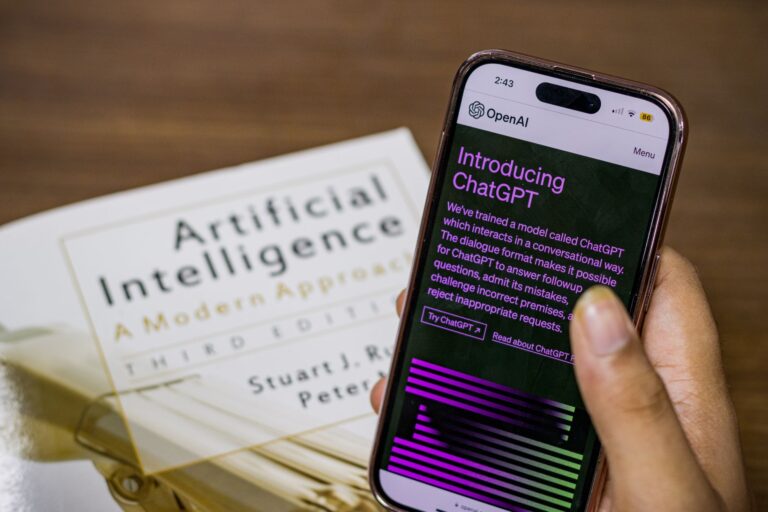
Overview of ChatGPT and Claude
When a student reaches for an AI‑powered helper, the two most talked‑about options are OpenAI’s ChatGPT and Anthropic’s Claude. Both are large‑language models (LLMs) that generate text in response to prompts, but they arrived from different design philosophies and have distinct histories. ChatGPT, first released to the public in late 2022, builds on OpenAI’s GPT‑3.5 and GPT‑4 families and has been iteratively refined through a mix of supervised fine‑tuning and reinforcement learning from human feedback (RLHF). Claude, introduced by Anthropic in 2023, is grounded in the company’s “Constitutional AI” approach, which emphasizes rule‑based safeguards and a more transparent alignment process.
For students, the practical question is how these technical origins translate into everyday study tasks—writing essays, summarizing research articles, brainstorming project ideas, or even debugging code. While both models can produce coherent, context‑aware text, the nuances of their conversational style, knowledge cutoff, and integration ecosystem often tip the scales for different learning scenarios.
Conversational Style and Tone
ChatGPT tends to adopt a conversational tone that mirrors the cadence of the prompt. If you ask it to explain a physics concept “as if I were a 10‑year‑old,” it will simplify language and use analogies. Conversely, a request for a “formal literature review” prompts a more academic diction. This flexibility comes from extensive exposure to a wide variety of writing styles across the internet, allowing the model to mimic the tone you specify.
Claude, on the other hand, is often described as more measured and “steady‑handed.” Anthropic trained Claude with a strong focus on reducing overly confident or speculative statements. In practice, Claude may pause before offering an answer it deems uncertain, and it frequently includes clarifying questions when the prompt lacks detail. For students who value cautious reasoning—especially in subjects like philosophy or ethics—Claude’s tendency to surface ambiguities can be a pedagogical advantage.
Knowledge Base and Accuracy
Both models draw on massive text corpora compiled up to roughly 2023. ChatGPT’s training data includes a blend of web pages, books, and code repositories, giving it a broad factual reach. OpenAI’s subsequent updates have added “plugins” and “web‑browse” capabilities (in specific tiers), allowing the model to fetch recent information beyond its static knowledge cut‑off.
Claude’s knowledge is similarly extensive, but Anthropic places a heavier emphasis on internal consistency. The company’s research papers note that Claude is designed to avoid “hallucinations” by cross‑checking statements against its own learned representations. While no model is immune to errors, many educators report that Claude’s explanations often include explicit caveats (“I’m not certain, but…”) that encourage critical follow‑up.
Integration with Study Tools
ChatGPT benefits from a mature ecosystem of integrations. The official OpenAI API powers plugins for popular platforms such as Microsoft Word, Google Docs, and the Canvas learning management system. In addition, third‑party extensions let students summon ChatGPT directly within note‑taking apps like Notion or Obsidian, streamlining the workflow from prompt to polished draft.
Claude’s integration landscape is still emerging, but Anthropic provides an API that developers can embed in custom educational apps. A growing number of university labs have built Claude‑powered tutoring bots for specific courses, and the model’s “system‑level instructions” allow educators to shape its behavior to align with course policies. For students who prefer open‑source or self‑hosted solutions, Claude’s more limited third‑party plugins may be a consideration.
Privacy, Data Handling, and Academic Integrity
Data privacy is a top concern for students, especially when personal essays or research ideas are involved. OpenAI retains user interactions for model improvement unless users opt out via the platform’s settings. For paid plans, OpenAI offers “Enterprise” options that provide stronger data isolation, but these are typically beyond the reach of individual students.
Anthropic takes a slightly different stance. Their public documentation emphasizes that Claude does not retain conversation history beyond the session, and they do not use user data to further train the model without explicit permission. This approach can be reassuring for institutions that must comply with strict data‑protection regulations. However, both services advise users to avoid sharing sensitive personal information, as no system can guarantee absolute confidentiality.
Cost and Access for Students
ChatGPT’s free tier gives access to a capable version of the model, but higher‑quality outputs (e.g., GPT‑4 level) require a subscription—currently priced per month. Many schools have negotiated campus‑wide licenses, giving students complimentary or discounted access. Additionally, OpenAI’s “ChatGPT Plus” plan includes faster response times and priority access during peak usage.
Claude offers a free research preview that is generous for occasional use, but sustained, high‑volume interaction typically requires a paid plan. Anthropic’s pricing is structured per token (a fragment of text), which can be more economical for short queries but adds up for extensive drafting. Some universities have begun pilot programs that provide students with Claude credits as part of AI‑enhanced curricula, though such initiatives are less widespread than OpenAI’s campus agreements.
Choosing the Right Tool for Your Needs
Ultimately, the decision comes down to the specific tasks you face and the environment in which you work. Below is a quick checklist to help you weigh the factors that matter most:
- Desired tone: ChatGPT for adaptable voice; Claude for measured, cautious explanations.
- Integration needs: ChatGPT for ready‑made plugins; Claude for custom‑built educational tools.
- Data‑privacy priorities: Claude’s session‑only storage vs. OpenAI’s opt‑out model.
- Budget constraints: Free tier suffices for light use on both; paid tiers differ in pricing structure.
- Course alignment: Claude’s system instructions can be tuned to follow syllabus guidelines; ChatGPT can be guided but may require more prompt engineering.
Students who frequently need to cite sources or verify facts might favor ChatGPT’s browsing extensions, while those working on reflective essays or ethics assignments may appreciate Claude’s tendency to surface uncertainties. It’s also worth experimenting with both side by side on a small assignment to see which output feels more natural to your personal workflow.
Conclusion: A Complementary Duo Rather Than a Winner‑Take‑All
In the rapidly evolving landscape of AI tutoring, framing the conversation as “ChatGPT vs. Claude” can be tempting, but the reality is more nuanced. Each model brings a distinct blend of conversational agility, safety mechanisms, and integration pathways. For the modern student, the most productive strategy is often to treat the two as complementary tools—leveraging ChatGPT’s breadth of knowledge and plugin ecosystem for drafting and research, while turning to Claude when a cautious, principle‑driven response is needed.
As both companies continue to refine their models, we can expect improvements in factual reliability, reduced bias, and tighter integration with the platforms students already use. Staying informed about updates, institutional policies, and emerging best practices will ensure that AI remains a supportive ally rather than a shortcut that undermines learning. In the end, the best AI assistant is the one that helps you think more clearly, write more confidently, and engage more deeply with the material you’re studying.
