
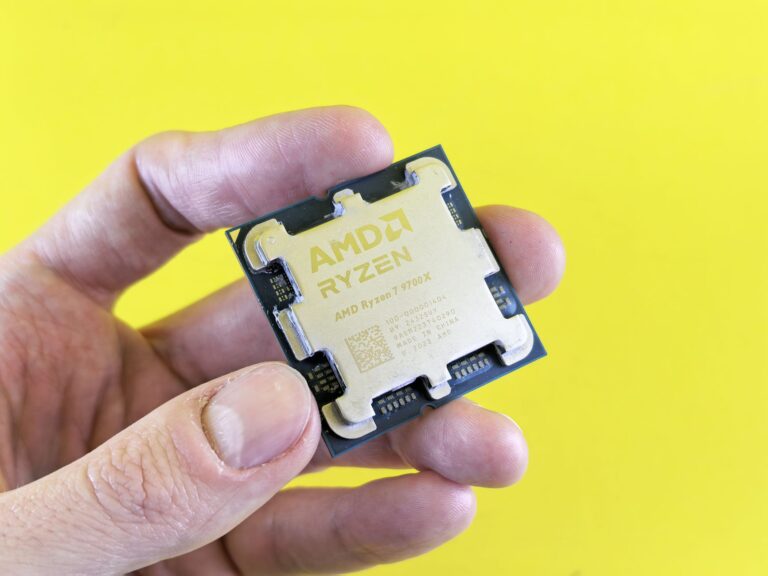
Overview of the Two Families
AMD’s Ryzen brand has become synonymous with high‑performance desktop and mobile processors, but the company is now expanding its portfolio to address the growing demand for on‑device artificial‑intelligence (AI) workloads. The result is the emerging Ryzen AI 300 series, a line of processors that embed dedicated AI accelerators alongside traditional CPU cores. Across the same market segment, the well‑established Ryzen 8000 series—built on the Zen 4 architecture—continues to dominate mainstream desktop and workstation use cases. While both families share AMD’s commitment to high IPC (instructions per cycle) and energy efficiency, they diverge sharply in design philosophy, target workloads, and platform requirements.
Core Architecture and Process Technology
The Ryzen 8000 series launched in late 2023 and is manufactured on TSMC’s 5 nm N5 process. Zen 4 cores deliver up to a 13 % IPC uplift over the previous Zen 3 generation, with boost clocks that routinely exceed 5 GHz on flagship models such as the Ryzen 9 7950X. The series supports DDR5‑5600 memory, PCIe 5.0, and incorporates AMD’s Infinity Fabric for low‑latency inter‑core communication.
In contrast, the Ryzen AI 300 series is built on a hybrid architecture that pairs Zen 4‑based CPU cores with a separate AI engine derived from AMD’s Radeon Instinct technology. Early samples have been fabricated on the 5 nm node as well, but the AI block is a distinct silicon die that is either integrated on the same package (chip‑on‑wafer‑level) or offered as a discrete tile in higher‑end SKUs. This approach mirrors the industry trend of “AI‑first” silicon, allowing the AI engine to execute matrix‑multiply operations at higher throughput than the general‑purpose cores could achieve.
Integrated AI Capabilities
The defining feature of the Ryzen AI 300 line is its on‑chip AI accelerator. AMD markets the engine as capable of handling inference tasks for models such as image classification, speech‑to‑text, and recommendation engines without offloading to a GPU or external accelerator. The AI block supports industry‑standard frameworks including ONNX Runtime and TensorFlow Lite, and it offers a set of hardware‑accelerated instructions—similar to Intel’s AVX‑512 VNNI or Apple’s Neural Engine.
Benchmarks from early review units show that the AI accelerator can deliver inference latency improvements of roughly 2‑3× compared to running the same workload on the CPU cores alone. For developers, this translates to faster response times in edge devices like laptops, thin clients, or embedded systems where power and space constraints limit the use of discrete GPUs.
By comparison, the Ryzen 8000 series lacks a dedicated AI block. Users rely on the CPU’s vector units (AVX2) or, in some configurations, a paired Radeon graphics core (APU variants) to handle AI workloads. While the CPU can still run inference, performance scales with core count and clock speed rather than with specialized matrix units, making it less efficient for high‑throughput AI tasks.
Performance in Traditional Workloads
When it comes to gaming, content creation, and general productivity, the Ryzen 8000 series remains the benchmark for desktop performance. The series’ high core counts and aggressive boost frequencies translate to strong single‑threaded scores in titles like “Cyberpunk 2077” and excellent multi‑threaded throughput in rendering suites such as Blender or Adobe Premiere Pro.
The AI‑focused Ryzen AI 300 chips, however, allocate a portion of the silicon budget to the AI engine, which can modestly reduce the maximum clock speed of the CPU cores in some SKUs. In pure CPU benchmarks (e.g., Cinebench R23), the AI 300 models typically sit a few percent behind their 8000‑series counterparts with comparable core counts. This trade‑off is intentional: the AI accelerator compensates by delivering superior performance in workloads that can offload to it, such as real‑time video upscaling using AI‑based algorithms.
For mixed‑use scenarios—where a user runs a productivity suite alongside occasional AI inference—the Ryzen AI 300 can actually feel faster overall, because the AI engine handles the heavy lifting without stalling the CPU cores.
Power Efficiency and Thermals
Both families benefit from the 5 nm process, but their power envelopes differ. The Ryzen 8000 series’ TDPs range from 65 W for mid‑range 6‑core models to 170 W for the 16‑core flagship. Power consumption scales predictably with clock speed and workload, and the CPUs have become more efficient per clock compared with previous generations.
The Ryzen AI 300 series adds an extra power domain for the AI accelerator. In idle or low‑AI‑usage scenarios, the AI block can power down, keeping overall consumption close to a standard 8000‑series part. During intensive AI inference, the accelerator can draw several watts on its own, but because it offloads work from the CPU cores, total system power can stay competitive or even lower than a CPU‑only solution that would otherwise run at maximum boost.
Thermally, the AI accelerator’s die is typically smaller than a full CPU core cluster, allowing manufacturers to place it near the CPU’s heat spreader without significantly increasing the cooling requirement. Nonetheless, high‑performance desktop builds that pair a Ryzen AI 300 with a powerful discrete GPU may benefit from a more robust cooling solution to keep the combined package within safe temperature limits.
Platform and Ecosystem Considerations
Both processor families use AMD’s AM5 socket, which means they share the same motherboard ecosystem, including support for DDR5 memory and PCIe 5.0 lanes. However, the AI‑enabled models often ship with an additional firmware layer that exposes the AI accelerator to the operating system. AMD provides a suite of drivers and a runtime library (AMD AI SDK) that developers can integrate into their software stack.
The broader ecosystem around AI workloads is still maturing. Major operating systems such as Windows 11 and certain Linux distributions now include basic support for AMD’s AI hardware, but third‑party application support varies. Some video editing tools already leverage the AI engine for features like auto‑tone mapping, while others require custom plugins.
For users who primarily need a proven, out‑of‑the‑box experience for gaming or professional content creation, the Ryzen 8000 series offers a straightforward path with well‑documented BIOS settings and a wealth of community knowledge. Those interested in experimenting with on‑device AI, developing edge‑AI applications, or building compact workstations where a separate GPU is undesirable may find the Ryzen AI 300’s integrated accelerator a compelling addition.
Who Should Choose Which?
Choosing between the Ryzen AI 300 and the Ryzen 8000 series ultimately hinges on the primary workload and the importance of on‑device AI acceleration:
- Gaming and High‑End Content Creation: The Ryzen 8000 series delivers higher raw CPU performance and is supported by a mature ecosystem of drivers and BIOS profiles.
- Edge AI Development and AI‑Enhanced Applications: The Ryzen AI 300’s built‑in accelerator offers lower latency and better power efficiency for inference tasks, making it ideal for developers and power‑conscious users.
- Mixed‑Use Desktop Builds: Users who want strong CPU performance but also plan to run AI features (e.g., AI‑upscaled streaming, voice assistants) may appreciate the hybrid nature of the AI 300 line.
- Future‑Proofing: As AI features become more prevalent in software, the AI 300 series positions itself as a forward‑looking platform, whereas the 8000 series will continue to serve as a reliable workhorse for traditional workloads.
In practice, many builders will opt for a Ryzen 8000 series CPU paired with a discrete GPU that includes its own AI cores (such as the Radeon RX 7000 series or Nvidia’s RTX 40‑series). This configuration delivers the best of both worlds: top‑tier graphics performance and flexible AI acceleration. However, for compact builds, laptops, or specialized edge devices where adding a separate GPU is impractical, the Ryzen AI 300 series provides a unique value proposition that blends CPU and AI capabilities in a single package.
Looking Ahead
AMD’s foray into integrated AI accelerators reflects a broader industry shift toward heterogeneous computing, where CPUs, GPUs, and dedicated AI blocks cooperate to handle increasingly diverse workloads. While the Ryzen AI 300 series is still in its early adoption phase, the company’s roadmap suggests that future iterations will deepen the integration—potentially moving from a separate AI tile to a fully monolithic die that shares cache with the Zen cores.
For consumers and professionals, the key takeaway is that the choice between a Ryzen AI 300 and a Ryzen 8000 series processor should be guided by the balance between traditional performance needs and the desire for on‑device AI capability. As software continues to embed AI features—whether in photo editors, browsers, or productivity suites—the added flexibility of an integrated AI accelerator may become a decisive advantage. Until then, the Ryzen 8000 series remains the benchmark for raw CPU horsepower, while the Ryzen AI 300 series offers a glimpse of a more AI‑centric future for AMD’s desktop platform.
