
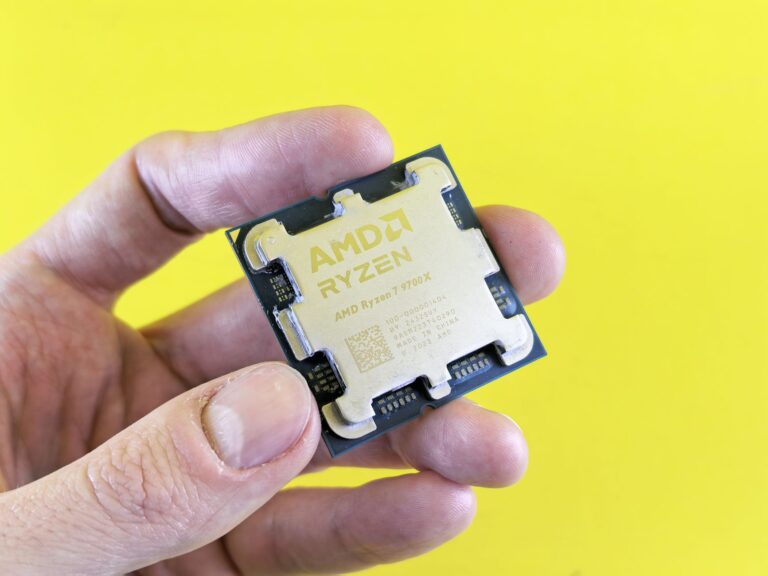
What Is the Ryzen AI 9 HX 370?
When AMD unveiled its Ryzen AI branding early in 2024, it signaled a new chapter for mobile computing: CPUs that combine traditional performance with a dedicated artificial‑intelligence engine. The Ryzen AI 9 HX 370 is the flagship of that lineup, aimed at power users who need both raw CPU horsepower and on‑device AI capabilities. In essence, it is an 8‑core Zen 4‑based processor with a separate AI accelerator tile, integrated Radeon graphics, and a configurable 45 W TDP envelope for thin‑and‑light laptops.
Core Architecture – Zen 4 Meets the HX Form Factor
At its heart, the HX 370 uses AMD’s fourth‑generation Zen architecture, the same micro‑architecture that powers the desktop Ryzen 7000 series. The “HX” suffix indicates a high‑performance mobile part that can sustain higher boost clocks and power draw than the “HS” or “U” variants. In practice, the chip offers eight Zen 4 cores and sixteen threads, with a base clock around 2.8 GHz and boost clocks that can reach the low‑4 GHz range depending on cooling and firmware.
Because the HX 370 is built on a 5 nm process, AMD can pack a lot of silicon into a relatively small die. This enables a larger L3 cache (typically 32 MiB for an 8‑core part) and a more efficient power delivery system, which is crucial when the AI accelerator is active.
The Dedicated AI Accelerator – How It Works
AMD’s AI engine is not an afterthought; it is a separate tile on the same package that shares the same memory subsystem as the CPU and GPU. The accelerator is based on the same CDNA‑derived architecture that powers Radeon Instinct data‑center GPUs, but it is tuned for low‑power, high‑throughput inference workloads.
In practical terms, the AI tile can execute matrix‑multiply operations (the backbone of neural‑network inference) at rates measured in tera‑operations per second (TOPS). While AMD has not published a specific TOPS figure for the HX 370, the company’s launch materials for the broader Ryzen AI portfolio suggest performance comparable to other mobile AI accelerators on the market.
Developers can tap the AI engine through AMD’s open software stack, which includes support for ONNX Runtime, TensorFlow Lite, and PyTorch Mobile. The accelerator is also accessible via the ROCm runtime, allowing software to offload compatible layers automatically.
Graphics and Memory – A Balanced Trio
The “Radeon 780M” graphics core that ships with the HX 370 is built on RDNA 3. It offers up to 12 compute units, delivering solid 1080p gaming performance while sharing the same high‑speed LPDDR5X memory pool as the CPU and AI engine. Because the three components (CPU, GPU, AI accelerator) draw from a unified memory architecture, data does not need to be copied between separate memory banks—a key factor in keeping latency low for AI‑enhanced workloads.
- CPU: 8 Zen 4 cores, 16 threads, up to ~4 GHz boost.
- GPU: Radeon 780M, 12 CUs, up to 2.6 GHz boost.
- AI accelerator: CDNA‑based tile, multi‑TOPS inference performance.
- Memory: Up to 64 GB LPDDR5X, 6400 MT/s, shared across all three blocks.
- TDP: Configurable 35 W–45 W for laptop designs.
This balance means that a laptop built around the HX 370 can handle demanding content‑creation tasks, modern games, and AI‑enhanced applications without resorting to a separate discrete GPU or an external AI card.
Why On‑Device AI Matters for Consumers
Most people associate AI with cloud services, but the trend is shifting toward on‑device processing for three main reasons:
- Privacy: Sensitive data—photos, voice recordings, health metrics—stays on the device.
- Latency: Real‑time features like AI‑driven webcam background removal or language translation benefit from sub‑millisecond response times.
- Connectivity: Offline AI enables features in environments with limited or no internet access.
The HX 370’s AI accelerator directly addresses these concerns. For example, a laptop using this chip can run AI‑powered noise suppression in video calls without sending raw audio to the cloud, or it can perform on‑the‑fly image upscaling for photo editing apps, all while preserving battery life thanks to the accelerator’s efficiency.
Real‑World Use Cases in 2024 Laptops
Since its announcement, several OEMs have begun shipping laptops that feature the Ryzen AI 9 HX 370. While the exact model names vary, the common themes are high‑end ultrabooks aimed at creators, engineers, and gamers who also need AI features. Typical scenarios where the HX 370 shines include:
- Creative software acceleration: Adobe Photoshop and Lightroom now support AI‑based upscaling and noise reduction that can be offloaded to the AI tile, freeing the CPU for other tasks.
- Gaming enhancements: Modern titles increasingly integrate AI for upscaling (e.g., AMD’s FidelityFX Super Resolution) and adaptive audio. The HX 370 can run these algorithms natively, improving frame rates without a dedicated RTX‑style tensor core.
- Productivity tools: Microsoft Teams and Zoom leverage on‑device AI for background blur and live transcription, reducing bandwidth usage.
- Developer workloads: Engineers building edge‑AI applications can prototype directly on their laptop, testing inference speeds on the same silicon that will later ship in IoT devices.
How It Stacks Up Against the Competition
Intel’s answer to the AI‑centric mobile market is the “Core Ultra” line, which bundles a Xe‑based AI engine alongside its Meteor Lake cores. Both AMD and Intel are pursuing a similar philosophy: keep AI on the chip to avoid the latency and privacy penalties of cloud processing. In early benchmark impressions, the HX 370’s AI engine appears competitive, especially for workloads that favor matrix‑multiply operations common in computer‑vision models. However, performance can vary widely based on software optimization, and the ecosystem around AMD’s ROCm tools is still maturing compared to Intel’s OpenVINO.
From a power‑efficiency standpoint, the HX 370’s unified memory architecture gives it an edge in scenarios where data must be shuffled between CPU, GPU, and AI blocks. Intel’s design separates the AI engine more distinctly, which can lead to higher memory traffic. For most laptop users, the real differentiator will be the software ecosystem: developers who already work with AMD’s GPU stack may find the transition to Ryzen AI smoother.
Future Outlook – What the HX 370 Means for the Road Ahead
The introduction of the Ryzen AI 9 HX 370 is more than a single product launch; it marks AMD’s commitment to embedding AI at the silicon level across its entire portfolio. The same AI accelerator tile is slated to appear in future desktop “Ryzen AI Pro” processors and even in custom SoCs for embedded devices.
Looking ahead, we can expect several developments that build on the HX 370’s foundation:
- Expanded software support: As more developers adopt AMD’s AI libraries, cross‑platform tools will make it easier to write code that runs on CPUs, GPUs, and AI tiles without major rewrites.
- Higher TOPS density: Ongoing process‑node improvements will allow AMD to increase the AI engine’s compute density while keeping power draw modest.
- Hybrid designs: Future chips may blend multiple AI accelerator tiles for workloads that need both high‑throughput inference and low‑latency edge processing.
For consumers, the practical upshot is that the next generation of laptops will feel more responsive, smarter, and more private—all without needing a bulky external AI module. The Ryzen AI 9 HX 370 is the first clear step toward that vision, and its early adoption by OEMs suggests the market is ready for AI‑first hardware.
