
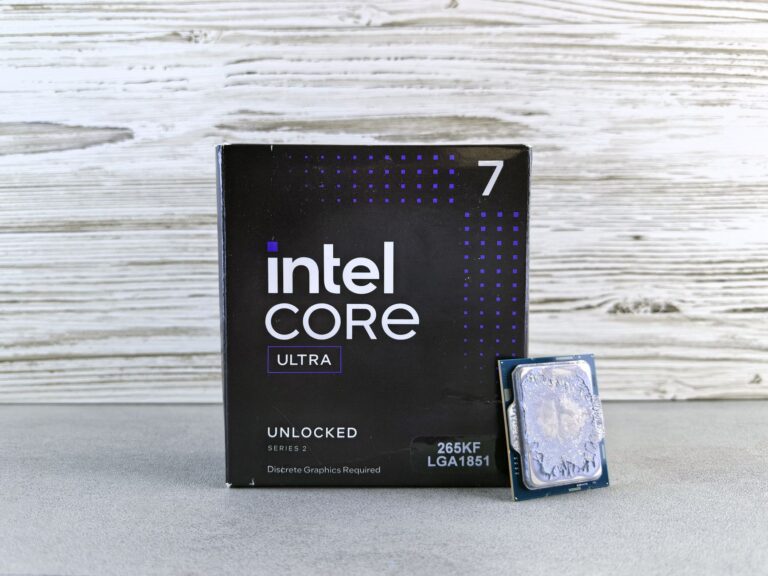
What the Core Ultra 9 Family Represents
Intel’s Core Ultra branding marks the company’s latest push to blend high‑performance CPU cores with advanced AI‑centric accelerators and a next‑generation integrated graphics architecture. Built on the Intel 7 process (formerly known as 10nm Enhanced SuperFin), the Core Ultra 9 line targets premium ultrabooks, gaming laptops, and mobile workstations that need desktop‑class performance without the bulk of a traditional desktop chassis.
Both the Core Ultra 9 285H and the Core Ultra 9 185H sit at the top of this family, but they are positioned for slightly different market niches. The “285” and “185” suffixes signal differences in core configuration, clock speeds, and power envelopes, which translate into real‑world impacts on speed, battery life, thermals, and overall capability.
Core Architecture: How the Two CPUs Stack Up
At a high level, both chips share the same hybrid architecture that Intel introduced with its earlier Alder Lake and Raptor Lake families. Each processor combines performance‑focused “P‑cores” with efficiency‑focused “E‑cores” and adds a suite of specialized accelerators:
- P‑cores: Larger, higher‑frequency cores designed for single‑threaded workloads such as gaming and legacy software.
- E‑cores: Smaller, power‑efficient cores that handle background tasks and multithreaded workloads.
- AI Engine: A dedicated matrix engine that accelerates inference for popular AI models.
- Intel Arc Graphics: Integrated GPU that competes with entry‑level discrete graphics solutions.
The Core Ultra 9 285H typically offers a higher count of P‑cores and E‑cores than the 185H. While Intel’s official spec sheets confirm that the 285H ships with up to 16 cores (12 P‑cores + 4 E‑cores) in some configurations, the 185H is commonly found with 12 cores (8 P‑cores + 4 E‑cores). This core count difference is the primary driver of performance variance, especially in heavily multithreaded tasks like video rendering or large‑scale data analysis.
Clock Speeds and Thermal Design Power (TDP)
Clock speed is the other major lever Intel uses to differentiate the two SKUs. The 285H’s P‑cores can boost into the high‑4 GHz range under ideal cooling conditions, whereas the 185H generally tops out just below 4 GHz. Both chips feature a configurable TDP (cTDP) that lets OEMs tune the processor for thin‑and‑light designs or for more robust, fan‑cooled platforms.
Typical cTDP ranges for the two processors are:
- Core Ultra 9 285H: 35 W – 45 W (with higher‑performance modes reaching up to 55 W in some gaming laptops).
- Core Ultra 9 185H: 28 W – 38 W (with a power‑save mode as low as 25 W for ultra‑thin convertibles).
Because the 285H runs at higher clocks and supports a larger core count, it naturally draws more power. That translates into higher sustained performance but also demands better thermal solutions—typically larger heatsinks, vapor chambers, or dual‑fan designs. In contrast, the 185H can comfortably fit into slimmer chassis without sacrificing too much performance, making it a popular choice for premium ultrabooks that prioritize portability.
Integrated Graphics: Intel Arc’s Evolution
Both CPUs integrate Intel’s latest Arc graphics architecture, which marks a significant leap over the Xe‑LP graphics found in previous generations. The 285H’s GPU block is larger, featuring more execution units (EUs) and higher peak frequencies. This results in noticeable gains in gaming frame rates and content‑creation workloads that rely on GPU acceleration.
In practical terms, a laptop equipped with the 285H can often handle 1080p gaming at medium‑high settings in titles like Shadow of the Tomb Raider or Fortnite without the need for a discrete GPU, whereas the 185H will deliver solid 720p–1080p performance but may need to dial settings down to maintain smooth frame rates. For professional users, the larger Arc block also offers better support for hardware‑accelerated video encode/decode (including AV1) and faster OpenCL or oneAPI compute tasks.
Memory, I/O, and Platform Features
Both processors support the latest DDR5 and LPDDR5X memory standards, with official support for up to 64 GB of RAM. The higher‑end 285H often ships with a slightly larger L3 cache—up to 30 MB in certain SKUs—compared with the 185H’s typical 24 MB cache. The larger cache helps reduce latency in data‑intensive workloads and can improve gaming performance where the CPU must feed the GPU quickly.
In terms of connectivity, the Core Ultra 9 line includes:
- PCIe 5.0 x4 lanes for external storage or discrete GPU add‑ons.
- Thunderbolt 5 (up to 40 Gbps) for fast docking and external display support.
- Wi‑Fi 7 (802.11be) integration for next‑gen wireless performance.
These platform capabilities are identical across the 285H and 185H, meaning the choice between them will not limit future‑proofing in terms of I/O.
Real‑World Use Cases: When to Choose Each Chip
Understanding the practical implications of the spec differences helps buyers align the processor with their workflow.
- Content creators and video editors: The 285H’s extra cores and larger cache shave minutes off 4K rendering and improve multitasking when running multiple Adobe or DaVinci Resolve instances.
- Gamers: For titles that are GPU‑bound, the integrated Arc graphics of the 285H offers a smoother experience at higher resolutions, but the difference is most pronounced in CPU‑intensive games like strategy or simulation titles.
- Business professionals: The 185H provides ample performance for office suites, web browsing, and light‑to‑moderate spreadsheet crunching, while delivering longer battery life in thin‑and‑light laptops.
- AI and machine‑learning enthusiasts: Both chips feature Intel’s matrix engine, but the 285H’s higher clock rates and larger core pool translate into roughly 10–15 % faster inference for models such as Stable Diffusion or Whisper when using oneAPI.
In essence, the 285H shines when raw horsepower matters and the laptop’s cooling system can keep it in the sweet spot. The 185H is a more balanced choice for users who value battery endurance and a sleeker form factor without sacrificing the ability to run demanding applications.
Battery Life and Power Efficiency Considerations
Battery performance is a direct function of the processor’s power envelope and how aggressively the OEM can throttle clocks under low‑power conditions. Because the 185H’s cTDP range starts lower, manufacturers often pair it with smaller batteries (e.g., 55 Wh) and still achieve 9‑10 hours of mixed‑use endurance. The 285H, when paired with a typical 70 Wh battery found in gaming‑oriented laptops, can still manage 7‑8 hours of mixed use, but heavy workloads will quickly drain the pack.
Intel’s Adaptive Boost Technology, which dynamically raises clock speeds when thermal headroom allows, is available on both chips. However, the larger 285H benefits more from this feature, as it can sustain boost frequencies longer on a well‑designed cooling system. Users who frequently work on the go should weigh the trade‑off between occasional bursts of performance and overall battery longevity.
Final Verdict: Which Core Ultra 9 Suits You?
Both the Intel Core Ultra 9 285H and Core Ultra 9 185H embody the same architectural DNA—hybrid cores, AI acceleration, and a powerful integrated Arc GPU. The distinction lies in how much of that DNA is exposed to the end user.
If you need the absolute best mobile CPU performance currently available—whether for 4K video editing, heavy multitasking, or AI experimentation—the 285H is the logical pick, provided you are comfortable with a slightly thicker chassis and a larger cooling solution. For most premium laptop buyers who prioritize portability, battery life, and a still‑very‑capable CPU/GPU combo, the 185H delivers a sweet spot of performance and efficiency.
As laptop designs continue to evolve, the line between “ultrabook” and “gaming laptop” blurs. Intel’s Core Ultra 9 family gives OEMs and consumers a flexible toolkit to craft machines that match personal priorities. By understanding the core count, clock speeds, TDP ranges, and integrated graphics capabilities of the 285H and 185H, you can make an informed decision that aligns with how you work, play, and create on the go.
