
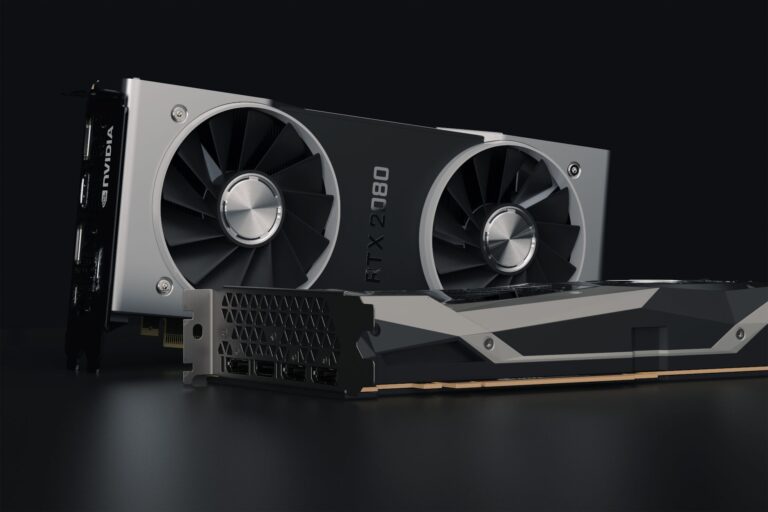
From Pixels to Parameters: The Rise of GPU Power in AI
Artificial intelligence, especially deep learning, has moved from academic labs to everyday products in less than a decade. The driving force behind that rapid progress isn’t just clever algorithms; it’s the raw computational muscle of modern graphics processing units (GPUs). While CPUs have long been the workhorses of general‑purpose computing, GPUs have become the specialized engines that turn massive neural networks from theory into reality.
Parallelism by Design
GPUs were originally built to render millions of pixels on a screen simultaneously. That requirement forced engineers to create hardware capable of handling thousands of tiny tasks at once. In deep learning, the same principle applies: training a neural network involves performing the same mathematical operation—typically a matrix multiplication—on countless data points. A GPU’s thousands of cores can execute these operations in parallel, delivering a speedup that would be impossible on a traditional multi‑core CPU.
Because each core is relatively simple, GPUs excel at the kind of dense, repetitive arithmetic that dominates deep‑learning workloads. When a model processes a batch of images, audio clips, or text fragments, the same set of weights is applied across the entire batch. A GPU can apply those weights to every element at the same time, dramatically reducing the time it takes to complete a training epoch.
Memory Bandwidth: Feeding the Compute Engine
Parallel compute power alone isn’t enough. Neural networks move huge amounts of data in and out of memory during training and inference. GPUs are equipped with high‑speed memory (often GDDR6 or HBM) that offers bandwidth far beyond typical system RAM. This bandwidth ensures that the thousands of cores stay fed with data, preventing the “memory bottleneck” that would otherwise slow the whole process.
For example, modern data‑center GPUs can move data at rates measured in the terabytes per second range, allowing them to keep up with the massive tensor operations that underlie state‑of‑the‑art models. This combination of compute and memory performance is why a single GPU can sometimes outperform a whole cluster of CPUs for the same task.
Specialized Hardware Features for AI
Beyond raw parallelism and bandwidth, GPU manufacturers have added purpose‑built features that directly accelerate AI workloads:
- Tensor cores: Dedicated matrix‑multiply units that perform mixed‑precision arithmetic (often FP16 or bfloat16) with higher throughput than regular FP32 cores.
- CUDA and ROCm ecosystems: Software stacks that expose GPU capabilities to popular deep‑learning frameworks such as TensorFlow and PyTorch, simplifying development.
- Unified memory: A shared address space between the CPU and GPU that reduces data‑transfer overhead.
- Multi‑instance GPU (MIG): Partitioning a single physical GPU into several isolated instances, allowing multiple users or workloads to share resources efficiently.
These innovations turn a generic graphics chip into a specialized AI accelerator without sacrificing its flexibility for other tasks like rendering or scientific simulation.
Scaling Up: From Single GPUs to Whole Farms
When researchers began training models with millions of parameters, a single GPU was sufficient. Today, cutting‑edge language models contain billions, even trillions, of parameters. Training such models requires distributing the workload across dozens or hundreds of GPUs working in concert.
GPU clusters rely on high‑speed interconnects (such as NVLink or InfiniBand) to share gradients and synchronize weights during training. The low latency and high bandwidth of these connections are essential; otherwise, the overhead of communication would erase the benefits of parallel compute.
Frameworks like Distributed Data Parallel (DDP) in PyTorch or Horovod for TensorFlow abstract much of this complexity, but the underlying hardware—the GPUs and their interconnects—remains the limiting factor in how quickly a model can converge.
Energy Efficiency: More Work per Watt
Power consumption is a practical concern for any large‑scale AI operation. GPUs tend to deliver more floating‑point operations per watt than CPUs, largely because their architecture is optimized for parallel arithmetic rather than general‑purpose control flow. This efficiency translates into lower operating costs for data centers and reduces the environmental footprint of AI research.
In practice, organizations often benchmark the “performance per watt” of different hardware configurations when planning large training jobs. The results consistently show that GPUs—especially those with dedicated tensor cores—outperform CPUs in this metric, making them the preferred choice for both cost‑sensitive startups and massive cloud providers.
The Future: Beyond GPUs?
While GPUs dominate today’s AI landscape, the field continues to explore alternatives. Custom ASICs (application‑specific integrated circuits) like Google’s TPU and emerging neuromorphic chips promise even higher efficiency for particular workloads. However, GPUs maintain a unique advantage: a mature software ecosystem and the flexibility to handle a wide variety of tasks beyond deep learning, from video encoding to scientific simulations.
As AI models become more complex, the demand for raw compute will only increase. Until a new hardware paradigm matures enough to supplant the GPU’s blend of performance, programmability, and ecosystem support, GPUs will remain the engine that powers the next wave of artificial‑intelligence breakthroughs.
