
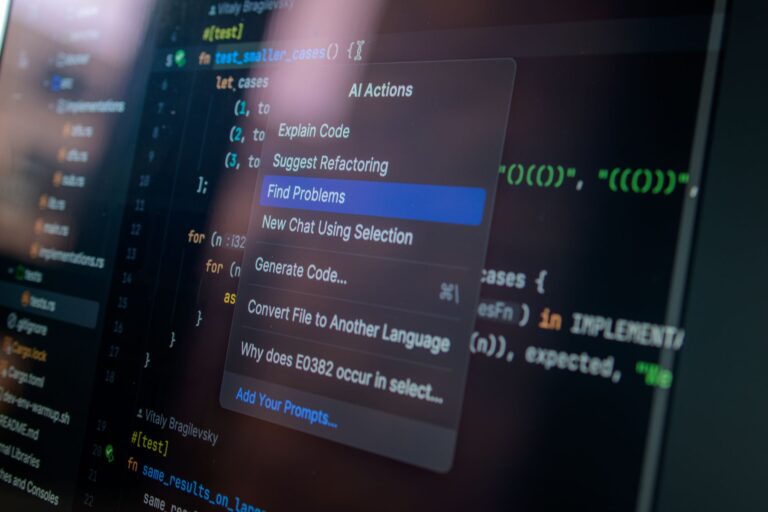
From Autocomplete to Autonomous Agents
When developers first encountered code completion tools, the experience felt like a clever spell‑checker for programming languages. Today those tools have evolved into full‑blown AI agents capable of writing, testing, and even deploying software with minimal human prompting. Powered by large language models (LLMs) that have been trained on billions of lines of open‑source code, these agents can understand intent expressed in natural language, generate syntactically correct snippets, and even suggest architectural patterns. The shift from simple autocomplete to autonomous assistance marks a new phase in the software development lifecycle, one where the boundary between human and machine contribution is increasingly fluid.
AI as a Pair Programmer
Perhaps the most visible impact of AI agents is their role as a virtual pair programmer. Integrated directly into editors such as Visual Studio Code, JetBrains IDEs, or cloud‑based workspaces, these agents listen to the developer’s context—imports, variable names, and recent edits—and generate code that fits the current task. Unlike static templates, the suggestions adapt on the fly, offering whole functions, test cases, or even refactored modules.
- Context‑aware completions that respect project‑specific conventions.
- Instant generation of boilerplate code, reducing repetitive typing.
- Inline explanations that help junior developers understand why a piece of code works.
- Rapid prototyping of APIs or UI components from plain English descriptions.
Because the AI operates in the same environment as the developer, it can be consulted at any moment—much like a teammate who never tires. The result is a measurable reduction in “context‑switching” time, as developers spend less effort looking up documentation or searching for example snippets.
Accelerating Testing and Quality Assurance
Testing has traditionally been a bottleneck, especially when teams try to maintain high coverage across rapidly changing codebases. AI agents are now being employed to generate unit tests, integration tests, and even property‑based tests automatically. By analyzing function signatures and existing test suites, the agent can suggest edge cases that a human might overlook.
Beyond test creation, AI can also assist in test maintenance. When a refactor changes a method’s signature, the agent can locate affected tests, update assertions, and flag any inconsistencies. In continuous integration pipelines, AI‑driven test flakiness detectors scan recent failures to determine whether they stem from environmental issues, flaky assertions, or genuine regressions, prompting developers with concise remediation steps.
Streamlining DevOps and Continuous Integration
Modern DevOps pipelines are composed of many small, scripted steps: building containers, applying infrastructure‑as‑code, rolling out canary releases, and monitoring performance metrics. AI agents equipped with function‑calling capabilities can orchestrate these steps on behalf of the developer. For example, a developer might type, “Deploy the latest version of the payment service to staging with zero downtime,” and the agent translates that request into a series of Helm commands, Kubernetes manifests, and health‑check scripts.
Because the agent can read the repository’s CI configuration files, it can also suggest optimizations—such as caching frequently built artifacts or parallelizing independent test suites—to shave minutes off each pipeline run. In large organizations, these incremental savings compound into significant cost reductions and faster feedback cycles.
Documentation and Knowledge Management
One of the most time‑consuming tasks for developers is keeping documentation up to date. AI agents can generate README files, API reference pages, and inline code comments directly from the source code. By parsing function docstrings, type annotations, and usage examples, the agent produces human‑readable explanations that are immediately publishable.
Beyond static docs, AI agents can act as conversational knowledge bases. When a developer asks, “How does the authentication middleware handle token refresh?” the agent can retrieve the relevant code paths, summarize the flow, and even point to the most recent commit that introduced the logic. This instant access to project‑specific knowledge reduces reliance on scattered wiki pages and mitigates the “bus factor” risk.
Challenges and Ethical Considerations
While the productivity gains are compelling, the integration of AI agents into software development raises several practical and ethical concerns.
- Hallucinations and incorrect code: Language models sometimes generate syntactically correct but semantically wrong code. Without vigilant review, these mistakes can slip into production.
- Licensing and provenance: When an AI agent draws from publicly available repositories, the origin of generated snippets can be ambiguous, potentially introducing incompatible licenses into a project.
- Bias in suggestions: Models trained on existing codebases may inherit outdated patterns or insecure practices, reinforcing them unintentionally.
- Security exposure: Automated agents that modify deployment pipelines must be constrained by strict role‑based access controls to avoid accidental privilege escalation.
Addressing these issues requires a combination of technical safeguards—such as automated linting, static analysis, and model fine‑tuning on vetted internal code—and organizational policies that define the acceptable use of AI‑generated artifacts.
Looking Ahead: The Future Role of AI Agents
The next wave of AI agents is expected to be more autonomous, moving from “assistant on demand” to “continuous collaborator.” Emerging frameworks that combine LLMs with tool‑use plugins (for example, LangChain or OpenAI function calling) enable agents to fetch data from issue trackers, modify code in multiple repositories, and even negotiate merge conflicts by presenting rationales to human reviewers.
In the long term, software development may resemble a dialogue where humans set high‑level goals—such as “implement a multi‑tenant billing system with GDPR compliance”—and agents iteratively propose designs, write code, run tests, and refine the solution based on feedback. This collaborative loop could free developers to focus on strategic problem solving, user experience, and ethical stewardship, while routine implementation details are handled by the AI.
To harness this potential responsibly, teams should adopt a “human‑in‑the‑loop” mindset: treat AI suggestions as drafts, enforce rigorous code review practices, and continuously monitor for unintended consequences. As the technology matures, the line between tool and teammate will blur, but the core principle remains the same—AI agents are amplifiers of human creativity, not replacements for it.
