
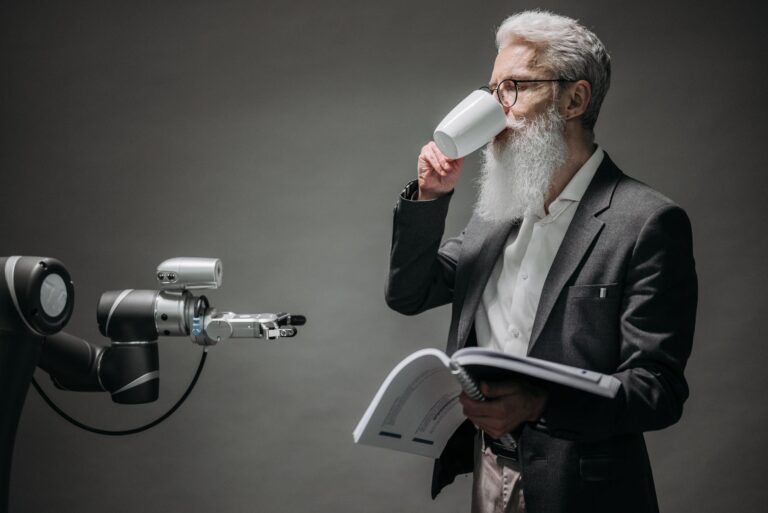
Artificial intelligence agents—software entities that can perceive, reason, and act—have moved from research labs into everyday tools like personal assistants, customer‑service bots, and autonomous vehicles. As these agents become more capable, a pressing question surfaces: can they operate effectively without human supervision? The answer isn’t a simple yes or no. It depends on the domain, the level of autonomy, the safety mechanisms in place, and the societal expectations we attach to AI. In this article, we explore the current state of autonomous AI agents, the technical and ethical hurdles they face, and where the line between supervision and independence might realistically be drawn.
From Rule‑Based Scripts to Self‑Learning Agents
Early AI agents relied on hard‑coded rules: a chatbot would follow a decision tree, and a robotic arm would repeat a pre‑programmed motion. Supervision was implicit—developers designed the behavior and intervened only when the system failed. Modern agents, however, employ machine‑learning models that adapt from data, reinforcement learning that discovers strategies through trial and error, and large language models that generate novel text on the fly. This shift means agents can handle ambiguous inputs and novel situations without explicit human instructions, but it also makes their internal decision‑making less transparent.
Where Human Oversight Is Still Essential
In high‑stakes environments—healthcare, finance, aviation, and public safety—human supervision remains a non‑negotiable safety net. For example, AI‑driven diagnostic tools can flag potential anomalies in medical images, yet radiologists must verify findings before any treatment decision is made. Similarly, algorithmic trading systems can execute thousands of transactions per second, but regulators require “kill switches” and human operators to monitor for market‑disrupting behavior. The prevailing principle in these sectors is human‑in‑the‑loop or human‑on‑the‑loop, ensuring that AI augments rather than replaces human judgment.
Autonomous Domains Where Supervision Is Minimal
Some applications are designed from the ground up for low‑level supervision. Smart thermostats, recommendation engines, and spam filters operate continuously, adjusting parameters based on user feedback or statistical patterns. In these cases, the cost of occasional error is low, and users implicitly accept a degree of autonomy. Autonomous drones used for agricultural monitoring or infrastructure inspection also function with limited oversight; they follow predefined flight plans, capture data, and return results for later analysis. The key difference is that the impact of a mistake is constrained, allowing developers to relax supervision requirements.
Technical Challenges to Full Autonomy
Even in seemingly safe domains, achieving truly unsupervised operation presents several technical hurdles:
- Robustness to Distribution Shift: Models trained on historical data may falter when confronted with novel inputs, such as unusual weather patterns affecting an autonomous vehicle.
- Explainability: Without understandable reasoning, it’s difficult for users to trust an agent’s decisions or to intervene effectively when things go awry.
- Real‑Time Adaptation: Continuous learning in live environments raises concerns about “catastrophic forgetting,” where new information overwrites valuable prior knowledge.
- Security: Autonomous agents are vulnerable to adversarial attacks that can manipulate inputs or exploit system weaknesses.
Addressing these issues often requires a hybrid approach that combines learning‑based components with rule‑based safeguards, and it typically involves some degree of human oversight during development and testing.
Ethical and Legal Dimensions of Unsupervised AI
The move toward less supervised AI agents triggers profound ethical debates. If an autonomous system makes a harmful decision—say, a self‑driving car fails to avoid a pedestrian—who bears responsibility? Current legal frameworks generally hold the operator or the manufacturer liable, but as agents become more independent, attributing blame becomes murkier. Moreover, unsupervised agents can propagate biases present in their training data, leading to unfair outcomes in hiring tools or content moderation bots. Ethical AI guidelines from organizations like the IEEE and the European Commission stress accountability, transparency, and human dignity, urging developers to embed oversight mechanisms even when agents appear capable of operating alone.
Designing Safe “Supervision‑Lite” Systems
Researchers and engineers are experimenting with ways to reduce the burden of continuous human monitoring while preserving safety. One promising concept is self‑verification, where an AI agent runs internal checks against known constraints before acting. For instance, a robotic warehouse picker may simulate a planned motion to ensure it won’t collide with obstacles before executing it. Another approach is human‑on‑demand oversight: the system alerts a human operator only when confidence drops below a threshold, rather than requiring constant supervision. These strategies aim to strike a balance—leveraging AI’s speed and adaptability while keeping a human safety net in place for edge cases.
Looking Ahead: When Might Full Autonomy Be Realistic?
Predicting a timeline for completely unsupervised AI agents is speculative, but several trends suggest incremental progress:
- Improved simulation environments enable agents to train extensively in virtual worlds before deployment, reducing the likelihood of surprise failures.
- Advances in causal reasoning help models distinguish correlation from cause, enhancing decision quality in dynamic settings.
- Regulatory bodies are beginning to define standards for “acceptable risk” in autonomous systems, providing clearer pathways for deployment.
Even as these developments mature, most experts agree that full autonomy will be domain‑specific. In low‑risk, well‑bounded tasks—such as inventory management or automated content tagging—agents may soon operate with minimal human input. In contrast, complex, high‑impact arenas will likely retain a human supervisory layer for the foreseeable future.
Ultimately, the question isn’t whether AI agents can work without any human supervision, but rather how we design the partnership between humans and machines. By embedding transparency, fail‑safe mechanisms, and ethical guardrails, we can harness the power of autonomous agents while ensuring they remain accountable tools, not inscrutable black boxes. The future will be less about eliminating supervision and more about redefining it: shifting from constant watchfulness to strategic, context‑aware oversight that lets AI do what it does best—process information at scale—while humans focus on judgment, values, and creativity.
