
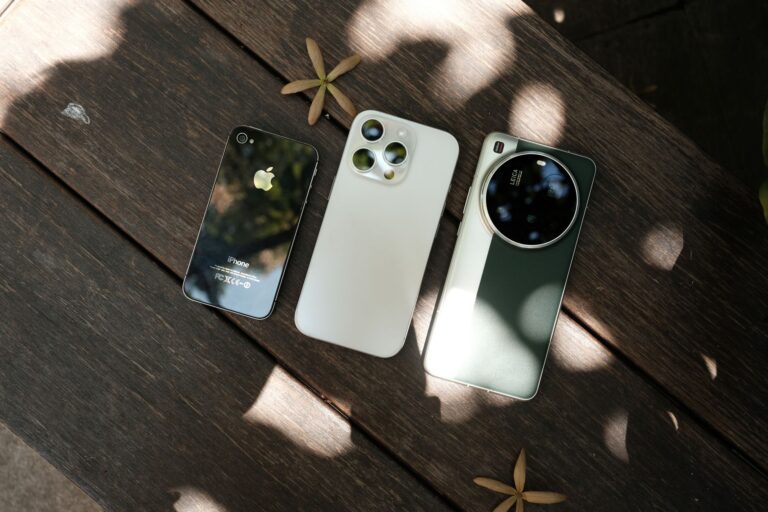
From Grainy Grayscale to Computational Mastery
When the first camera phones hit the market in the early 2000s, most of us treated them as a novelty—a way to snap a quick picture of a concert ticket or a group selfie without digging out a separate device. Fast‑forward two decades, and the smartphone camera is now a primary tool for professional‑grade photography, journalism, and content creation. This evolution has been driven by a blend of hardware breakthroughs, software ingenuity, and shifting consumer habits.
Early Days: The First Clickable Pixels
The first widely recognized camera phone was the Nokia 7650, released in 2002. It sported a 0.3‑megapixel sensor and a fixed‑focus lens, producing low‑resolution, black‑and‑white images that were more impressive for their convenience than for their quality. Around the same time, Sony’s Ericsson T68i offered a 0.3‑megapixel shooter with basic color capture, but both devices were limited by tiny sensors, lack of flash, and minimal software processing.
These early phones introduced two concepts that would shape the future: the integration of a sensor into a slim handset and the idea that a phone could replace a point‑and‑shoot camera for casual use.
Hardware Arms Race: Megapixels, Sensors, and Optics
By the late 2000s, manufacturers began pushing hardware limits to satisfy a growing appetite for clearer, larger images. The introduction of 5‑megapixel sensors in phones like the HTC Dream (2008) and the Samsung Galaxy S (2010) marked a turning point. Larger pixel counts allowed for more detail, but true image quality also depends on sensor size, lens quality, and the ability to gather light.
- Sensor size: Early phones used 1/12‑inch sensors; modern flagship devices often employ 1/1.7‑inch or larger, allowing each pixel to capture more photons.
- Pixel technology: Back‑illuminated sensors (BSI) became common around 2013, flipping the photodiode layout to improve low‑light performance.
- Optical image stabilization (OIS): First seen in the Sony Xperia Z series (2013), OIS physically counteracts hand shake, making longer exposures feasible without blur.
These improvements culminated in the “12‑megapixel era” of the mid‑2010s, where almost every flagship phone boasted at least a 12‑MP primary sensor, larger pixels, and OIS. The consistency of hardware upgrades set the stage for a more profound transformation: software.
Software Takes Center Stage: Computational Photography
Even with better sensors, a smartphone’s tiny lens still struggles in low light compared to a DSLR. The solution arrived not in glass but in code. Apple’s introduction of “Smart HDR” on the iPhone 8 Plus (2017) combined multiple exposures into a single high‑dynamic‑range image, balancing shadows and highlights automatically. Google’s “Night Sight,” debuting on the Pixel 3 (2018), used long exposures and AI‑driven noise reduction to produce bright, detailed night shots without a flash.
These features rely on computational photography—a suite of algorithms that merge raw sensor data, apply machine‑learning models, and output a final image that looks better than any single exposure could achieve. Today, most high‑end smartphones use at least one form of multi‑frame processing for HDR, portrait mode, and low‑light enhancement.
Multi‑Camera Systems: From Dual to Quad
The next hardware milestone was the addition of multiple lenses. The first dual‑camera phone, the iPhone 7 Plus (2016), paired a standard lens with a telephoto module, enabling optical zoom and depth‑based portrait effects. Samsung followed with its “Dual Aperture” Galaxy S9+ (2018), offering a variable aperture for better control over depth of field.
As the concept proved popular, manufacturers added ultra‑wide, macro, and depth sensors, expanding creative possibilities without increasing phone thickness. The 2020‑2021 generation of flagships from Apple, Samsung, and Huawei commonly featured four‑camera arrays, each lens optimized for a specific scenario:
- Standard (wide) lens: The workhorse, balanced for most lighting conditions.
- Ultra‑wide lens: Captures expansive scenes, ideal for architecture or group shots.
- Telephoto lens: Provides optical zoom, preserving detail better than digital cropping.
- Depth or macro lens: Enables close‑up detail or assists in background separation for portrait effects.
These arrays also feed richer data into computational pipelines, allowing software to blend information from several perspectives for sharper, more accurate final images.
The Rise of AI‑Driven Features
Artificial intelligence is now woven into nearly every step of the capture process. Real‑time scene detection can identify a sunrise, a food plate, or a pet, automatically adjusting color balance, exposure, and tone mapping. Portrait modes leverage depth maps generated by dual‑camera or time‑of‑flight (ToF) sensors, creating a convincing bokeh effect that mimics a wide‑aperture lens.
Beyond photography, AI powers video stabilization, frame‑interpolation for smooth slow‑motion, and even “photographic style” filters that emulate specific looks (e.g., classic film grain or vivid HDR). These tools are typically available directly within the native camera app, reducing the need for third‑party editing software.
Impact on Culture and Content Creation
The smartphone camera’s rapid maturation has reshaped how we document and share our lives. Social platforms such as Instagram and TikTok are built on the premise that users can produce high‑quality visual content on the go. The ease of capturing a professional‑looking portrait or a cinematic video clip has lowered the barrier to entry for creators, leading to the explosion of influencer economies, citizen journalism, and mobile‑first storytelling.
Moreover, the ubiquity of capable cameras has influenced fields like education and healthcare. Teachers now record lessons with crisp clarity, while clinicians use phones to document injuries or share telemedicine images, relying on the same AI‑enhanced low‑light performance that makes night‑time street photography possible.
Looking Ahead: Under‑Display Sensors and Beyond
While today’s cameras are impressive, manufacturers are already experimenting with next‑generation designs. Under‑display camera technology aims to hide the front lens beneath the screen, delivering truly uninterrupted displays. Early prototypes have demonstrated modest image quality, but improvements in sensor sensitivity and software correction could make them viable in a few years.
Another frontier is larger sensors borrowed from compact cameras. Companies are exploring sensor‑sizes approaching 1‑inch, paired with periscope lenses that achieve up to 10× optical zoom without thickening the phone body. Coupled with advances in real‑time AI processing—thanks to dedicated neural‑processing units (NPUs)—future smartphones may handle HDR, night mode, and even RAW editing entirely on device, eliminating reliance on cloud services.
Finally, the integration of augmented reality (AR) overlays will blur the line between photography and interactive experiences. Imagine framing a shot while the phone suggests optimal composition, highlights points of interest, or even adds virtual objects that blend seamlessly with the captured scene.
Conclusion: A Camera in Everyone’s Pocket
From the grainy 0.3‑megapixel clicks of the Nokia 7650 to today’s multi‑camera arrays powered by AI, the smartphone camera has evolved from a gimmick into a core component of modern life. Its progression reflects a relentless pursuit of better optics, smarter software, and tighter integration with the way we communicate.
As sensor technology, computational photography, and AI continue to converge, the distinction between a “phone camera” and a “professional camera” will keep shrinking. For most of us, the next great photo will likely be taken with a device that fits in our pocket, processed instantly by algorithms we barely notice, and shared worldwide with a single tap.
