
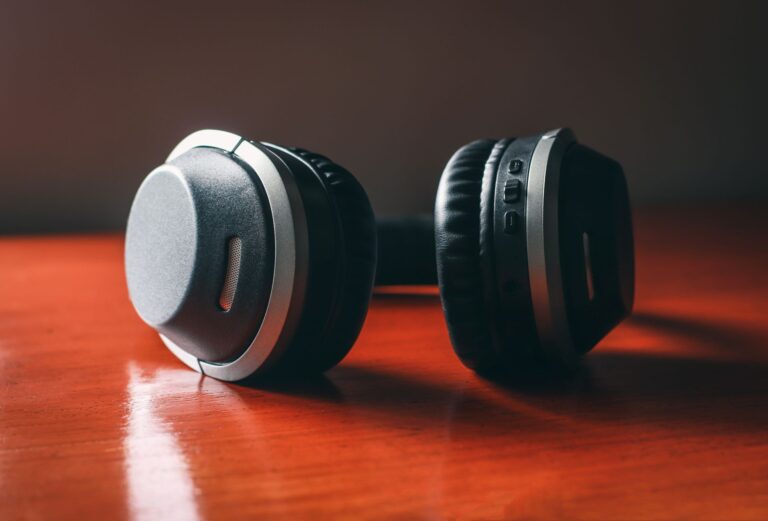
What Makes Noise‑Cancelling Headphones Different?
When you slip on a pair of noise‑cancelling headphones and the world outside fades, you’re experiencing a blend of clever acoustics and digital signal processing. Unlike ordinary headphones that simply block some sound with physical padding, noise‑cancelling models actively generate “anti‑noise” to neutralise unwanted ambient sounds. This article demystifies the technology, explains why it works (and sometimes doesn’t), and offers practical tips for getting the most out of your next pair.
The Basics: How Sound Travels and How We Hear It
Sound is a pressure wave that propagates through air (or any medium) as alternating compressions and rarefactions. Our ears detect these fluctuations via the eardrum, which vibrates and sends signals to the brain. When a wave reaches the ear at a certain frequency and amplitude, we perceive it as a tone, a buzz, or a rumble.
To cancel a sound, you need to create a new wave that is the exact inverse of the unwanted one. When the two waves meet, their pressure variations sum to zero—a phenomenon known as destructive interference. That principle underlies active noise cancellation, but achieving it in a portable device requires a series of carefully orchestrated steps.
Passive Isolation: The First Line of Defense
Before any digital wizardry kicks in, good noise‑cancelling headphones rely on passive isolation—simply putting a barrier between the ear and the environment. This is achieved through:
- Ear‑cup design: Over‑ear or on‑ear cups that seal around the ear, reducing the direct path for sound.
- Materials: Dense foams, silicone, and acoustic membranes that absorb mid‑ and high‑frequency noise.
- Fit: A snug seal prevents leaks that could let external sounds in.
Passive isolation is most effective at higher frequencies (above roughly 1 kHz). Low‑frequency hums—think airplane engines or HVAC fans—can pass through even a well‑sealed cup, which is where active cancellation makes its biggest contribution.
Active Noise Cancellation: Turning Sound Into Code
Active Noise Cancellation (ANC) uses tiny microphones, a digital signal processor (DSP), and speakers to produce anti‑noise. The process can be broken down into four stages:
- Capture: One or more microphones pick up ambient sound before it reaches your ear.
- Analyse: The DSP analyses the waveform in real time, identifying its frequency, phase, and amplitude.
- Invert: The processor creates a mirror image of the captured waveform—same amplitude, opposite phase.
- Emit: The headphones’ drivers play this inverted signal, which meets the original sound inside the ear cup and cancels it out.
Because the system operates continuously, it can adapt to changing noise environments, such as a shifting conversation in a café or the varying roar of a jet engine during take‑off and cruise.
Feedforward, Feedback, and Hybrid ANC: Different Mic Configurations
Manufacturers employ three main microphone layouts, each with distinct strengths and trade‑offs.
- Feedforward ANC: Microphones sit on the outer surface of the ear cup, capturing noise before it reaches the ear. This gives the processor a “head‑start” on generating anti‑noise, which is ideal for consistent, low‑frequency sounds. However, because the mic also hears the headphones’ own output, it can introduce a slight “leak” that the system must constantly correct.
- Feedback ANC: A microphone placed inside the ear cup monitors the combined sound field after the anti‑noise has been added. This arrangement provides accurate correction of any residual noise, but the system reacts slightly later because it only sees the noise once it has already entered the ear space.
- Hybrid ANC: Combining both feedforward and feedback microphones, hybrid designs aim to capture the best of each world. They can quickly counteract predictable low‑frequency hums while fine‑tuning cancellation for higher frequencies that are harder to predict.
Most premium headphones on the market today use hybrid ANC because it delivers smoother performance across a broader frequency range.
Real‑World Performance: What You’ll Actually Hear
In controlled lab tests, well‑implemented ANC can reduce consistent low‑frequency noise by 15–30 dB. In everyday use, the perceived reduction depends on several factors:
- Fit: A proper seal amplifies both passive and active effects.
- Noise profile: ANC excels at steady, tonal sounds (engine hum, air‑conditioner whine) but is less effective against sudden, irregular noises like a passing siren or a colleague’s laugh.
- Battery level: Since ANC relies on active electronics, a low battery can degrade performance or switch the headphones to a “passive‑only” mode.
Listeners often describe the experience as “quietly spacious”—the background hum disappears, leaving a subtle “pressure” sensation that some compare to being underwater. That feeling is a side effect of the brain interpreting the lack of low‑frequency cues, and it usually fades as you become accustomed to the headphones.
Design Challenges: Latency, Pressure, and Battery Life
Creating an effective ANC system involves balancing several engineering constraints.
Latency. The time between sound capture and anti‑noise emission must be minimal—typically under a few milliseconds. Any delay reduces the effectiveness of destructive interference, especially for higher‑frequency sounds that change rapidly. Modern DSP chips are optimized for ultra‑low latency, but the requirement places a ceiling on how much processing can be layered on top (e.g., advanced adaptive algorithms).
Acoustic pressure. Adding a constant anti‑noise signal can create a slight pressure change inside the ear cup, sometimes described as ear “fatigue” after long listening sessions. Manufacturers mitigate this by tailoring the anti‑noise to the most intrusive frequencies and by allowing users to adjust ANC strength.
Power consumption. ANC draws power from the headphones’ battery, competing with Bluetooth streaming, active equalisation, and voice‑assistant functions. Efficient designs use low‑power DSP cores and dynamic scaling—turning off or reducing ANC when the surrounding environment is already quiet.
Future Trends: AI‑Driven Adaptation and Spatial Audio Integration
The next generation of noise‑cancelling headphones is likely to lean heavily on machine learning. By analysing the acoustic signature of a user’s typical environment, an AI model can predict recurring noise patterns and pre‑emptively generate anti‑noise, reducing latency further. Some experimental prototypes also combine ANC with beamforming microphones that isolate the wearer’s voice for clearer calls while simultaneously cancelling ambient sound.
Another emerging area is the integration of ANC with spatial audio. As immersive formats (Dolby Atmos, Sony 360 Reality Audio) become mainstream, headphone manufacturers are exploring ways to preserve directional cues while still suppressing unwanted background noise. The goal is a “transparent” listening mode where you can hear a distant conversation or announcements without sacrificing the immersive experience of a movie soundtrack.
Practical Tips for Getting the Most Out of Your Noise‑Cancelling Headphones
- Seal first, ANC second: Adjust the headband and ear cups for a snug fit before turning on ANC. A good seal can improve cancellation by up to 10 dB.
- Use the right mode: Many headphones let you toggle ANC strength or switch to “ambient sound” mode. Choose “ambient” when you need situational awareness (e.g., in an airport terminal).
- Charge regularly: Keep the battery above 30 % to avoid a sudden drop in ANC performance mid‑flight.
- Clean the ear pads: Dirt or oil can degrade the seal, reducing both passive and active effectiveness.
- Give your ears a break: If you notice ear fatigue, lower the ANC level or alternate with regular headphones for a few minutes.
Conclusion: The Science Behind a Quieter World
Noise‑cancelling headphones are a triumph of acoustic engineering and real‑time digital processing. By combining passive isolation with carefully measured anti‑noise, they turn chaotic soundscapes into manageable, peaceful zones. While the technology is not a silver bullet for every type of noise, understanding its limits—and how to optimise fit, battery, and settings—allows users to harvest the full benefit.
As AI and spatial audio continue to evolve, we can expect even smarter, more adaptable headphones that not only silence unwanted sounds but also enhance the ones we care about. Until then, a well‑fitted pair of ANC headphones remains one of the most effective tools for turning down the world’s volume and tuning into what matters most.
