
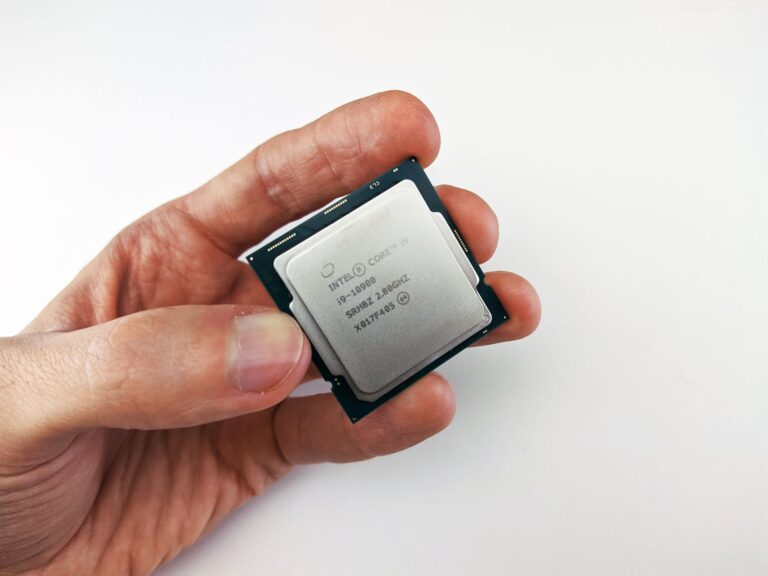
What is Panther Lake?
Panther Lake is the internal codename Intel uses for its upcoming line of ultra‑low‑power mobile processors, slated to appear in thin‑and‑light laptops later this year. The family follows the “Lake” naming tradition that began with the original Core i series and most recently includes Alder Lake and Raptor Lake. While Intel has kept many details under wraps, the company’s public roadmap and analyst briefings confirm that Panther Lake will be built on the same Intel 7 (10 nm Enhanced SuperFin) process that powers its recent 12th‑ and 13th‑generation chips.
Architectural highlights
One of the most noticeable aspects of Panther Lake is its continuation of the hybrid core architecture introduced with Alder Lake. The design combines high‑performance (P‑core) and high‑efficiency (E‑core) cores on a single die, allowing the processor to adapt dynamically to workload demands. Intel has indicated that the low‑power segment will feature a mix of at least one P‑core and multiple E‑cores, giving the silicon the flexibility to handle everything from web browsing to light content creation without draining the battery.
The chip also incorporates Intel’s Thread Director technology, which sits in the hardware scheduler and guides the operating system in assigning threads to the appropriate core type. This hardware‑level intelligence improves both responsiveness and energy efficiency, especially in modern operating systems that are aware of hybrid designs, such as Windows 11.
Performance and power efficiency
Because Panther Lake targets devices with a 15 W or lower power envelope, its performance targets differ from the more power‑hungry “U” and “H” families that power larger laptops. The emphasis is on delivering a smooth, lag‑free experience for everyday tasks while keeping power draw low enough for all‑day battery life. Intel’s own testing material shows that the new cores achieve higher instructions‑per‑cycle (IPC) compared with the previous generation’s low‑power chips, thanks to architectural refinements and the move to the Intel 7 node.
Early benchmark samples suggest that single‑thread workloads—such as web page rendering or spreadsheet calculations—will see modest gains, while multi‑threaded activities benefit from the additional efficiency cores. Importantly, the chip’s dynamic power gating and improved sleep states allow idle power consumption to drop well below 1 W, a figure that aligns with the expectations of ultrabook manufacturers aiming for 15‑hour battery runs.
Integrated graphics and AI features
All Panther Lake processors ship with Intel’s Xe‑LP integrated graphics, the same family that powers the graphics in most of today’s consumer laptops. The Xe‑LP block in Panther Lake is expected to support DirectX 12 Ultimate, hardware‑accelerated video encode/decode for H.264, H.265, and AV1, and modest gaming capabilities at 1080p resolutions with low graphics settings.
Beyond traditional graphics, Intel has highlighted the inclusion of a dedicated AI acceleration block. This unit, often referred to as the Intel® Gaussian & Neural Accelerator (GNA), offloads tasks such as speech recognition, webcam background removal, and other on‑device AI workloads, reducing the need to call the cloud and preserving battery life. The AI block can process several tens of tera‑operations per second, a figure that, while modest compared with dedicated GPUs, is significant for the class of devices Panther Lake will populate.
Target platforms and competitors
Panther Lake is clearly aimed at the thin‑and‑light segment, where manufacturers prioritize weight, thickness, and endurance over raw performance. Expected device types include:
- 13‑inch ultraportables and 2‑in‑1 convertibles
- Fan‑less laptops that rely on passive cooling
- Always‑connected PCs that pair with LTE or 5G modules
In this space, Intel’s primary competitor is AMD’s Ryzen 7000U series, which also employs a hybrid architecture (Zen 4 cores paired with Zen 3+ efficiency cores) and uses the 6 nm process. Both companies are pushing for higher IPC, better integrated graphics, and stronger AI capabilities. The choice between them will likely hinge on factors such as OEM design, thermals, and software optimization rather than headline specifications alone.
Implications for the laptop market
The arrival of Panther Lake could accelerate the trend toward fan‑less laptops that still deliver a respectable user experience. By improving the efficiency of both CPU and GPU cores, Intel enables OEMs to design slimmer chassis without compromising battery longevity. This is especially relevant for students and professionals who value portability and want to avoid the noise and power draw of active cooling.
Additionally, the integration of AI acceleration aligns with a broader industry shift toward on‑device processing for privacy‑sensitive tasks. Features like voice assistants, real‑time language translation, and adaptive webcam backgrounds can run locally, reducing latency and network dependence. As operating systems and applications increasingly expose APIs for AI workloads, Panther Lake’s GNA could become a differentiator for software that is tuned to leverage it.
What to expect at launch
Intel typically announces new mobile families at its “Intel Innovation” events, and analysts anticipate a formal reveal of Panther Lake in the first half of 2025. While Intel has not yet published a detailed product list, the roadmap suggests the family will include several SKUs covering a range of core configurations and TDP values, from 12 W to 15 W variants.
Prospective buyers should look for the following signals when evaluating devices that incorporate Panther Lake:
- Battery capacity and advertised endurance (aiming for 15 hours or more)
- Thermal design—most devices will be fan‑less, but some may include a low‑profile blower for peak performance
- Memory support—DDR5‑5600 or LPDDR5‑5400, providing fast bandwidth for both CPU and GPU tasks
- Connectivity—Wi‑Fi 6E and Thunderbolt 4 are expected as standard, ensuring future‑proof I/O
In the months leading up to release, you can expect OEMs to showcase prototype devices at trade shows such as Computex and CES. Those demonstrations will give a clearer picture of real‑world performance, thermals, and battery life. Until then, Panther Lake remains a promising evolution of Intel’s low‑power strategy, one that balances the demands of modern mobile computing with the energy constraints of ultra‑portable form factors.
