
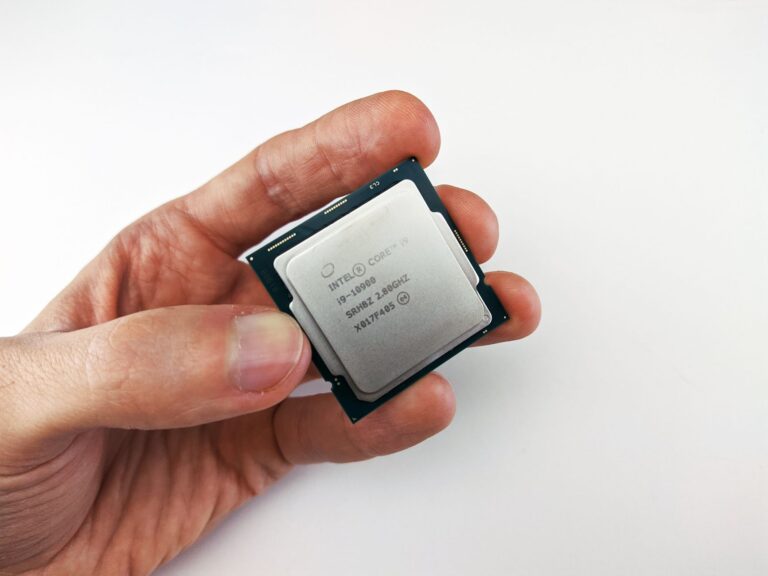
What is Lunar Lake?
Intel’s “Lunar Lake” codename refers to the company’s next-generation processor family that follows the Meteor Lake line‑up. Announced as part of Intel’s 2025 roadmap, Lunar Lake is positioned as the successor to the hybrid‑core designs introduced with Alder Lake and refined through Raptor Lake and Meteor Lake. While Intel has kept many details under wraps, the architecture is expected to build on the same “big‑LITTLE” philosophy—pairing high‑performance cores (P‑cores) with power‑efficient cores (E‑cores)—but with a tighter integration of AI acceleration, a more capable GPU, and a process node that pushes the limits of Intel’s current manufacturing roadmap.
The Hybrid Core Architecture
Since the launch of Alder Lake, Intel’s hybrid approach has become a core part of its strategy for balancing performance and power. Lunar Lake continues this trend, but analysts note a few likely refinements:
- More E‑cores per tile: Early renderings suggest each “tile” could contain up to four E‑cores, allowing the chip to scale efficiently for multi‑threaded workloads without a large increase in die size.
- Higher‑frequency P‑cores: The P‑core design is expected to benefit from architectural tweaks that raise boost clocks while improving thermal headroom, a goal that Intel highlighted in its “Intel 4” process briefings.
- Improved scheduling: The Thread Director, Intel’s hardware‑level scheduler that decides which tasks run on which core type, is slated for a firmware update that better predicts AI and graphics‑heavy workloads.
These changes aim to make Lunar Lake particularly adept at handling modern content‑creation tasks, gaming at high frame rates, and the growing class of AI‑augmented applications that rely on both raw compute and low‑latency inference.
Process Technology and Manufacturing
Lunar Lake is slated to be manufactured on Intel’s “Intel 4” process, which Intel describes as a 7 nm‑class node built on its EUV (extreme ultraviolet) lithography platform. The move from the “Intel 7” node used for Meteor Lake to Intel 4 is expected to bring a modest die‑size reduction and a notable boost in power efficiency—key for the thin‑and‑light laptops that the chip targets.
Intel has been transparent about the challenges of scaling EUV across a large wafer, and the company’s recent earnings calls highlighted ongoing yield improvements. By the time Lunar Lake ships, Intel anticipates a mature Intel 4 production line capable of delivering the volumes required for mainstream consumer devices while still offering the performance headroom for premium segments.
Graphics, AI, and Integrated Features
One of the most talked‑about aspects of Lunar Lake is its integrated graphics. The Xe‑LP (Low Power) architecture, first seen in Meteor Lake, will receive a new generation of execution units that push the theoretical pixel‑fill rate higher and add support for DirectX 12 Ultimate features such as ray tracing and variable‑rate shading. While exact performance figures are not public, early samples have shown a measurable uplift over the previous generation’s integrated GPU.
Beyond graphics, Intel is weaving AI acceleration more tightly into the silicon. A dedicated matrix engine, similar in concept to the one introduced in the “Intel AI Accelerator” blocks of Meteor Lake, will be expanded to handle larger tensor operations. This means on‑device inference for tasks like real‑time language translation, image enhancement, and even background noise suppression in video calls could become more responsive without relying on cloud services.
Other integrated features include:
- Support for DDR5‑6000 memory, providing higher bandwidth for both CPU and GPU workloads.
- PCIe 5.0 x4 lanes directly from the CPU, enabling fast NVMe storage and external GPU enclosures.
- Native Thunderbolt 5 connectivity, delivering up to 80 Gbps data rates and 100 W power delivery over a single cable.
- Wi‑Fi 7 (IEEE 802.11be) support, offering multi‑gigabit wireless speeds in future routers.
Platform Support and Connectivity
Lunar Lake will pair with a new series of chipsets—tentatively named “Meteor Lake‑X”—that extend the platform’s I/O capabilities while keeping power consumption low for mobile devices. These chipsets are expected to retain the familiar socket‑type connection (LGA 1700 or a refreshed version), making upgrades possible for users with compatible motherboards, though Intel has hinted that a new socket may be introduced to accommodate the revised power delivery and pin count.
On the desktop side, Intel is likely to offer a “Lunar Lake‑Desktop” variant aimed at all‑in‑one PCs and mini‑towers. This version would feature a higher core count, larger L3 cache, and the ability to pair with discrete GPUs via the full PCIe 5.0 x16 lane configuration.
Security remains a priority. The platform will continue to incorporate Intel® Platform Protection Technology (PPT), which includes hardware‑based mitigations for speculative‑execution attacks and a trusted execution environment for secure boot and firmware updates.
What This Means for Consumers
For everyday users, Lunar Lake promises a noticeable step up in everyday responsiveness. The hybrid core layout means that background tasks—email syncing, music playback, and voice assistants—can run on the low‑power E‑cores, preserving battery life, while demanding applications like video editing or modern games can tap the high‑performance P‑cores without throttling.
Gamers will appreciate the stronger integrated graphics, which should close the performance gap between low‑end discrete GPUs and the built‑in Xe‑LP solution. This could make thin laptops a more viable choice for casual esports titles and indie games, especially when combined with the higher bandwidth of DDR5 and PCIe 5.0.
Content creators stand to benefit from the expanded AI matrix engine. Tasks that currently rely on cloud‑based inference—such as upscaling video or applying AI‑driven filters—can be performed locally, reducing latency and protecting data privacy.
Finally, the broader ecosystem—Thunderbolt 5, Wi‑Fi 7, and a unified chipset—means future‑proof connectivity without the need for multiple adapters. As more peripherals adopt the newer standards, devices built on Lunar Lake will be better positioned to take advantage of them out of the box.
Looking Ahead
Lunar Lake is more than just a new processor; it’s a glimpse into how Intel envisions the convergence of performance, efficiency, and AI in the post‑mobile era. By refining the hybrid architecture, adopting a more advanced process node, and bolstering on‑chip graphics and AI capabilities, Intel aims to stay competitive in a market where power efficiency and integrated functionality are as important as raw speed.
The exact launch dates and detailed specifications will become clearer as Intel moves closer to the 2025 timeframe. In the meantime, the roadmap signals that the next wave of laptops and compact PCs will be built around a processor that can adapt to a wide variety of workloads while keeping power draw and heat generation in check. For consumers, that translates to lighter devices, longer battery life, and a smoother experience across work, play, and everything in between.
