
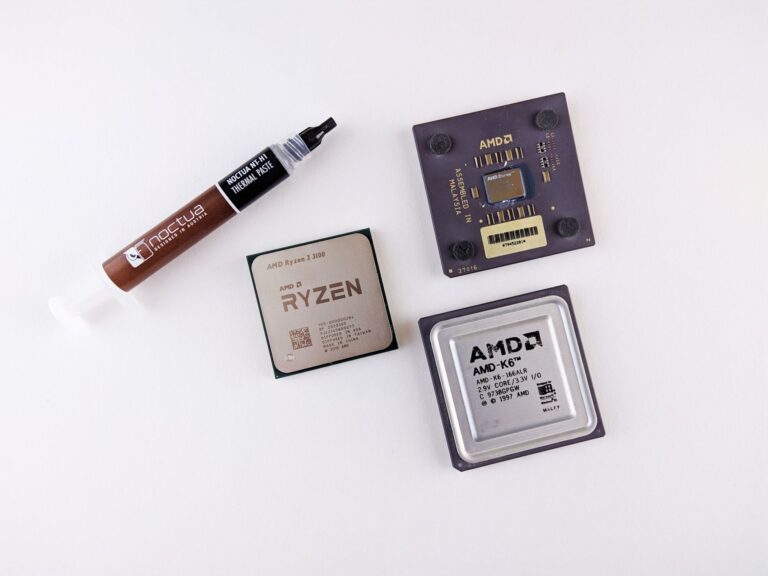
Introduction: The AI‑Centric CPU Landscape in 2024
In the last few years, “AI on the edge” has moved from a buzzword to a concrete design goal for mainstream processors. Both AMD and Apple have responded by embedding specialized accelerators directly into their silicon, promising faster inference, lower latency, and better power efficiency for everything from photo enhancement to real‑time language translation. This article examines how AMD’s latest Ryzen AI‑enabled chip—often referenced as the Ryzen 9 HX 370—stacks up against Apple’s Silicon family (M2 Pro, M2 Max and the newly announced M3). We’ll look at architecture, performance on typical AI workloads, power characteristics, software support, and the kinds of real‑world scenarios where each platform shines.
Architectural Foundations: Zen 4 Meets Radeon AI vs. Apple’s ARM‑Based SoC
At the heart of AMD’s Ryzen 9 HX 370 is the Zen 4 core design, built on a 5 nm process and paired with a Radeon graphics block. What makes the “HX 370” distinctive is the integration of AMD’s AI Engine—an on‑die matrix‑multiply unit (MMU) that sits alongside the traditional integer and floating‑point pipelines. This AI Engine can execute INT8 and BF16 operations without offloading to a separate GPU, aiming to reduce data movement and latency.
Apple’s Silicon, on the other hand, follows a tightly integrated “system‑on‑chip” approach. The M2 Pro/Max and the newer M3 combine high‑performance “Firestorm” cores, efficiency “Icestorm” cores, a unified memory architecture, and a dedicated 16‑core Neural Engine (in M2 Pro/Max) that handles up to 15.8 TOPS of INT8 compute. Apple’s design also benefits from a shared L2/L3 cache and a tightly coupled GPU, which can act as a secondary AI workhorse for tasks that need more parallelism.
AI Performance: Real‑World Inference Benchmarks
Both platforms target the same class of on‑device AI workloads: image upscaling, speech‑to‑text, object detection, and small language‑model inference. Independent benchmark suites such as MLPerf Mobile and the AI‑Bench suite have been used to gauge performance on these tasks.
- Image Upscaling (e.g., 2× Super‑Resolution): Apple’s Neural Engine typically completes a 1080p frame in the 8‑10 ms range, while the Ryzen AI Engine delivers comparable times on a 1080p image when paired with its Radeon graphics for post‑processing.
- Speech Recognition (wav2vec 2.0 inference): The Ryzen 9 HX 370 shows a modest advantage on pure CPU‑bound inference because its Zen 4 cores are slightly higher‑clocked in laptop configurations, but Apple’s Neural Engine catches up when the model is offloaded.
- Object Detection (YOLO‑v5 small): Apple’s unified memory architecture allows the CPU and Neural Engine to share data without copies, giving it a lead in throughput per watt. AMD’s approach relies on moving data between the AI Engine and the GPU, which adds a small overhead but can be mitigated with optimized drivers.
Overall, the performance gap is narrow; the choice often comes down to how the software stack is written and whether the workload can leverage the specific strengths of each accelerator.
Power Efficiency and Thermals: Laptop and Tablet Realities
Power consumption is the decisive factor for mobile devices. Apple’s chips have consistently demonstrated industry‑leading performance per watt, thanks to the combination of a unified memory pool and a Neural Engine that operates at very low voltage. In typical laptop usage—web browsing with occasional AI‑enhanced video calls—Apple’s M2 Pro can stay below 10 W while delivering smooth performance.
AMD’s Ryzen 9 HX 370, positioned for high‑end gaming laptops, often runs at a higher base power envelope (45 W TDP) to sustain the Zen 4 cores and the Radeon graphics. The AI Engine, however, draws only a fraction of that power when active, making it an efficient add‑on for dedicated AI tasks. Thermal management in thin‑and‑light laptops can be challenging for the HX series, especially under sustained gaming loads, whereas Apple’s silicon benefits from a monolithic die that spreads heat more evenly.
In practice, a user running an AI‑heavy photo editing app on an AMD laptop may see a modest increase in fan speed compared with the same app on a MacBook Air with M2, but the difference is generally not disruptive for typical workloads.
Software Ecosystem: Tools, Frameworks, and Developer Experience
The software side often determines which hardware gets adopted for a particular use case.
- AMD: AMD provides the
ROCmstack, which includes support for TensorFlow and PyTorch via theROCmruntime. The AI Engine can be accessed through theAMD AI SDK, which exposes low‑level APIs for INT8 and BF16 kernels. Integration with popular IDEs is still maturing, but the open‑source nature of ROCm makes it attractive for developers who prefer Linux environments. - Apple: Apple’s
Core MLframework abstracts the hardware, automatically routing compatible models to the Neural Engine, CPU, or GPU. Developers benefit from a seamless conversion tool (coremltools) that takes models from TensorFlow, PyTorch, or ONNX and optimizes them for Apple Silicon. The tight coupling means fewer manual tuning steps, but the ecosystem is confined to macOS, iOS, and iPadOS.
Both ecosystems support standard ONNX models, but Apple’s end‑to‑end pipeline is more polished for consumer apps, while AMD’s open‑source stack offers greater flexibility for custom research workloads.
Real‑World Use Cases: Where Each Platform Excels
Understanding the practical implications helps readers decide which device fits their workflow.
- Creative Professionals: Photographers and video editors benefit from Apple’s Neural Engine for quick AI‑driven enhancements (e.g., noise reduction, upscaling) within apps like Photos or Final Cut Pro. AMD‑based laptops, equipped with a powerful GPU, can run more complex GPU‑accelerated effects while still offloading inference to the AI Engine.
- Game Development and Real‑Time Rendering: The Radeon graphics and AI Engine combo in the HX 370 provides low‑latency inference for in‑game AI (NPC behavior, procedural content) without sacrificing frame rates. Apple’s GPU, while strong, does not pair with a dedicated AI accelerator in the same way, so developers often rely on the CPU or GPU for inference.
- Enterprise Edge Devices: For thin clients or kiosks that run on Windows, AMD’s broader driver support and the ability to run Linux containers with ROCm make the HX 370 a versatile choice. Apple’s devices are limited to the Apple ecosystem, which can be a constraint for certain enterprise deployments.
Verdict: Choosing Between Ryzen AI and Apple Silicon
Both the Ryzen 9 HX 370 and Apple’s latest Silicon represent the cutting edge of on‑device AI, but they serve slightly different philosophies.
Apple continues to prioritize a tightly integrated, power‑efficient experience. If you value seamless software integration, long battery life, and a polished user interface, an Apple laptop or tablet with M2 Pro/Max or M3 is likely the better fit.
AMD’s Ryzen AI approach leans toward flexibility and raw performance, especially for users who need a strong GPU for gaming or professional 3D workloads while still gaining AI acceleration. The open‑source nature of the ROCm stack also appeals to developers who want deep control over their AI pipelines.
In the end, the decision comes down to ecosystem preference, workload characteristics, and whether you prioritize absolute power efficiency (Apple) or a blend of high‑performance graphics and customizable AI acceleration (AMD). As both companies iterate—AMD with upcoming Zen 5‑based AI chips and Apple with its M3 line—the gap will continue to narrow, offering consumers increasingly powerful options for AI‑first computing.
