
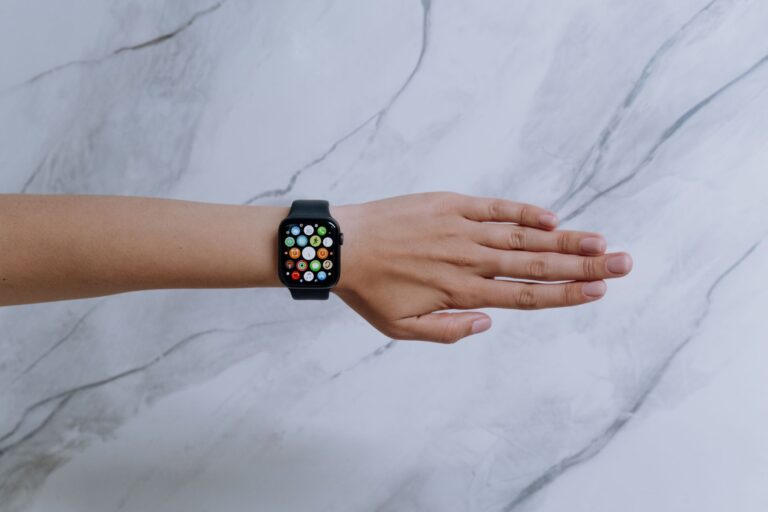
AI Meets the Wrist: The Evolution of Smartwatches
By 2026, the smartwatch has become the most visible platform for consumer‑grade artificial intelligence. The shift from simple step counters to AI‑powered personal assistants has been driven by three converging trends: on‑device machine learning, deeper integration with health ecosystems, and more capable low‑power processors.
Apple’s Watch Series 9 (released in late 2025) showcases a dedicated neural engine that can run speech‑to‑text, activity classification, and predictive health alerts without relying on the phone. This on‑device processing not only speeds up responses but also keeps sensitive biometric data local. Samsung’s Galaxy Watch 6 follows a similar path, adding a contextual “Bixby AI Coach” that learns a user’s daily routines and offers proactive suggestions—such as adjusting workout intensity before a scheduled meeting.
For athletes who prioritize raw data over ecosystem lock‑in, Garmin and Whoop have introduced AI layers that automatically detect the type of activity (e.g., interval training, long‑run, or yoga) and adjust recovery metrics in real time. The key takeaway is that AI is no longer an add‑on; it is now the core engine that interprets sensor streams and turns them into actionable insights.
AI‑Enhanced Health Rings: Tiny Devices, Big Data
Smart rings have carved out a niche for users who want health tracking without a wrist‑worn screen. The Oura Ring 4, launched early 2025, uses an on‑board AI model to analyze temperature trends, heart‑rate variability, and sleep stages. The ring’s AI can flag subtle shifts that may indicate early signs of illness, prompting users to schedule a check‑up.
Other notable entries include the Motiv Ring (now a collaboration between Fitbit and a European health‑tech startup) and the Biostrap Ring 2. Both leverage edge AI to deliver nightly sleep scores and daytime readiness reports directly to a companion app, reducing the need for cloud‑based analysis and enhancing privacy.
What distinguishes the best rings in 2026 is their ability to learn from a user’s long‑term baseline. Over weeks and months, the AI refines its thresholds, making alerts more personalized and less prone to false positives.
AI‑Powered Audio: Smart Earbuds That Listen—and Respond
Earbuds have become the new hub for conversational AI. Google’s Pixel Buds Pro, released in 2024, introduced an on‑device transformer that can handle real‑time translation and contextual voice commands without a constant internet connection. By 2026, the latest iteration supports “Ambient Awareness AI,” which distinguishes between background chatter and a user’s voice, allowing seamless switch‑to‑listen modes during meetings.
Other manufacturers—Sony, Bose, and the up‑and‑coming Indian brand Noise—have followed suit, embedding AI chips that perform noise‑cancellation tuning based on the acoustic environment. The AI also tracks vocal strain, nudging users to lower volume or take a break if prolonged high decibel exposure is detected.
For commuters, the most valuable feature is the AI‑driven “Quick Summarize” function: after a podcast or audio article, the earbuds can generate a concise text recap that appears in the companion app, saving users time while still delivering the core information.
Augmented Reality Glasses: The Next Frontier for Wearable AI
While AR glasses have struggled to achieve mass adoption, 2026 sees a handful of products that combine AI with optics in a way that feels practical. The Meta Quest XR glasses (formerly known as Ray‑Ban Stories) now run an on‑device AI pipeline that can identify objects, provide instant translations, and overlay fitness metrics during a run.
Microsoft’s Surface Glass, aimed at enterprise users, leverages AI to summarize meeting notes in real time, highlight action items, and even suggest relevant documents from OneDrive—all while keeping the wearer’s view unobstructed. The key advancement is the shift to “low‑latency edge AI,” which processes visual data locally, mitigating privacy concerns and reducing the need for high‑bandwidth Wi‑Fi.
For consumers, the most compelling use case remains contextual information: pointing at a restaurant and getting AI‑generated reviews, menu highlights, or dietary suitability based on the user’s health profile. The technology is still early, but the AI backbone is solid enough to make these interactions feel natural.
AI‑Driven Fitness Trackers: Beyond Steps and Calories
Fitness trackers have become more than simple band‑style devices. The latest Fitbit Charge 5+ (2025 refresh) includes a small AI accelerator that can detect nuanced movement patterns—distinguishing between a casual stroll and a brisk uphill climb. This granularity enables more accurate calorie estimates and better training recommendations.
Whoop’s 5.0 strap introduced “Dynamic Recovery AI,” which continuously evaluates heart‑rate variability, skin temperature, and activity load to suggest optimal sleep windows and hydration levels. Users receive a daily “Recovery Score” that updates as new data streams in, making the guidance truly real‑time.
What unites the top trackers is the use of federated learning—a privacy‑preserving technique where the device learns from the user’s data locally and only shares model updates (not raw data) with the cloud. This approach has become a selling point for privacy‑concerned athletes and health‑focused consumers.
Choosing the Right AI Wearable for You
With the market maturing, the decision now hinges less on brand loyalty and more on how AI fits into your lifestyle. Consider the following checklist when evaluating options:
- On‑device processing: Devices that keep AI inference local protect privacy and reduce latency.
- Health integration: Look for wearables that sync with your preferred health ecosystem (Apple Health, Google Fit, or open standards like Health Level 7).
- Battery life: AI can be power‑hungry; the best models balance performance with multi‑day endurance.
- Form factor: Whether you prefer a wristwatch, ring, earbuds, or glasses, choose a design you’ll wear consistently.
- Data ownership: Verify if the manufacturer uses federated learning or offers exportable raw data files.
In practice, a tech‑savvy professional might gravitate toward an AI‑enhanced smartwatch for its seamless calendar integration and voice assistant capabilities, while a privacy‑focused athlete could favor a smart ring paired with a minimalist fitness tracker that runs AI locally.
The Road Ahead: AI Wearables in 2027 and Beyond
Looking forward, several trends are set to shape the next wave of AI wearables:
- Multimodal AI: Devices will combine visual, auditory, and biometric inputs to create richer context awareness.
- Continual learning: Future wearables will adapt to users’ changing habits without requiring frequent firmware updates.
- Open‑source AI models: Communities are beginning to release lightweight, on‑device models that manufacturers can embed, fostering transparency.
- Regulatory clarity: As health‑related AI becomes more pervasive, regulators in the EU and US are expected to release guidance on validation and data handling, encouraging higher standards across the board.
For now, the best AI wearables in 2026 are those that blend reliable hardware with transparent, on‑device intelligence. Whether you’re tracking sleep, translating a conversation, or optimizing a training regimen, the AI embedded in today’s wearables is no longer a novelty—it’s a functional partner that helps you make sense of the data your body continuously generates.
