
Why Language Choice Still Matters in AI
Even though many AI frameworks abstract away low‑level details, the programming language you write in shapes everything from development speed to deployment options. In 2026 the landscape is more diverse than a decade ago, with new hardware accelerators, tighter integration of AI into browsers, and an expanding demand for on‑device inference. A language that feels natural for data scientists may not be the best fit for a real‑time robotics controller, while a language prized for safety can be crucial when AI drives medical devices. Understanding the trade‑offs helps teams avoid costly rewrites and maximises the return on their model‑building investments.
Python: The Established Workhorse
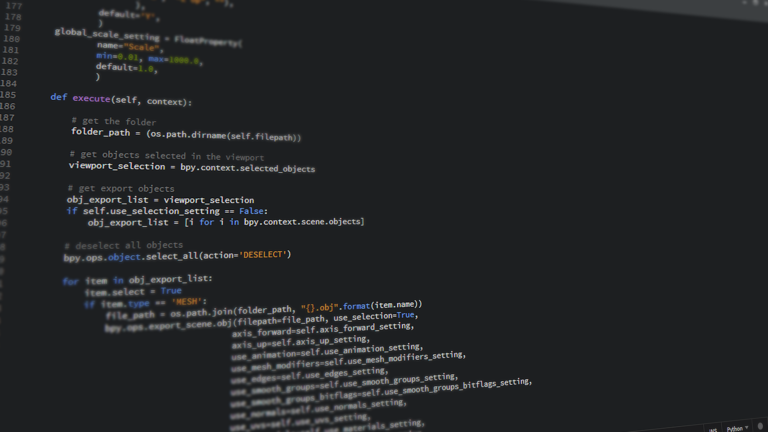
Python remains the lingua franca of AI research and production. Its dominance is rooted in an unmatched ecosystem: libraries such as TensorFlow, PyTorch, JAX, and Hugging Face Transformers are all first‑class Python packages. The language’s readability lowers the barrier for newcomers, and its dynamic typing makes rapid prototyping straightforward.
For large‑scale model training, Python’s integration with GPU‑enabled back‑ends means you can write a few lines of code and have the heavy lifting delegated to CUDA or ROCm kernels. The community continues to improve tooling for type checking (mypy), performance profiling (torch.profiler), and deployment (FastAPI, uvicorn). While Python’s interpreter adds some overhead, most production pipelines mitigate this by exporting models to compiled formats (ONNX, TorchScript) that run in C++ or Rust runtimes.
Julia: The Rising Star for High‑Performance Numerics
Julia was designed from the ground up for scientific computing, and its just‑in‑time (JIT) compiler now delivers performance close to that of C while retaining a high‑level syntax. In AI, Julia shines when you need to experiment with custom differentiable operators or integrate complex numerical solvers directly into the training loop.
Projects such as Flux.jl and MLJ.jl provide model‑building abstractions similar to PyTorch, and the language’s multiple dispatch makes it easy to write generic code that works across CPUs, GPUs, and emerging AI accelerators like TPUs and Habana. Because Julia compiles to native code, models can be shipped without an interpreter, an advantage for embedded systems where memory and startup time are at a premium.
Rust: Safety and Speed for Edge AI
Rust has moved from a niche systems language to a mainstream choice for performance‑critical AI components. Its ownership model guarantees memory safety without a garbage collector, which is essential for low‑latency inference on edge devices such as drones, IoT sensors, and autonomous vehicles.
The tch-rs and burn crates let developers load PyTorch or ONNX models directly in Rust, while the tract runtime provides a pure‑Rust inference engine that can run on microcontrollers. Because Rust binaries are statically linked, deployment is straightforward: copy a single executable to the target device and you have a secure, zero‑runtime‑overhead inference engine.
Java & Kotlin: Enterprise‑Scale Machine Learning
Large enterprises continue to rely on the JVM for its stability, tooling, and scalability. Java’s long‑standing presence in production back‑ends means AI services can be integrated without introducing a foreign runtime. Frameworks such as DeepLearning4J and the newer Jep (Java Embedded Python) bridge the gap between JVM code and Python‑based models.
Kotlin, with its concise syntax and seamless interop with Java, is gaining traction for building AI‑enabled microservices. Its coroutine model simplifies asynchronous data pipelines, a common pattern when streaming sensor data to a model for real‑time predictions.
JavaScript/TypeScript: Bringing AI to the Browser
The browser is now a first‑class platform for AI, thanks to WebGPU, WebAssembly, and libraries like TensorFlow.js and ONNX Runtime Web. JavaScript (and its typed superset TypeScript) enables developers to run inference directly on the client, preserving user privacy and reducing server load.
For example, a web app can load a pre‑trained image classification model in a few megabytes, run it on the user’s GPU via WebGPU, and return results instantly. TypeScript’s static typing helps maintain large codebases where AI components interact with UI state, routing, and analytics.
Choosing the Right Tool for Your Project
There is no single “best” language for every AI task. Below is a quick guide to match common project requirements with the most suitable language:
- Rapid prototyping & research: Python – extensive libraries, large community.
- Custom numerical methods or differentiable programming: Julia – high performance with readable syntax.
- Edge deployment with strict safety guarantees: Rust – memory safety, zero‑cost abstractions.
- Enterprise back‑end integration: Java/Kotlin – mature JVM ecosystem.
- Client‑side inference in web apps: JavaScript/TypeScript – WebGPU and WebAssembly support.
In practice, many teams adopt a polyglot approach: data scientists iterate in Python, export models to ONNX, and then embed those models in Rust or Java services for production. This workflow leverages the strengths of each language while keeping the overall pipeline efficient.
What to Watch in the Coming Years
Looking ahead to 2027 and beyond, several trends will likely reshape the language landscape for AI:
- Unified model formats: Wider adoption of portable formats like MLIR and ONNX will make language‑agnostic deployment easier.
- AI‑first compilers: Projects such as
torch-mliraim to compile high‑level models directly to hardware‑specific binaries, reducing the need for language‑specific runtimes. - Domain‑specific languages (DSLs): Emerging DSLs that focus on differentiable programming may sit on top of existing languages, offering specialized syntax for neural architecture search or reinforcement learning.
- Improved interoperability: Tools that automatically generate language bindings (e.g.,
pybind11for C++/Python,wasm-bindgenfor Rust/JavaScript) will lower the friction of mixing languages.
Regardless of how the ecosystem evolves, the core principle remains: choose the language that aligns with your team’s expertise, the performance constraints of your target hardware, and the long‑term maintainability of your codebase. By staying aware of each language’s strengths—and the tools that bridge them—developers can build AI systems that are both cutting‑edge today and adaptable for tomorrow’s innovations.
