
Understanding the Basics: GPUs and the Cloud
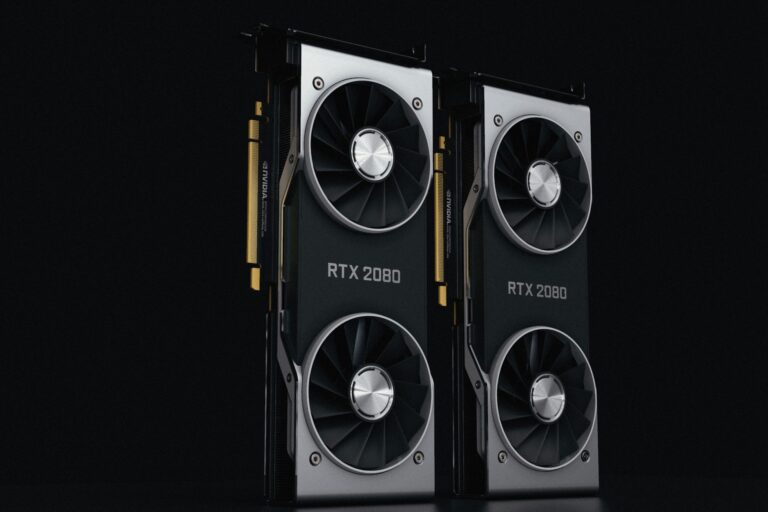
Graphics Processing Units, or GPUs, were originally designed to accelerate the rendering of images and video in computer graphics. Their architecture—thousands of small, highly parallel cores—makes them equally adept at handling the massive, simultaneous calculations required by modern data‑intensive tasks. Over the past decade, developers have discovered that the same parallelism can speed up machine‑learning training, scientific simulations, and real‑time analytics far beyond what a traditional Central Processing Unit (CPU) can achieve.
Meanwhile, cloud computing has shifted the way businesses and individuals access computing resources. Instead of purchasing and maintaining physical servers, users can rent virtual machines (VMs) from providers that run in massive data centers. By marrying these two trends, cloud GPU computing offers on‑demand access to powerful GPU hardware without the capital expense or logistical overhead of owning the devices yourself.
How Cloud GPU Services Work
When you request a GPU‑enabled instance from a cloud platform, the provider allocates a portion of a physical server that houses one or more GPUs. The virtual machine you receive is connected to the GPU through a technology called GPU virtualization, which can be implemented via direct device pass‑through, mediated sharing, or container‑based approaches. The result is a remote environment where your applications can issue GPU commands as if the hardware were physically attached to a local workstation.
Access to the remote VM typically occurs over secure network protocols such as SSH for command‑line workloads or Remote Desktop Protocol (RDP) and web‑based consoles for graphical interfaces. Data moves between your local device and the cloud over the internet, so bandwidth and latency become practical considerations—especially for interactive tasks like 3D modeling or real‑time inference.
Key Benefits Over Traditional On‑Premise GPU Setups
Cloud GPU computing eliminates many of the hurdles associated with maintaining an in‑house GPU farm. The most obvious advantage is cost flexibility: you pay only for the time you actually use, which can be measured in minutes or hours rather than the full lifespan of a hardware purchase.
- Scalability: Instantly spin up additional GPU instances for a training run, then shut them down when the job completes.
- Up‑to‑date hardware: Cloud providers regularly refresh their offerings, giving you access to the latest architectures without a replacement cycle.
- Reduced operational burden: No need to manage cooling, power, firmware updates, or driver compatibility.
- Geographic flexibility: Deploy workloads close to your data sources to minimize latency.
These benefits translate into faster development cycles, more experimentation, and the ability for small teams or solo developers to compete with larger organizations that previously relied on massive capital investments.
Common Use Cases Driving Adoption
The versatility of GPUs in the cloud has sparked a wide range of applications. In the realm of artificial intelligence, researchers use cloud GPUs to train deep neural networks on large datasets, iterating quickly because they can allocate multiple GPUs in parallel. Media producers rely on remote rendering farms to generate high‑resolution visual effects without maintaining costly render farms on site. Financial analysts employ GPU‑accelerated simulations to model market scenarios at a scale that would be impractical on CPUs alone. Even gaming studios are turning to cloud GPU instances for testing and for delivering high‑performance streaming services to end users.
Choosing the Right Cloud GPU Configuration
Not every GPU workload requires the same level of power. When evaluating options, consider the following factors:
- Compute intensity: Deep‑learning training often benefits from GPUs with large tensor cores, while video encoding may be more tolerant of modest graphics cores.
- Memory capacity: Large models or high‑resolution textures need GPUs with ample VRAM to avoid paging.
- Parallelism: Some tasks scale efficiently across multiple GPUs, making multi‑GPU instances attractive.
- Network proximity: If your data resides in a specific cloud region, selecting a GPU instance in the same region reduces data‑transfer latency.
Most providers let you experiment with a range of GPU types—from consumer‑grade cards optimized for graphics to data‑center GPUs built for scientific workloads. Starting with a modest instance and monitoring utilization can help you right‑size your deployment before committing to larger, more expensive configurations.
Challenges and Considerations
While the advantages are compelling, cloud GPU computing introduces its own set of challenges. Network latency can become noticeable when you need to interact with a graphical application in real time, making it less suitable for tasks that demand instantaneous feedback. Data security is another concern; moving sensitive datasets to the cloud requires robust encryption and compliance with industry regulations. Additionally, the pay‑as‑you‑go model, while flexible, can lead to unexpected costs if workloads are left running inadvertently.
To mitigate these risks, many users adopt best practices such as automating shutdown scripts, employing VPNs or private connectivity for sensitive data, and using monitoring tools that alert you when resource utilization exceeds predefined thresholds. Understanding the pricing model and setting budget alerts can also keep expenses predictable.
Looking Ahead: The Future of Cloud GPU Computing
As GPU architectures continue to evolve, cloud providers are expanding their offerings beyond raw graphics acceleration. Specialized hardware like tensor processing units (TPUs) and dedicated AI inference chips are being integrated into the same on‑demand model, giving developers a broader toolbox for specific workloads. Edge computing initiatives are also bringing GPU capabilities closer to end users, reducing latency for applications such as augmented reality and autonomous vehicle processing.
In parallel, software ecosystems are maturing. Container runtimes now support GPU pass‑through natively, and orchestration platforms like Kubernetes provide extensions that schedule GPU resources alongside CPUs and storage. These developments point toward a future where GPU‑accelerated workloads can be deployed as seamlessly as traditional web services, democratizing access to high‑performance computing across industries.
For anyone looking to harness the power of parallel processing without the overhead of managing physical hardware, cloud GPU computing represents a practical, scalable solution. By understanding the underlying mechanics, evaluating the right configuration, and managing the associated challenges, you can unlock new possibilities—from faster AI experiments to richer multimedia experiences—while keeping your infrastructure agile and cost‑effective.
