
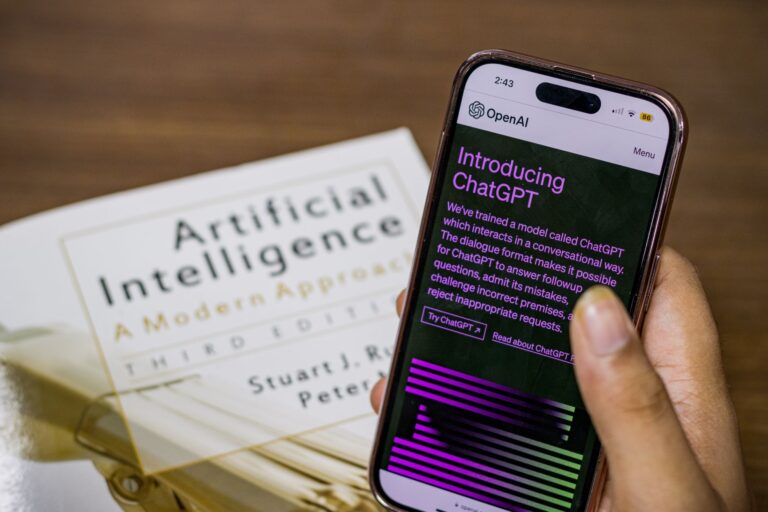
Understanding the Players: ChatGPT and Claude
When it comes to conversational AI, two names dominate the conversation: ChatGPT, developed by OpenAI, and Claude, created by Anthropic. Both models have become central to a growing ecosystem of chatbots, productivity assistants, and developer tools, yet they arrive from different design philosophies and corporate histories. Knowing where each system comes from helps frame the comparison that follows.
How They’re Built: Architecture and Training
ChatGPT is powered by the GPT‑4 family of large language models. GPT‑4 builds on the transformer architecture that OpenAI introduced with GPT‑3, scaling up both the number of parameters and the breadth of data it sees during pre‑training. The model is fine‑tuned with reinforcement learning from human feedback (RLHF), which aligns its responses to user expectations and reduces undesirable outputs.
Claude, on the other hand, is based on Anthropic’s “Claude” series, which also uses a transformer backbone but incorporates the company’s “Constitutional AI” approach. Instead of relying heavily on human‑generated preference data, Anthropic trains its model to follow a set of high‑level principles (the “constitution”) that guide its behavior. This method aims to embed safety and ethical considerations directly into the model’s reasoning process.
Both systems undergo extensive pre‑training on publicly available text from the internet, books, and other corpora. However, the exact composition of the datasets is proprietary, and each organization emphasizes different aspects—OpenAI highlights breadth and multilingual coverage, while Anthropic stresses the quality of instruction‑following data.
Interaction Style and Core Capabilities
When you type a prompt, the immediate experience differs subtly between the two models.
- ChatGPT tends to be conversationally fluid, often offering detailed explanations, step‑by‑step reasoning, and a willingness to ask clarifying questions.
- Claude frequently adopts a more measured tone, with an emphasis on concise answers and a built‑in tendency to flag potentially risky or ambiguous requests.
Both can perform tasks such as drafting emails, summarizing articles, generating code snippets, and answering factual questions. In practice, users report that ChatGPT often produces longer, more elaborated text, whereas Claude may produce tighter responses that stay closer to the prompt. The difference is largely a product of the underlying alignment strategies rather than a hard limit on capability.
Ecosystem and Integration Options
OpenAI has built a robust set of APIs that power everything from Microsoft Copilot to third‑party chat widgets. The API offers flexible pricing tiers, token‑based usage, and tools like function calling that let developers integrate structured data retrieval directly into the conversation flow. OpenAI’s documentation is extensive, and the community has produced a wealth of SDKs for Python, JavaScript, and other languages.
Anthropic’s API, launched for Claude, follows a similar token‑based model but places a stronger emphasis on safety controls. Developers can configure “system messages” that set behavioral guardrails, and Anthropic provides built‑in content filters that help ensure outputs stay within acceptable bounds. While the API ecosystem is younger, it has already attracted integration partners in the enterprise space, particularly those with stringent compliance requirements.
Privacy, Data Handling, and Security
Both companies have published policies outlining how they treat user data. OpenAI states that it does not use API data to train its models unless customers explicitly opt in, and it offers enterprise plans with isolated data handling. Anthropic takes a comparable stance, emphasizing that Claude does not retain prompts after processing and that any data used for model improvement is anonymized.
For organizations concerned about regulatory compliance (such as GDPR or HIPAA), the key considerations are:
- Data retention policies – Verify whether prompts are stored and for how long.
- Encryption at rest and in transit – Both providers use industry‑standard TLS, but enterprise contracts may include additional encryption guarantees.
- Auditability – Anthropic’s “constitutional” approach is documented in a way that can be reviewed for compliance, while OpenAI’s RLHF process is more opaque but has been subjected to external audits.
Real‑World Use Cases: Where Each Shines
Because the two models share much of the same functional core, many use cases overlap. However, certain scenarios tend to favor one over the other based on the nuances discussed earlier.
ChatGPT excels in:
- Creative writing and brainstorming, where a more expansive, exploratory tone is beneficial.
- Complex multi‑step problem solving, such as debugging code or outlining research papers, thanks to its strong chain‑of‑thought capabilities.
- Integration with Microsoft products, where the model is embedded directly into Office and Azure services.
Claude tends to be a better fit for:
- Enterprise environments with strict content‑safety requirements, as its constitutional guardrails reduce the likelihood of policy‑violating outputs.
- Applications that need concise, on‑point answers—e.g., internal knowledge‑base assistants that must stay within tight word limits.
- Projects where developers want fine‑grained control over the model’s “personality” through system prompts.
Choosing the Right Model for Your Needs
There is no one‑size‑fits‑all answer to “which AI is best.” The decision should be guided by the specific priorities of your project:
- Depth of response vs. brevity – If your users value thorough explanations, ChatGPT’s tendency to elaborate may be preferable. If you need short, direct answers, Claude’s concise style could be advantageous.
- Safety and compliance – Anthropic’s constitutional approach offers built‑in safeguards that can simplify compliance work.
- Ecosystem alignment – Organizations already embedded in Microsoft’s cloud may find ChatGPT integration smoother, while those building custom enterprise pipelines might appreciate Anthropic’s granular control options.
- Cost structure – Both providers charge per token, but the actual expense will depend on usage patterns and any enterprise discounts you negotiate.
In practice, many teams experiment with both APIs before committing. The open nature of the APIs means you can prototype quickly, compare outputs on a set of representative prompts, and let the data guide your final choice.
Looking Ahead: The Future of Conversational AI
Both OpenAI and Anthropic are actively iterating on their models. OpenAI’s roadmap includes newer versions of GPT that aim to improve reasoning speed and multimodal capabilities (such as image and audio understanding). Anthropic continues to refine its constitutional framework, adding more nuanced principles that address emerging ethical concerns.
As the field matures, the line between “ChatGPT” and “Claude” may blur—each system will likely adopt best practices from the other, offering richer safety features, more flexible APIs, and better multilingual performance. For now, the choice rests on the subtle differences in alignment philosophy, response style, and ecosystem fit.
In short, neither model is universally superior; both represent state‑of‑the‑art conversational AI. By evaluating the factors that matter most to your users—whether that’s depth of insight, safety guarantees, or integration convenience—you can select the AI that best aligns with your goals and, perhaps, keep both in your toolbox for different tasks.
