
Why the Shift to Solid State Was a Turning Point
When the first consumer solid‑state drives (SSDs) appeared a little over a decade ago, the reaction was a mix of excitement and skepticism. For years, hard‑disk drives (HDDs) had been the workhorse of personal computers, offering large capacities at low cost. Yet the mechanical nature of spinning platters and moving read/write heads imposed a hard limit on how quickly data could be accessed. SSDs, which store information in flash memory cells with no moving parts, promised to eliminate those bottlenecks. The result was not just a faster computer—it was a fundamental change in how operating systems, applications, and even hardware design approached performance.
The Physics Behind the Speed Difference
At the core, HDDs rely on magnetic media. A read/write head hovers just micrometers above a rotating platter; to retrieve a piece of data, the drive must spin the platter to the correct location (latency) and then position the head (seek time). Those mechanical steps typically add several milliseconds of delay for each access.
SSDs, on the other hand, use NAND flash cells organized into pages and blocks. Electrical signals travel through silicon pathways at near‑light speed, so the time to locate and read a cell drops to a few microseconds—a thousand‑fold improvement over the mechanical process. Moreover, because there are no moving parts, SSDs can handle many simultaneous read/write operations (known as I/O parallelism) without the performance penalties that plague HDDs.
Early Adoption: From Enthusiasts to Mainstream
The first SSDs were expensive and offered modest capacities, making them attractive mainly to enthusiasts, gamers, and professionals who needed the absolute best performance. Early adopters reported dramatically reduced boot times, near‑instantaneous file transfers, and smoother multitasking.
As NAND flash manufacturing matured, production costs fell and capacities grew. By the mid‑2010s, SSDs became common in mid‑range laptops and desktops, and today they are the default storage option in most new computers. This gradual shift allowed software developers and hardware designers to rethink performance assumptions that had been built around the slower nature of HDDs.
Real‑World Performance Gains You Can Feel
While benchmark numbers are useful, the everyday user experiences SSD benefits in a variety of scenarios. Here are some typical tasks that feel noticeably quicker on an SSD:
- Booting the operating system – often under 30 seconds on a modern SSD versus over a minute on an HDD.
- Launching large applications such as video editors, IDEs, or photo‑management suites – they open in seconds rather than waiting for the disk to spin up.
- File copying and moving – especially for many small files, where the SSD’s ability to handle many I/O requests at once shines.
- System updates and software installations – reduced waiting for packages to unpack and write to disk.
- Gaming load screens – many titles now stream assets from storage, and SSDs cut those load times dramatically.
These improvements are not just about speed; they also affect reliability. With no moving parts, SSDs are less vulnerable to physical shock, which translates into fewer data‑loss incidents caused by drops or vibrations.
The Ripple Effect on Operating Systems and Software Design
Operating system developers have taken advantage of SSD characteristics in several ways. Windows, macOS, and Linux distributions now include features such as:
- TRIM support, which informs the SSD which blocks are no longer needed, allowing the drive to manage its internal garbage‑collection more efficiently.
- Optimized pagefile and swap handling – because random access is cheap, OSes can place virtual memory pages on the SSD without the severe performance penalties seen on HDDs.
- Faster boot‑loader and kernel loading paths, reducing the time from power‑on to a usable desktop.
Application developers, too, have rethought data access patterns. Games now stream textures and world data on the fly, assuming that the storage subsystem can keep up. Content‑creation tools pre‑fetch assets, and web browsers cache more aggressively, knowing that reading from disk is no longer a major bottleneck.
SSDs as Enablers of New Hardware Form Factors
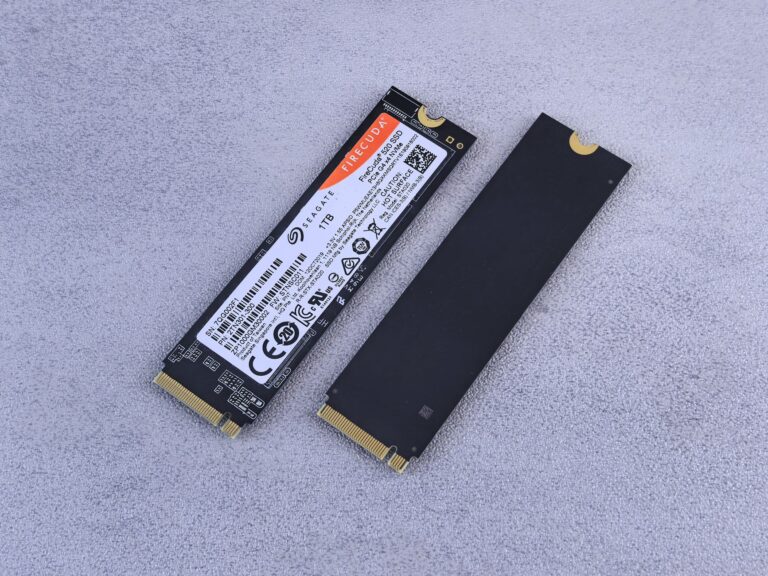
The thin, lightweight nature of SSDs has unlocked design possibilities across the computing landscape. Ultrabooks, 2‑in‑1 convertibles, and even compact desktop PCs can now ship without sacrificing performance because an SSD occupies a fraction of the space of a traditional 2.5‑inch HDD. In the server world, the rise of NVMe (Non‑Volatile Memory Express) drives—SSD devices that connect directly to the PCIe bus—has pushed data‑center latency into the sub‑microsecond range, enabling high‑frequency trading platforms, AI model training, and massive parallel workloads to run faster.
Beyond personal devices, SSDs have also transformed portable storage. External NVMe enclosures now deliver speeds comparable to internal drives, making high‑resolution video editing on a laptop practical without relying on a wired network.
Looking Ahead: What Comes After the SSD?
Even as SSDs dominate today’s market, the storage industry continues to evolve. Emerging technologies such as Intel’s Optane (based on 3D XPoint) and emerging MRAM (Magnetoresistive RAM) promise latency even lower than NAND flash while retaining non‑volatile characteristics. Meanwhile, advancements in NAND stacking (e.g., 176-layer and beyond) keep pushing capacity and throughput higher.
For most users, the practical takeaway is that the performance ceiling set by mechanical drives is now firmly behind us. Future improvements will likely focus on reducing latency further, increasing endurance, and lowering power consumption—especially important for mobile devices and edge computing.
In the meantime, the shift to solid‑state storage has already changed the expectations of what “fast” means in everyday computing. Tasks that once took minutes now happen in seconds, and the software ecosystem has adapted to exploit that speed. As a result, the computer of today feels more responsive, more reliable, and more capable than any machine built on spinning platters could ever be.
