
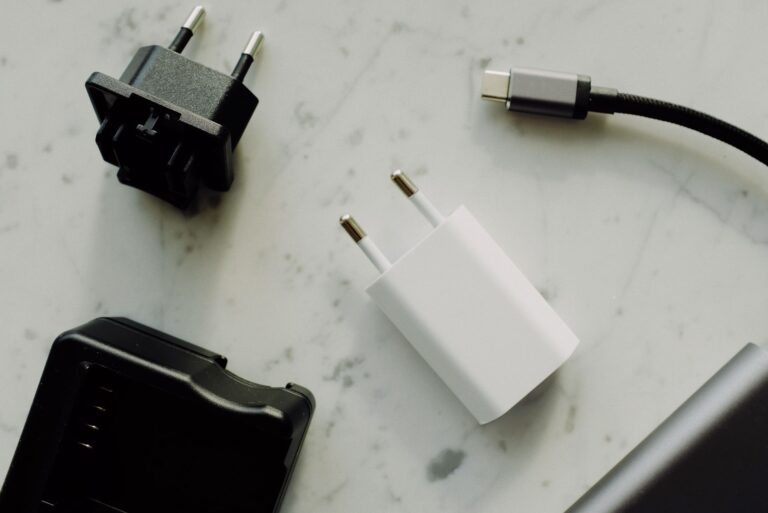
The Evolution From Legacy Ports to a Single Connector
For decades, the world of consumer electronics has been a patchwork of barrel plugs, micro‑USB, proprietary chargers, and a dizzying array of power bricks. The inconvenience was so familiar that most users stopped noticing it. That all began to change in the early 2010s when the USB Implementers Forum (USB‑IF) introduced the Type‑C connector. Unlike its predecessors, USB‑C was designed not just as a data interface but as a true power delivery platform capable of handling the diverse needs of modern devices.
Technical Design Choices That Made USB‑C Future‑Proof
Several deliberate engineering decisions set USB‑C apart from earlier USB revisions. First, the reversible, 24‑pin design eliminated the “upside‑down” frustration that plagued micro‑USB. Second, the connector’s compact size (about 8.4 mm × 2.6 mm) made it suitable for everything from slim smartphones to large laptops.
- Power Delivery (PD) up to 100 W: The USB‑PD specification allows negotiation of voltage and current, supporting fast charging for high‑capacity batteries.
- Alternate Modes: USB‑C can carry non‑USB protocols such as DisplayPort, Thunderbolt, and HDMI, enabling a single cable to handle video, data, and power.
- Scalable Data Rates: Starting at USB 3.1 Gen 1 (5 Gbps) and progressing to USB 4 (up to 40 Gbps), the connector can evolve without a physical redesign.
Because the specifications are extensible, manufacturers can adopt newer features without forcing consumers to replace the physical connector.
Industry Adoption: From Phones to Laptops
When Apple introduced its 12‑inch MacBook with a USB‑C‑only design in 2015, it sparked a wave of attention. The move signaled that a premium brand trusted the new standard for both power and high‑speed data. Android OEMs quickly followed, largely because the connector could support the fast‑charging expectations of flagship smartphones. Over the following years, major laptop makers, tablet manufacturers, and even peripheral vendors such as monitor and docking‑station producers began to ship products with USB‑C as the primary or sole port.
What cemented its ubiquity was the convergence of three market forces: the need for higher power budgets (especially for thin‑and‑light laptops), the desire for slimmer device profiles, and the push for a single cable solution that could replace a dozen different adapters. As more devices adopted USB‑C, accessory ecosystems grew, reinforcing the standard’s value proposition.
Regulatory Momentum and the Push for Standardisation
Beyond market dynamics, government policy played a decisive role. In the European Union, lawmakers argued that the proliferation of proprietary chargers contributed to electronic waste and consumer inconvenience. After extensive consultation with industry groups, the EU adopted a regulation mandating a common charger for small electronic devices—a move widely interpreted as a green light for USB‑C as the default solution. Similar discussions have taken place in other regions, creating a regulatory environment that favours a universal connector.
These policy initiatives have not forced manufacturers to abandon legacy ports overnight, but they have accelerated the transition by providing clear, long‑term expectations for product design.
Consumer Expectations: Simplicity, Speed, and Sustainability
Modern consumers are accustomed to instant gratification. A charger that can replenish a phone from zero to fifty percent in under half an hour feels indispensable. USB‑C’s ability to negotiate higher voltages means that fast‑charging standards from different manufacturers can coexist on the same physical connector, reducing the need for multiple power bricks.
At the same time, the “one‑cable‑fits‑all” narrative resonates with environmentally conscious buyers. When a single charger can power a phone, a tablet, and a laptop, the resulting reduction in plastic and electronic waste aligns with growing sustainability concerns.
Challenges on the Road to Universality
Despite its many advantages, the transition to USB‑C has not been without hurdles. Early implementations suffered from fragmented specifications—some cables supported only USB 2.0 speeds, while others offered full PD capabilities. This inconsistency led to confusion, with users occasionally plugging a low‑power cable into a high‑wattage charger and receiving sub‑optimal performance.
Another challenge has been the cost of high‑quality, fully featured cables. While basic passive cables are inexpensive, those that support 100 W PD and 40 Gbps data rates require more sophisticated wiring and shielding, driving up price points. Industry bodies continue to work on clearer labeling standards to help consumers identify the capabilities they need.
The Role of Standards Bodies and Open‑Source Communities
The USB‑IF remains the central authority defining the technical specifications and compliance testing for USB‑C. By publishing detailed test criteria and offering certification programs, the organization ensures that devices from different manufacturers can interoperate reliably. Complementary to this, open‑source hardware enthusiasts have contributed to the ecosystem by designing affordable, fully featured USB‑C hubs and adapters, further democratizing access to the technology.
These collaborative efforts have helped maintain a balance between innovation—such as the introduction of USB‑4 and Thunderbolt 4 over USB‑C—and the need for backward compatibility with existing USB‑C accessories.
Looking Ahead: What Comes After USB‑C?
While USB‑C is currently the dominant connector for consumer electronics, the standard itself is designed to evolve. Future revisions of the USB Power Delivery protocol could increase power ceilings beyond 100 W, potentially enabling even larger devices like gaming laptops or small workstations to charge over a single cable. Additionally, the integration of wireless power technologies may eventually complement, rather than replace, wired solutions.
For now, the convergence of technical flexibility, industry endorsement, regulatory support, and consumer demand has made USB‑C the de‑facto universal charging standard. As the ecosystem matures, the promise of a single cable for power, video, and data across virtually every personal device moves from aspiration to everyday reality.
